
Weighing a load usually means stopping the truck, driving to a floor scale and queueing for a reading. A forklift weighing system removes that step. It integrates weighing equipment directly onto the truck so the operator captures load weight during the lift itself, at any location and at any time. For plants that move steel, aluminium, chemicals, paper, textiles or cold-chain goods, that single change reduces traffic, labour and paperwork at the same time.
What a forklift weighing system actually measures
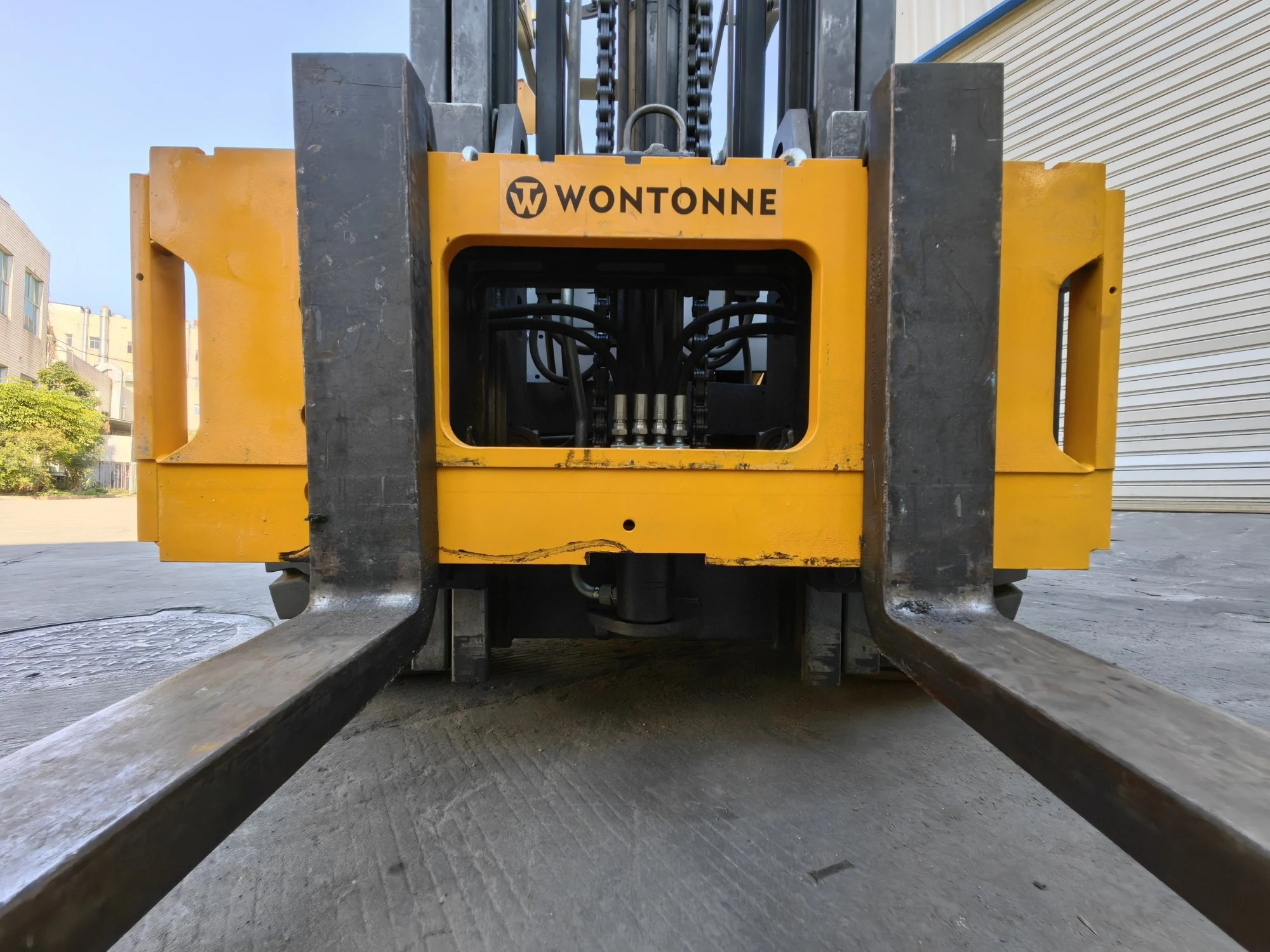
Every weighing device works on the same physical principle: it measures the force an object exerts under gravity and converts that force into a mass reading. On a laboratory balance the object sits on a pan. On a forklift the load sits on the carriage, and the measurement is taken from the load-bearing structure or hydraulic pressure instead.
That difference matters. A forklift weighing system is not a laboratory instrument, and it should not be judged as one. It is production weighing equipment: fast, repeatable and accurate enough to confirm a shipment, check a supplier claim or stop an overload before the truck leaves the ground.
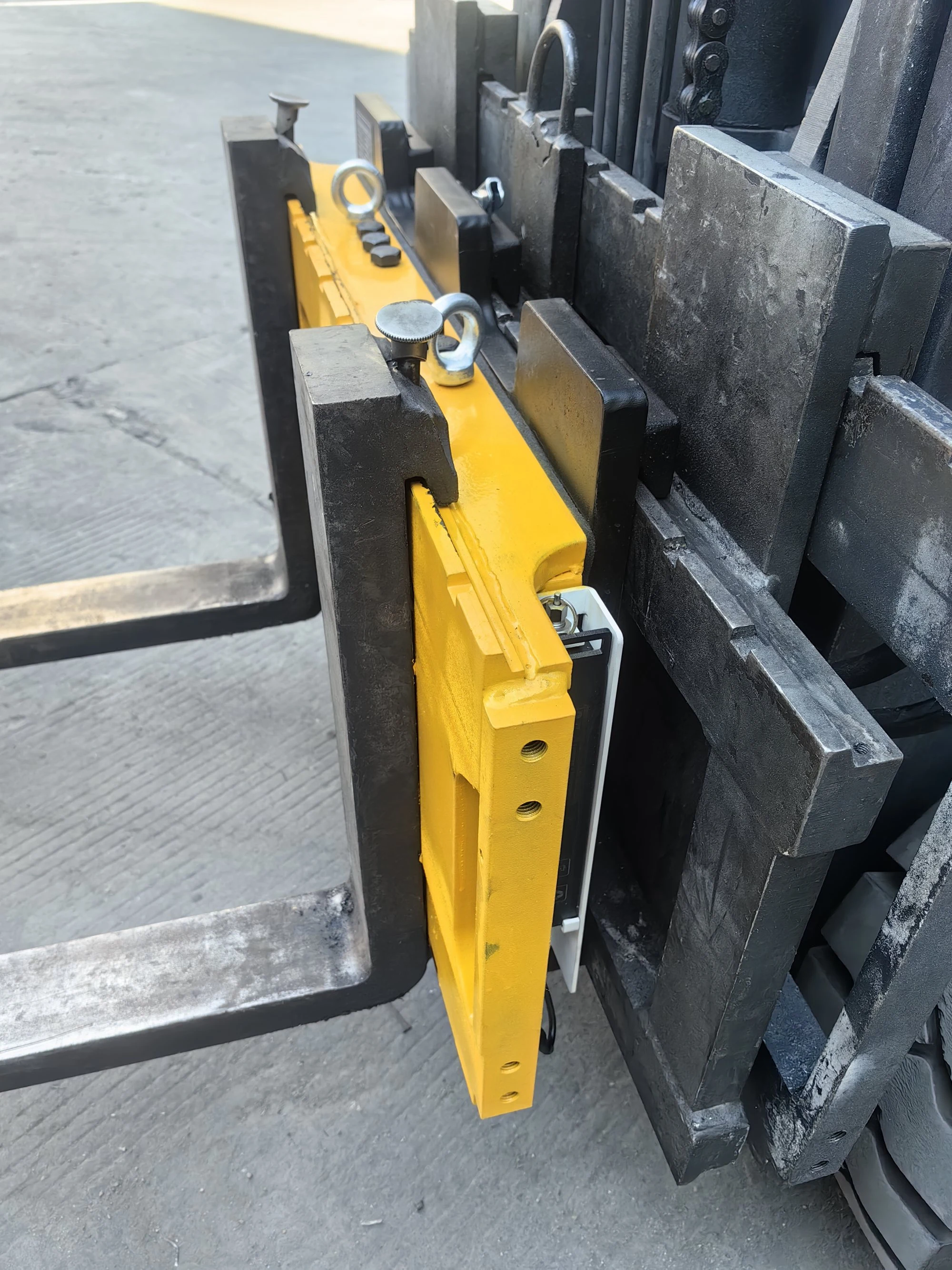
The WONTONNE Weighing System For Forklift follows this approach. The weighing device is integrated onto the forklift, and load weight information is available on the spot rather than after a trip to a fixed scale.
Why onboard weighing pays for itself
Fixed floor scales create a bottleneck. Trucks queue, operators wait, and loads are handled twice — once to weigh and once to move. Moving the weighing function onto the truck removes that second handling step. The benefits that follow are practical rather than theoretical:
- Production efficiency improves because loads are weighed and moved in one pass.
- Operating costs fall when loads no longer travel to a separate scale.
- Labour intensity drops because the operator does not leave the seat to record a weight.
- Process control strengthens because every lift produces a data point, not just the loads someone chose to weigh.
Weighing indicator, load cells and the data trail
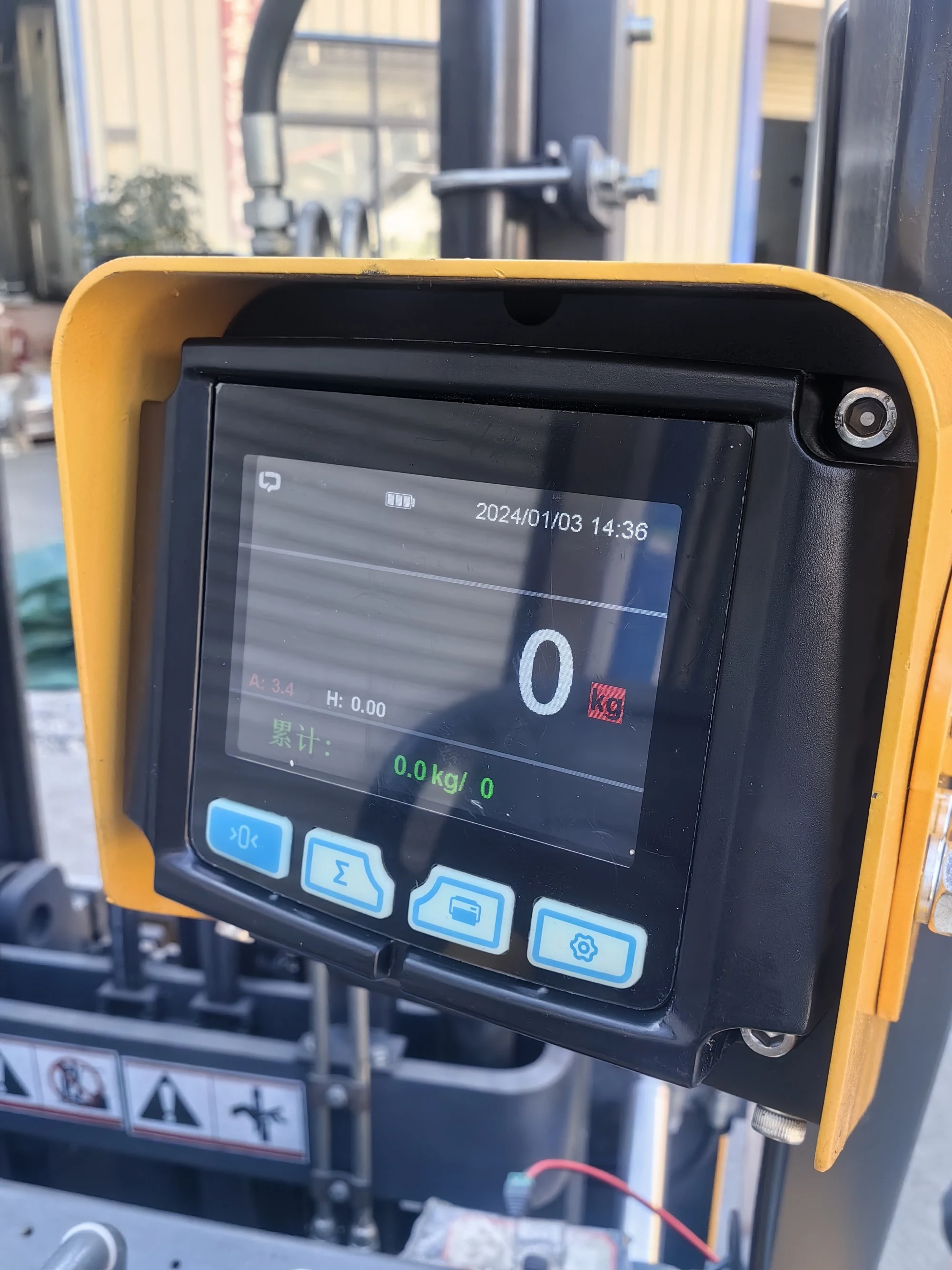
A complete weighing system is more than a set of forks. The load-sensing element produces a signal; the weighing indicator converts that signal into a number the operator can read and, in most installations, record or transmit. Once weight is captured digitally, it can be tied to a work order, a delivery note or a stock record.
This is where weighing instruments stop being a scale and start being part of lean management. Instead of weighing a batch at the end of a shift, the plant weighs it as it moves. Overloading is detected before the lift is complete. Under-delivery is caught at the loading bay, not at the customer's gate.
Where these systems are used
Onboard weighing is common in steel and aluminium handling, chemical plants, paper and textile operations, cold-chain logistics and general warehousing. In each case the requirement is the same: confirm the weight while the load is already on the forks.
H2 series specifications and mounting classes
WONTONNE supplies the forklift weighing system in three models. Capacity, division and mounting class are the three numbers that decide whether a unit fits your truck and your tolerance.
| Model | Capacity (kg) | Min. load (kg) | Division (kg) | Error | Mounting class | Unit weight (kg) |
|---|---|---|---|---|---|---|
| H2-25 | 2500 | 30 | 1 | 0.2 | Class 2 | 150 |
| H2-35 | 3500 | 30 | 1 | 0.2 | Class 3 | 180 |
| H2-45 | 4500 | 30 | 2 | 0.2 | Class 3 | 220 |
Read the table in this order. First, capacity: the unit must exceed the heaviest load you intend to weigh, not just the load you lift most often. Second, mounting class: Class 2 and Class 3 carriages are not interchangeable, so match the class to the truck. Third, division and minimum load: these define the smallest reliable increment and the point below which a reading should not be trusted.
Note the trade-off between the models. The H2-45 carries the highest capacity but a coarser 2 kg division, while the H2-25 and H2-35 resolve to 1 kg. If you weigh small, high-value components, the lower-capacity unit with the finer division is usually the better choice.
Forklift compatibility
The system is compatible with major truck brands including Linde, Toyota, Heli, Hangcha, Zhongli and BYD. Because carriage dimensions differ between models, the H2 series uses different mounting dimensions across the range — A, B, C, D, E, F and G values are listed per model. Confirm these against your carriage before ordering.
How to specify the right weighing equipment
Most specification errors come from choosing on capacity alone. Work through these points instead:
- Heaviest load, not average load. Size the capacity above your maximum, and remember that the attachment itself adds weight to the carriage.
- Carriage class. Confirm Class 2 or Class 3 before anything else — a mismatch cannot be corrected on site.
- Required resolution. Decide the smallest weight difference you must detect. That determines whether a 1 kg or 2 kg division is acceptable.
- Mounting dimensions. Check the A–G dimensions for the specific model against your existing carriage.
- Data handling. Decide whether the weighing indicator only displays weight or also records and transmits it.
- Environment. Cold-chain, chemical and outdoor applications place different demands on the weighing device than a dry warehouse.
If you are still comparing attachment types, the broader range of all forklift attachments shows where weighing sits alongside other carriage-mounted equipment.
Frequently asked questions
Does a forklift weighing system replace a floor scale?
For most in-process checks, yes. It confirms load weight during handling, which is enough for shipping verification, overload prevention and stock control. Where a legal-for-trade certificate is required, a calibrated static scale may still be needed — the onboard system is a production tool, not a replacement for certified trade weighing.
Which H2 model suits a 3-tonne forklift?
Start with the H2-35, which has a 3500 kg capacity, a 1 kg division and a Class 3 mounting. If your heaviest loads approach or exceed that figure, or if your carriage is Class 2, review the H2-25 and H2-45 against your actual carriage and load data before deciding.
What does the minimum load figure mean?
All three models list a 30 kg minimum load. Below that point, the reading is not considered reliable. If you routinely weigh very light loads, discuss the application with us rather than assuming the system will resolve them.
Talk to WONTONNE about your weighing application
With more than 20 years in forklift attachments and material handling equipment, WONTONNE supports weighing system projects from model selection through installation and after-sales service, including technical support and spare parts. Send us your truck brand, carriage class and the loads you need to weigh, and we will confirm the right H2 model for the job. Contact WONTONNE to start the specification.