
A forklift sensor is any device that measures what the truck, its load or its surroundings are doing and turns that measurement into a signal the operator or the control system can act on. On modern fleets the term covers three practical families: vision sensors such as cameras, proximity and collision-awareness sensors that watch for people and obstacles, and load sensors that weigh what is on the forks. Each family solves a different problem, and the most effective safety programmes combine them rather than relying on one device.
This guide explains how each type works, where it fits, and how to specify sensors alongside the attachment you are running. WONTONNE has supplied forklift attachments and material handling equipment to industrial customers for more than 20 years, and the questions we hear most often are about matching sensing equipment to real operating conditions — not about buying the most complex system on the market.
What a forklift sensor actually does
Sensors on a forklift fall into two broad jobs. The first is perception: detecting pedestrians, other trucks, racking, walls and blind spots around the machine. The second is load and machine state: knowing how heavy the load is, whether the truck is level, and whether an impact has occurred. Perception sensors support the operator; load sensors support the process and protect the truck.
It helps to separate the sensing layer from the response layer. A sensor detects; the system then warns, limits speed, records data or locks a function. When you evaluate any forklift sensor safety product, ask what the output is and who acts on it. A camera that shows the operator a clear image and a radar unit that triggers an audible alarm are both valid, but they belong in different parts of your risk assessment.
Perception sensors
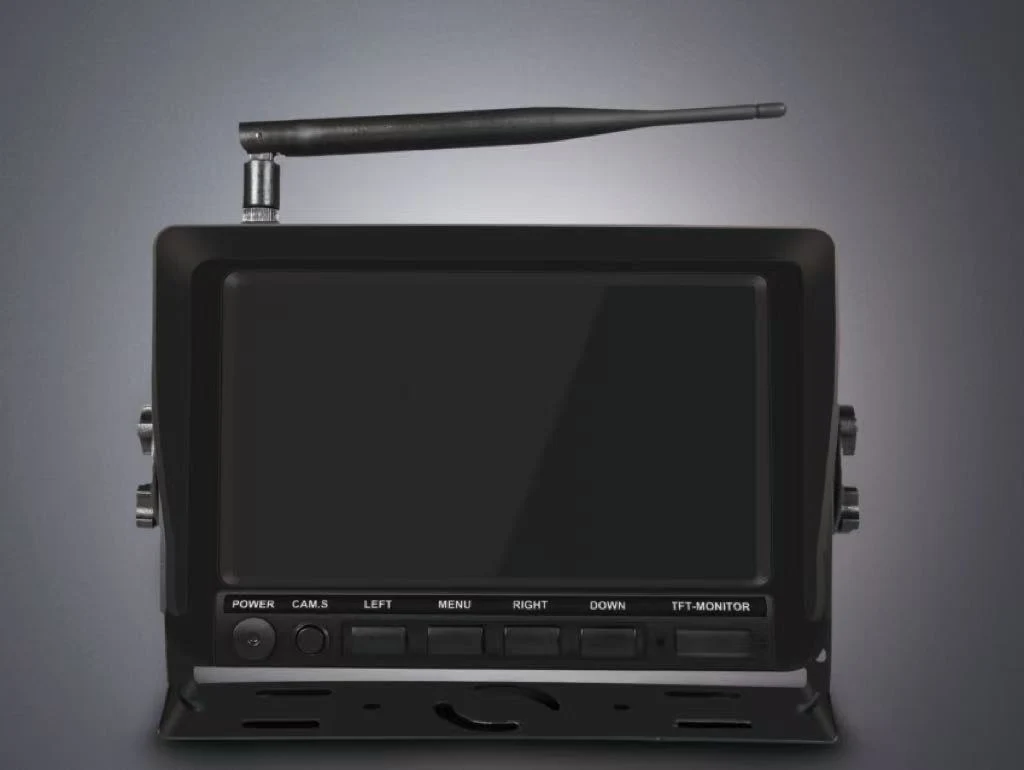
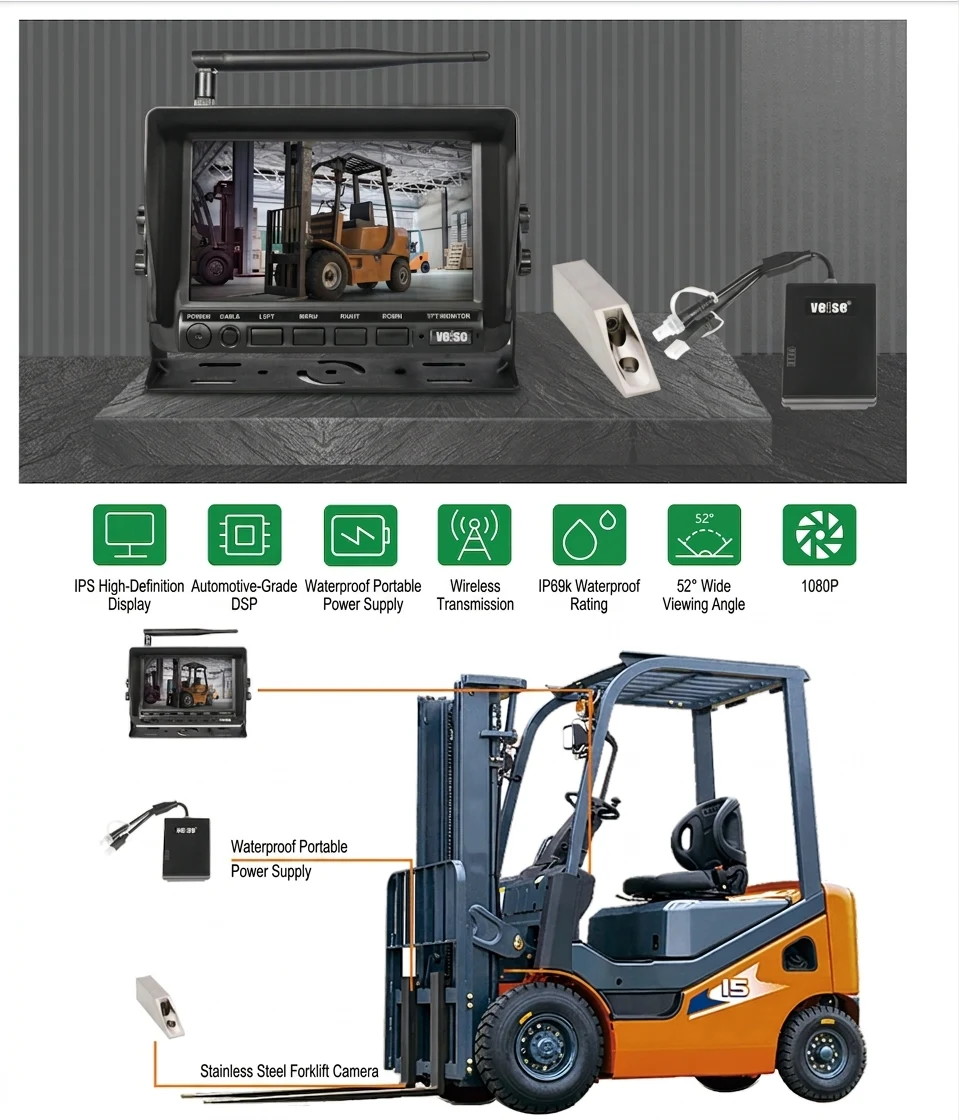
- Camera and display systems — wide-angle HD cameras show the operator what the mirrors cannot, especially at the fork tips, behind the truck and around large attachments.
- Proximity and collision-awareness sensors — ultrasonic, radar, Lidar or UWB technologies detect people or vehicles inside a defined distance and warn the operator or the pedestrian.
- Impact sensors — accelerometer-based devices record abnormal shocks so managers can investigate near misses and damage.
Load and machine-state sensors
- Weighing systems — load cells or pressure-based systems integrated into the carriage or hydraulics report the weight on the forks.
- Position and current sensors — used by OEMs to monitor fork position, motor current and battery behaviour.
Forklift sensors safety: where the real risks are
Most forklift incidents happen in three situations: reversing, travelling with a raised or bulky load, and working in aisles shared with pedestrians. Blind spots are the common thread. A standard counterbalance truck has significant blind areas behind the mast and around wide attachments, and those areas grow when you add a clamp, a rotator or a long fork extension.
A camera system addresses this directly. The WONTONNE Cameras Safety Solution for Forklift And Attachment uses wide-angle HD lenses to eliminate blind spots, with models including the CWHD-232M, CWHD-23A2M and CWHD-152M cameras paired with the MWHD-754H 7-inch IPS HD monitor. The housings are rated IP69K and 5G shock-proof, and the system is available with heating and anti-fog treatment for cold stores and humid yards. The CWHD-152M offers a 120° viewing angle and 0 Lux infrared capability for dark warehouses, while the CWHD-23A2M adds a green one-word laser guide to help the operator judge fork position.
Proximity and collision-awareness systems complement cameras by warning before contact. A collision awareness forklift sensor typically defines one or more distance zones around the truck and escalates from a visual warning to an audible alarm, and in some systems to automatic speed reduction. The technology choice matters: ultrasonic sensors are low cost but short range; radar and Lidar perform better in dust, darkness and glare; UWB and RFID-based systems rely on tags worn by pedestrians or fitted to vehicles. Buyers who have seen sick forklift sensor literature will recognise the same principles — time-of-flight and laser distance measurement for reliable detection in harsh environments — and should apply the same scrutiny to range, response time and false-alarm rate when comparing suppliers.
Weighing sensors: the load-side case
Overloading is a safety issue and a cost issue. An overloaded truck loses stability, brakes poorly and wears its mast and hydraulics faster. It also creates compliance exposure when axle limits or racking load ratings are exceeded. A weighing system integrated onto the forklift gives the operator and the warehouse system the load weight at the point of lift, without a detour to a floor scale.
The WONTONNE Weighing System For Forklift mounts on the carriage and is available in the H2-25, H2-35 and H2-45 models with capacities of 2500 kg, 3500 kg and 4500 kg respectively. Minimum load is 30 kg, division is 1 kg or 2 kg depending on model, and error is 0.2. The units are compatible with Linde, Toyota, Heli, Hangcha, Zhongli, BYD and other major brands, and are used in steel, aluminium, chemical, paper, textile, cold-chain and warehousing operations.
How the sensor families compare
| Sensor type | Primary job | Typical output | Best fit |
|---|---|---|---|
| Camera and monitor | Eliminate blind spots, verify fork position | Live HD image on cab display | Reversing, bulky attachments, high-rack work |
| Proximity / collision awareness | Detect people and vehicles in defined zones | Visual and audible warning, optional speed limit | Shared aisles, busy loading docks |
| Impact sensor | Record abnormal shocks | Event log for investigation | Fleet damage control and driver coaching |
| Weighing system | Measure load weight on the forks | Weight reading, overload warning | Process control, axle protection, trade weighing |
Specifying sensors with your attachment
Sensors and attachments must be planned together. A wide clamp or a long fork extension changes the operator's field of view, so camera placement should be decided after the attachment is selected, not before. Likewise, a weighing carriage adds its own weight and interface dimensions, which must be accounted for in the truck's residual capacity calculation. The H2-25 uses mounting class 2, while the H2-35 and H2-45 use class 3, so the carriage interface must match the truck before ordering.
Our forklift attachments catalogue lists the full range of carriages, clamps, positioners and handling equipment that sensors can be paired with. Before finalising a specification, confirm four things:
- The operating environment — indoor, outdoor, cold store, dusty or high-glare.
- The blind-spot profile created by the attachment you intend to run.
- Whether you need warning only, or warning plus intervention such as speed limiting.
- How the data will be used — live display, event logging or integration with fleet management.
FAQ
Can I add a forklift sensor to an existing truck?
Yes. Camera systems and weighing systems are designed as add-on equipment for major forklift brands, including Linde, Toyota, Heli, Hangcha, Zhongli and BYD. The key checks are voltage compatibility, carriage mounting class and physical clearance around the mast.
Do I need cameras or proximity sensors for forklift sensor safety?
They solve different problems. Cameras give the operator sight where mirrors fail; proximity sensors warn when a person or vehicle enters a defined zone. In shared-aisle operations, the two are usually deployed together as part of a layered safety programme.
How accurate is a forklift weighing system?
The WONTONNE H2 series specifies an error of 0.2 with a minimum load of 30 kg and a division of 1 kg or 2 kg depending on model. Accuracy depends on correct installation and calibration, so follow the mounting and commissioning procedure for your truck.
Next step
If you are building a sensor specification for a fleet, start with the attachment and the environment, then choose the sensing layer that matches. WONTONNE can help you match cameras, weighing systems and attachments to your trucks. Contact WONTONNE with your truck models, attachment types and operating conditions, and our team will confirm compatibility and configuration.