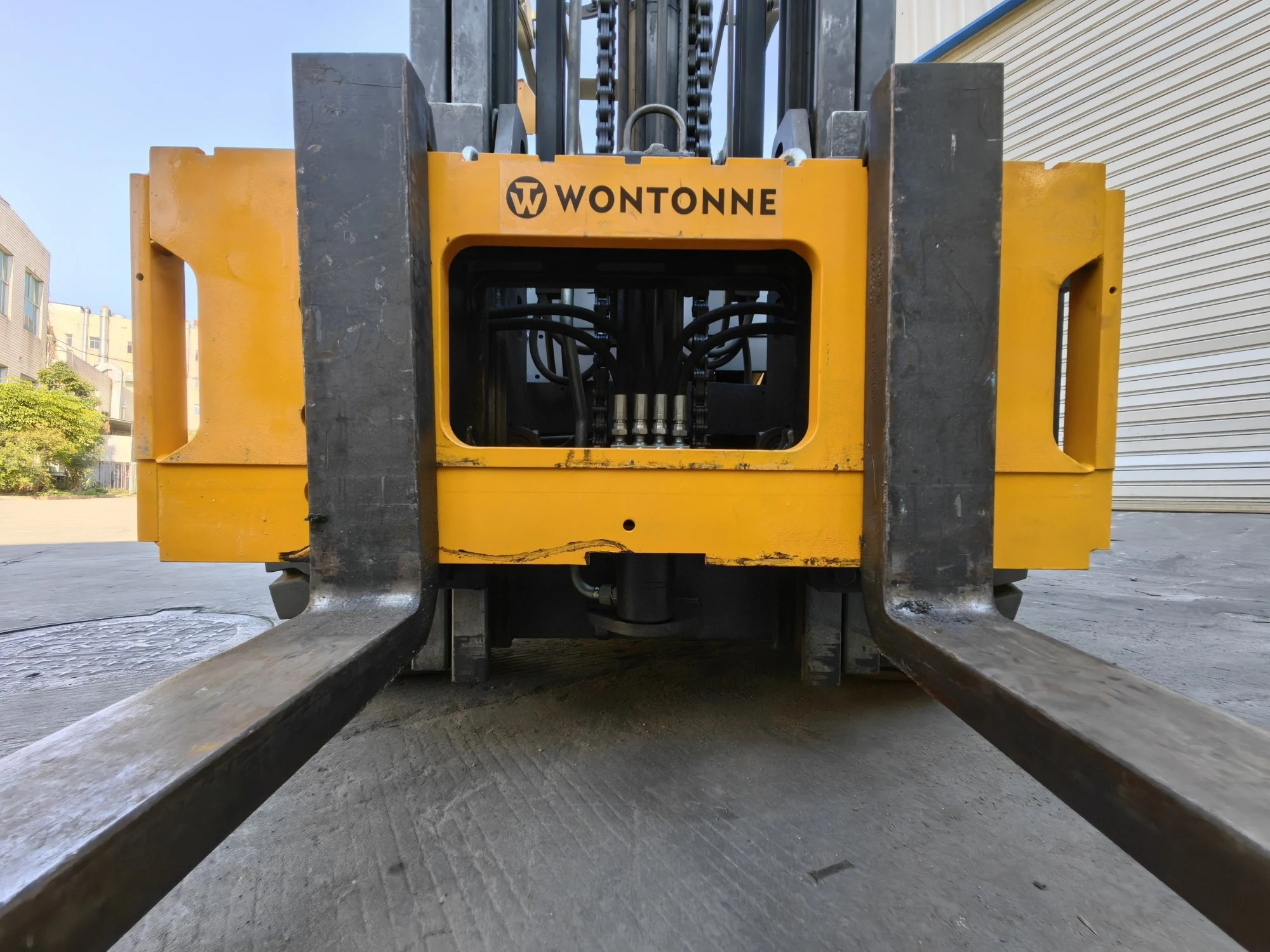

Side shifting is the lateral movement of the forks and carriage to the left or right without repositioning the truck. On a forklift, a side shift attachment turns pallet alignment from a driving exercise into a hydraulic one: the operator lines the truck up roughly, then corrects the last 100 or 150 mm from the seat. That single capability is why the side shifter is the most common attachment in warehousing and distribution — it removes repeated forward-and-reverse corrections at every rack face and every trailer floor position.
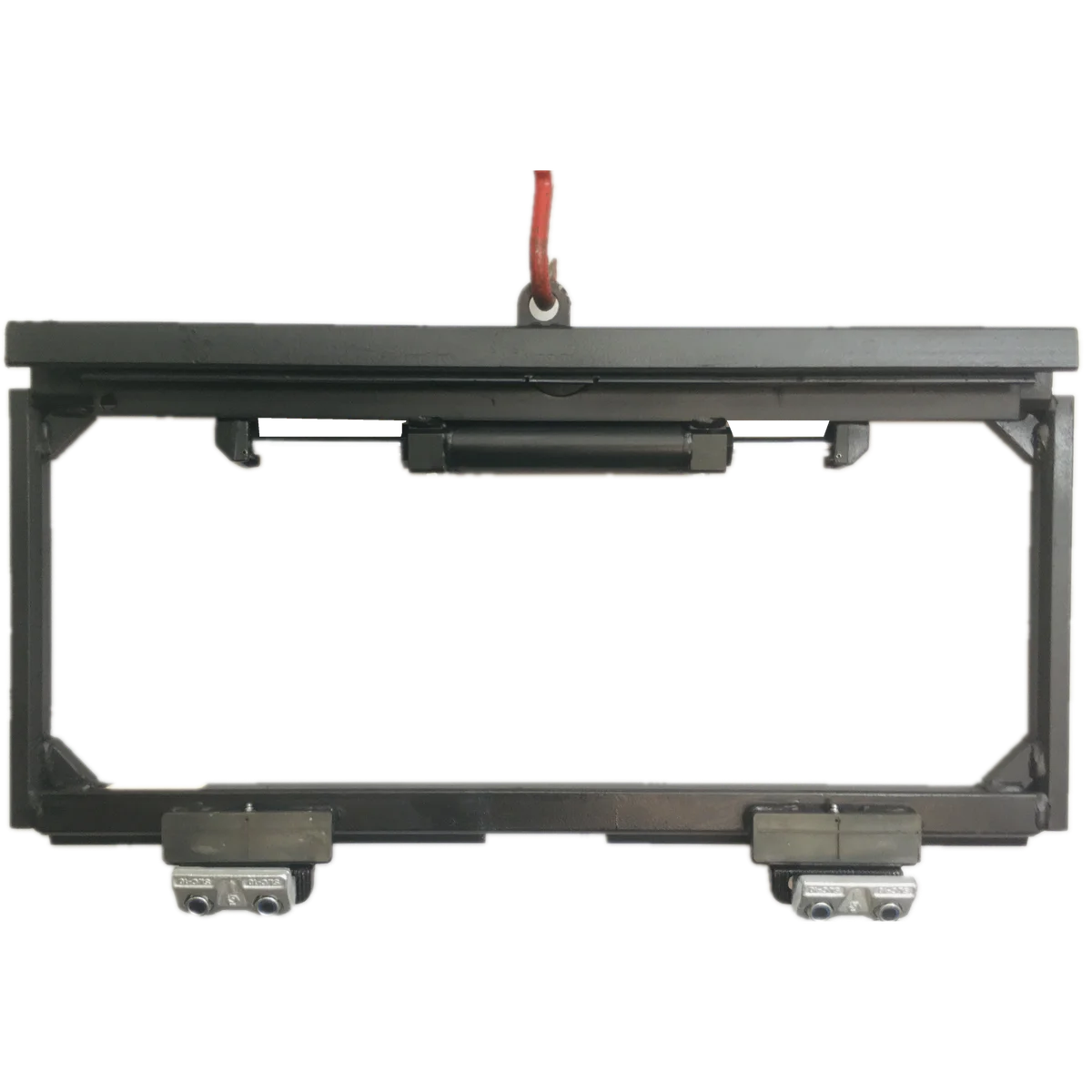
This guide covers how side shifting works, where it differs from fork positioning, how to read a capacity chart without losing lift height, and which WONTONNE series fits which duty.
What Side Shifting Actually Does on a Forklift
A side shift carriage sits between the truck's original carriage and the forks. A hydraulic cylinder moves the fork bar laterally; the forks travel as a pair, keeping the fork spacing fixed while the whole set slides left or right. On WONTONNE sideshifters that travel is 100 or 150 mm to each side, which covers the vast majority of real-world misalignment — a pallet sitting slightly off-centre in a rack bay, a load that needs nudging against the one beside it, or a truck that cannot square up in a narrow aisle.
The practical gains are consistent across applications:
- Fewer truck movements per pallet, so less tyre and drivetrain wear and lower energy consumption per tonne handled.
- Faster pallet engagement at height, where judging distance from the seat is hardest.
- Less product damage from forks scraping or clipping pallet edges during entry.
- Better use of tight floor space, because the truck no longer needs room to shuffle sideways.
Because the attachment adds thickness between the carriage and the fork heel, it also reduces residual capacity. That trade is normal and predictable — the numbers are on the data plate of every WONTONNE unit.
Side Shifter vs Fork Positioner: Two Different Jobs
Side shifting and fork positioning are often confused because they are frequently combined. The distinction is simple: side shifting moves the forks together, left and right. Fork positioning changes the distance between the two forks.
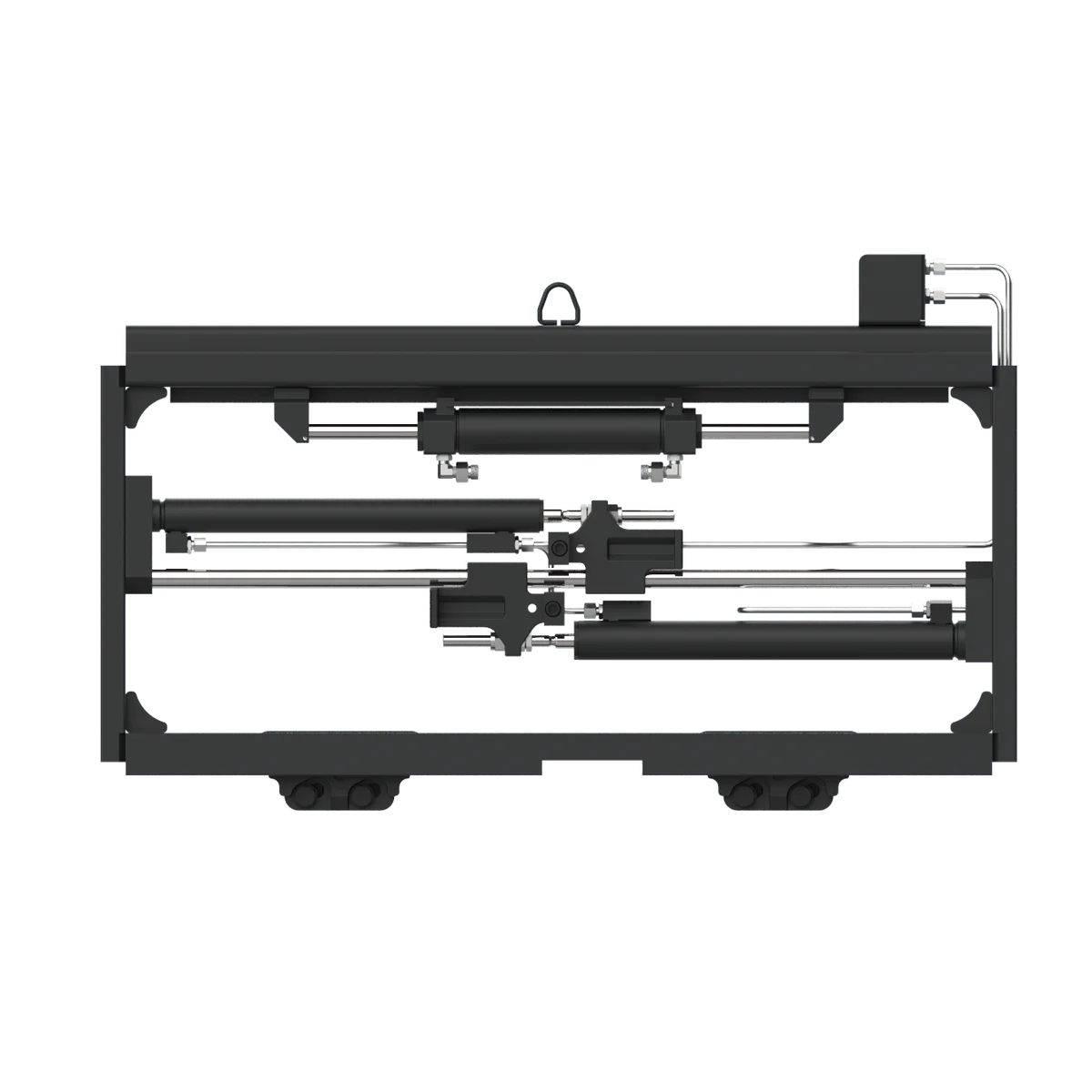
If your operation handles one pallet footprint all day, a sideshifter alone is enough. If you handle multiple pallet widths — Euro pallets next to block pallets, or slip sheets and crates alongside standard pallets — the operator needs to open and close the forks without leaving the seat. That is the job of a K Series Fork Positioner, which moves each fork hydraulically, individually or together.
Many operations need both functions in one attachment. A fork positioner with side shift, such as the G Series Fork Positioner, adjusts fork spacing and then shifts the pair laterally, so a single attachment covers variable pallet sizes and fine alignment. The trade-off is added weight and thickness, which is why the selection should follow the load, not the other way round.
Choosing the Right Side Shift Attachment
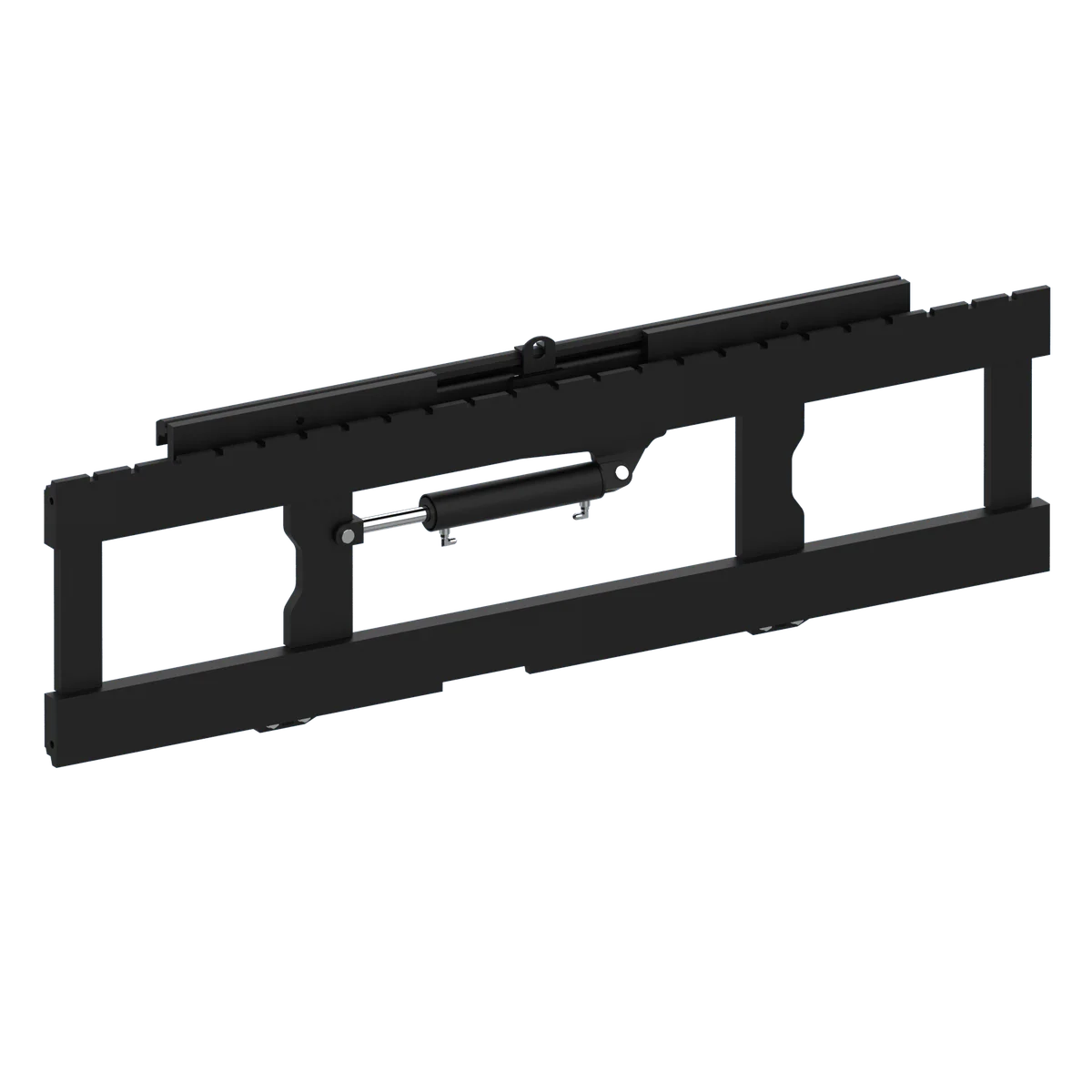
Selection starts with three inputs: the load weight and load centre, the pallet widths you actually handle, and the forklift's mounting class. WONTONNE sideshifters and positioners mount to ISO 2A, 3A and 4A carriages, so the attachment class must match the truck's carriage class rather than being adapted to it.
From there, the series choice is mostly about duty and capacity:
- Light to medium duty, cost-sensitive fleets: the F Series Sideshifters cover capacities up to 3500 kg with a straightforward, affordable design for general work situations.
- General warehouse and distribution: the D Series Sideshifters are the workhorse option, with capacities up to 6800 kg for heavier counterbalance trucks.
- Mixed pallet operations: the E Series Sideshifters prioritise fast fork insertion and stacking, with capacities up to 5000 kg.
- Variable pallet widths: fork positioners, including Independent Control Fork Positioners for uneven or mixed loads where each fork must be set separately.
- Multi-pallet handling: the Triple Sideshifter forks three pallets side by side for logistics, recycling and construction work.
- Very wide or flexible loads: a Forks Spreader distributes load across its full length for plasterboard, roof sheeting and timber.
Comparing WONTONNE Side Shifting Options
The table below summarises the main families. Capacities and mounting classes are taken from the published model data; always confirm against the specific model number for your truck.
| Attachment | Function | Capacity range | Mounting class | Typical application |
|---|---|---|---|---|
| F Series Sideshifter | Lateral shift only | Up to 3500 kg | ISO 2A | General handling, cost-sensitive fleets |
| E Series Sideshifter | Lateral shift only | Up to 5000 kg | ISO 3A | Warehouse stacking, fast fork insertion |
| D Series Sideshifter | Lateral shift only | Up to 6800 kg | ISO 4A | Heavy counterbalance trucks |
| G Series Fork Positioner | Fork spacing + side shift | Up to 3000 kg | ISO 2A / 3A | Mixed pallet sizes |
| K Series Fork Positioner | Fork spacing, individual or together | Up to 3000 kg | ISO 2A / 3A | Distribution and manufacturing |
| Triple Sideshifter | Three pallets, single or pairwise control | Up to 3200 kg | ISO 3A | Logistics, recycling, construction |
| Forks Spreader | Fixed wide fork spread | Up to 3000 kg | ISO 2A | Plasterboard, roof sheeting, timber |
Residual Capacity, Hydraulics and Maintenance
Residual capacity
Every attachment moves the load centre forward and adds its own weight ahead of the carriage. The result is a lower net capacity than the bare truck rating, and the reduction grows with lift height. WONTONNE publishes attachment weight and effective thickness for each model — for example, the D Series SSS70D-1190C weighs 207 kg with an effective thickness of 84 mm — so the dealer or fleet engineer can recalculate the truck's residual capacity before the attachment is fitted. Do not skip this step on high-lift or double-deep applications.
Hydraulics
Side shifting needs one hydraulic function; a fork positioner needs its own circuit, and independent fork control needs more. Confirm the truck has the valve sections and hose routing available, or plan for an auxiliary valve. Operating from the seat is the point of the attachment — if the operator has to leave the cab, the productivity case disappears.
Maintenance
Side shift carriages are mechanically simple: check the fork bar and bearings for play, inspect hoses and fittings at the carriage entry point where flexing is constant, and keep the fork retention pins and stops secure. WONTONNE supplies technical support and spare parts for all series, which matters more than the initial price when a truck is down mid-shift.
Frequently Asked Questions
What is the purpose of side shifting on a forklift?
Side shifting lets the operator move the forks left or right hydraulically so they can align with a pallet without repositioning the whole truck. It speeds up pallet entry and placement, reduces product and rack damage, and cuts the number of manoeuvres needed in tight aisles and trailers.
What is the difference between a side shifter and a fork positioner?
A side shifter moves the forks laterally as a pair while keeping the fork spacing fixed. A fork positioner changes the distance between the forks, hydraulically, individually or together. A fork positioner with side shift combines both functions in one attachment for operations handling several pallet widths.
Does a side shift attachment reduce lifting capacity?
Yes. The attachment adds weight and thickness ahead of the carriage, which reduces residual capacity, and the effect increases with load centre and lift height. Use the published attachment weight and effective thickness for the specific model to recalculate the truck's net capacity before fitting.
Side shifting is a small mechanical change with a large operational effect, but the right choice depends on your pallet range, load weight and carriage class. Browse the full range of forklift attachments or send your truck model, load data and pallet sizes to the WONTONNE team through our contact page for a model recommendation and a quotation.