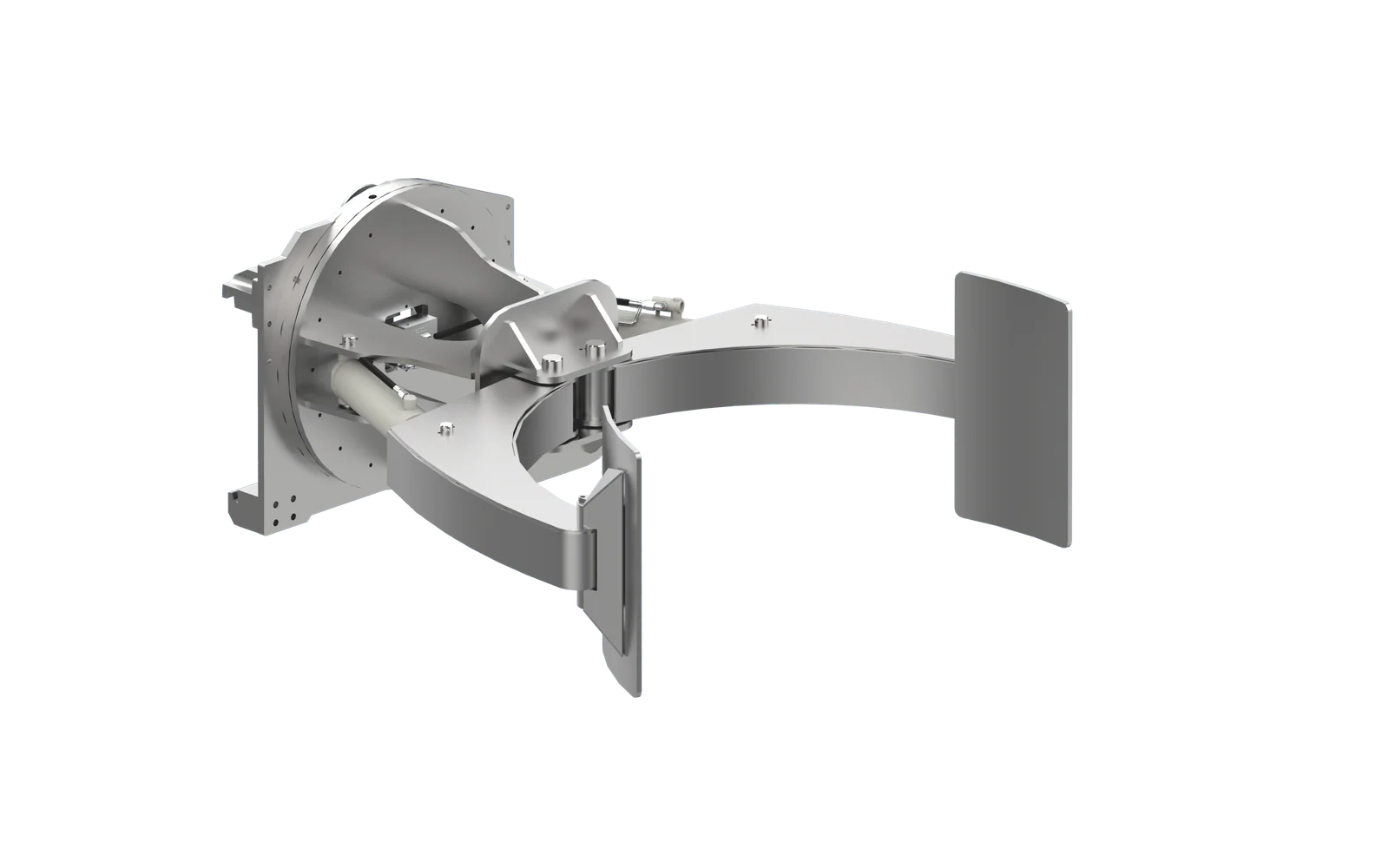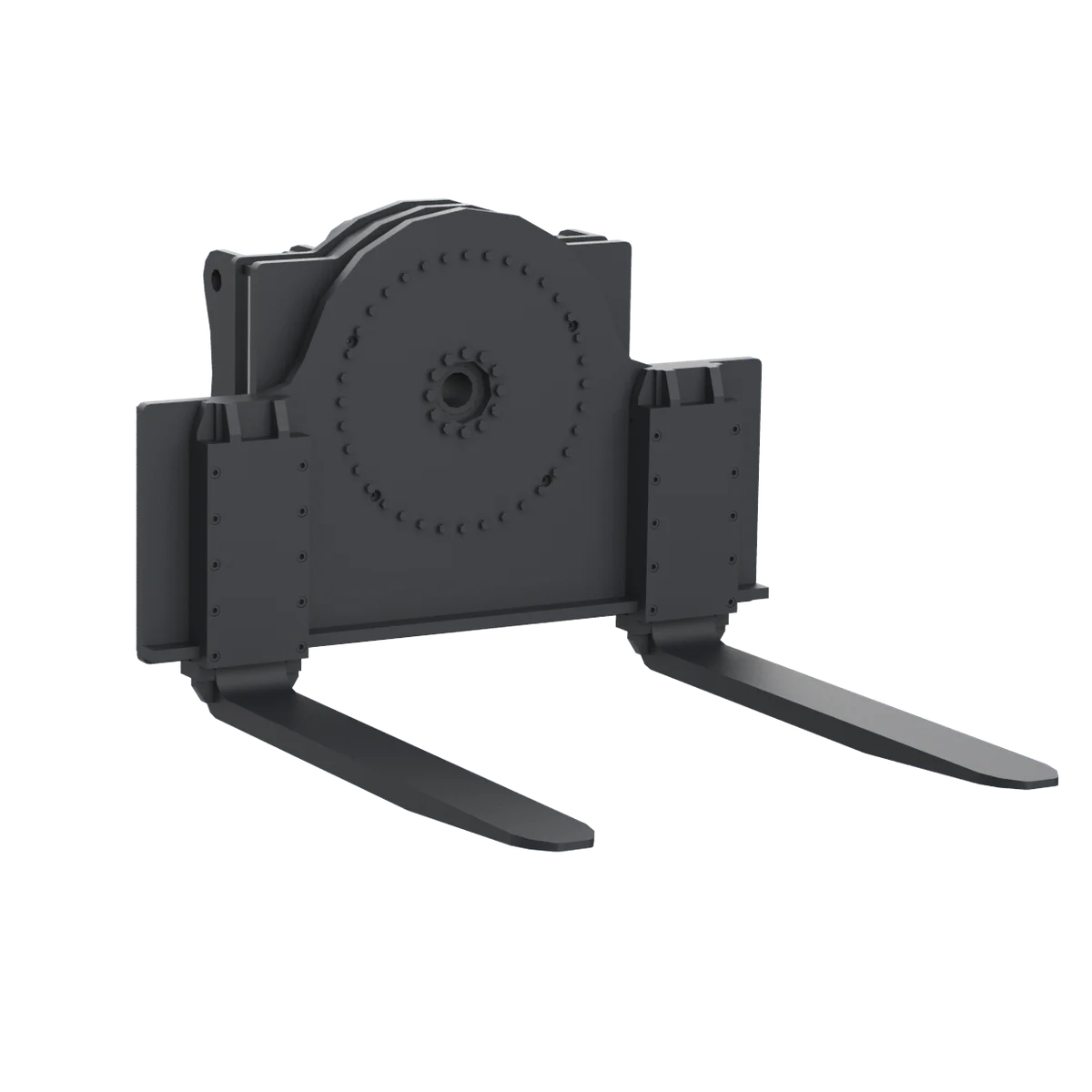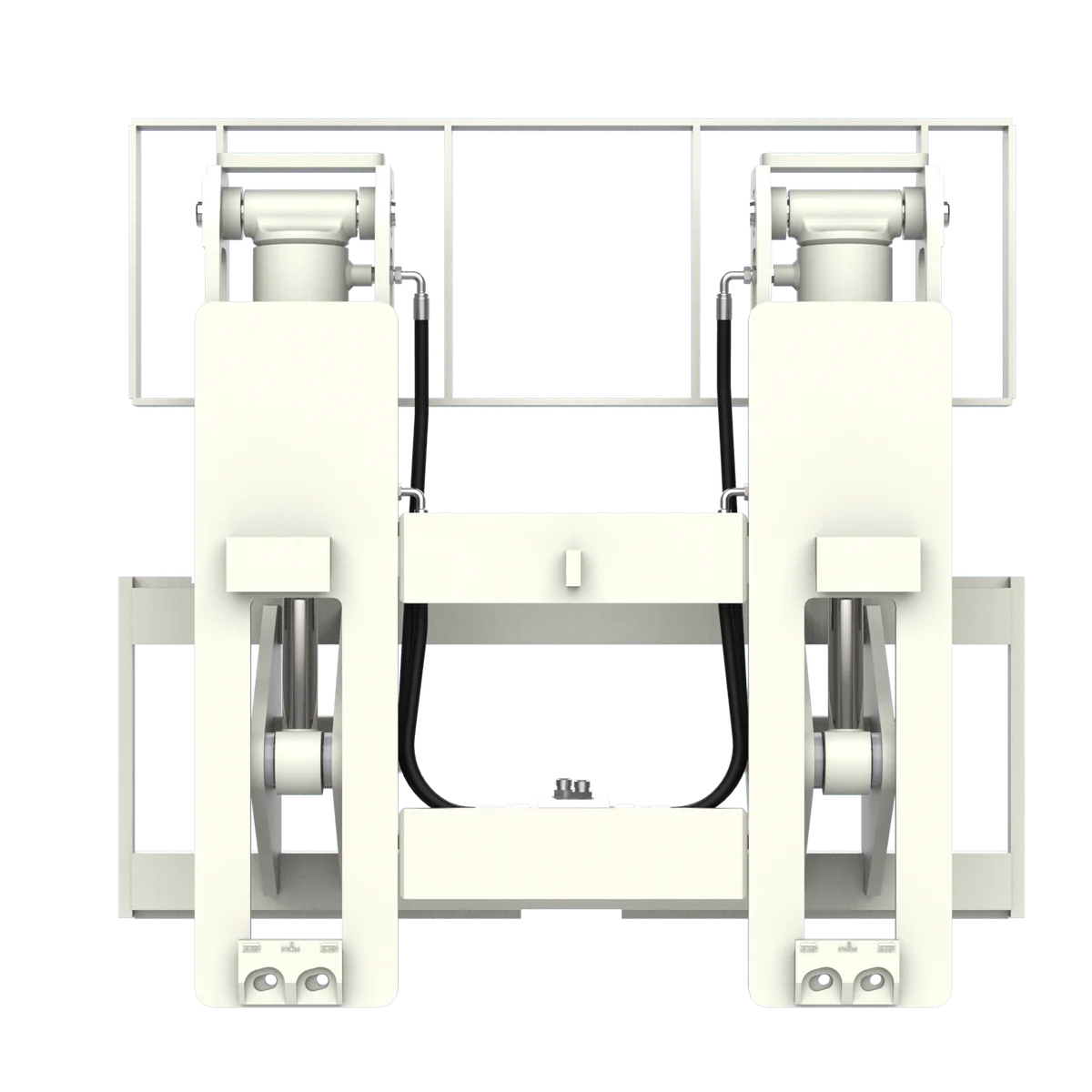

A bag lifter is a forklift attachment that turns an ordinary counterbalance truck into a safe handler of filled bags, sacks and FIBC bulk bags. Instead of balancing a soft, shifting load on bare tynes or sending two people to wrestle it by hand, the operator engages the bag with prongs or hooks and moves it under full control. WONTONNE has built bag handling attachments for more than two decades, and the models in this guide cover loads up to 2000 kg with slip-on or carriage mounting.
What a bag lifter does that bare forks cannot
A filled bag is not a pallet. It has no fixed footprint, its centre of gravity moves as the contents settle, and its loops or seams are the only features you can grip. Forks rely on friction and balance; a bag lifter relies on positive engagement. That difference shows up in three places:
- Retention. Prongs or hooks hold the bag loops or body so the load cannot slide off during travel or braking.
- Positioning. The operator can place a bag onto a mixer inlet, hopper or pallet without dragging it across the surface.
- Repeatability. Every lift follows the same path, which shortens cycle times and reduces the manual handling that causes back injuries.
The attachment is not a substitute for load charts or training. It is a tool that makes a difficult lift predictable, provided it is matched to the bag and the truck.
Prong lifting vs hook lifting: choosing the interface
WONTONNE bag lifters lift bags in one of two ways, and the choice follows directly from how the bag is made.
Prong lifting
Prongs support the bag from beneath or through its base, which suits woven sacks and bags without reinforced lifting loops. The bag sits on the prongs like a shallow platform, so the load is supported rather than suspended. This is the more forgiving option for bags whose seams or fabric may not tolerate point loading.
Hook lifting
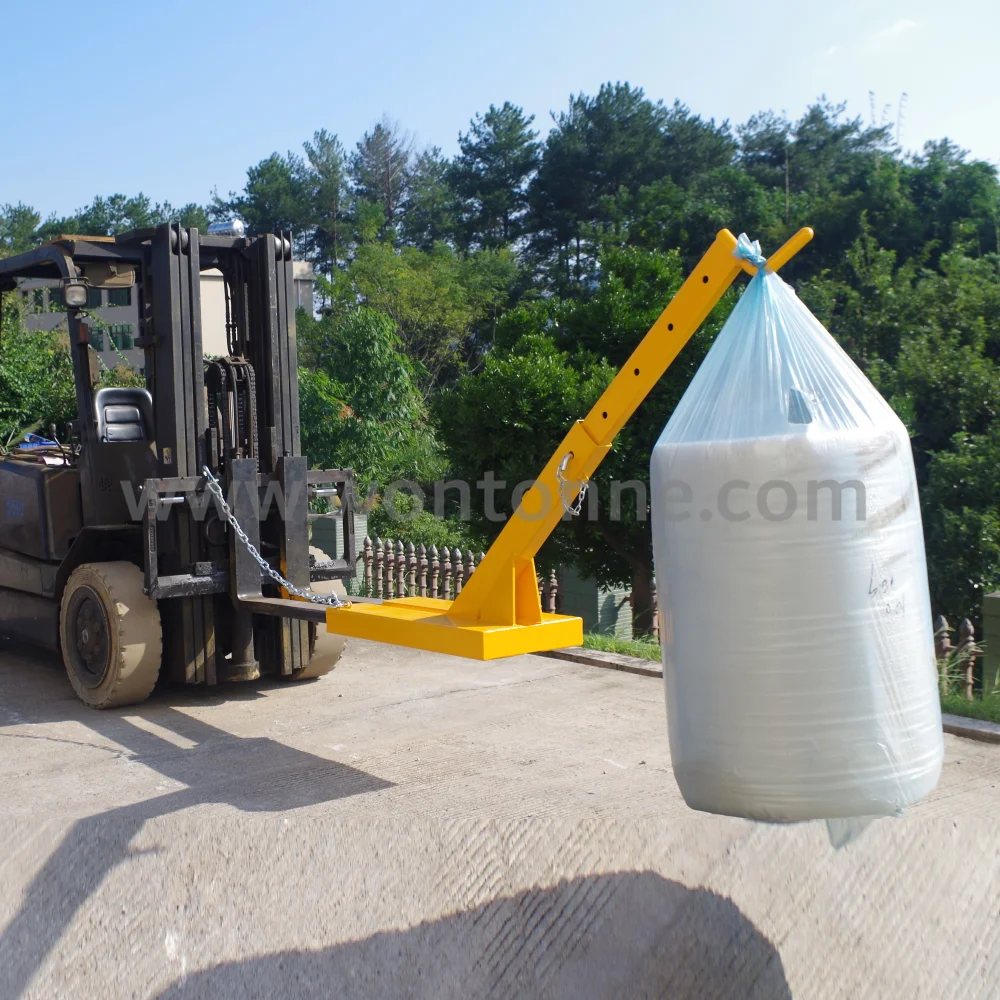
Hooks engage the four lifting loops of an FIBC bulk bag and suspend it from above. The bag hangs freely, which keeps it clear of the mast and makes it easy to spot over a hopper or vessel. Hook lifting depends on the loops being intact and correctly rated for the load, so inspect them before every lift.
Slip-on or carriage-mounted: matching the mounting to your fleet
Mounting decides how quickly the attachment goes on, how much capacity it costs you, and whether the truck needs hydraulics. WONTONNE offers both families, and the table below sets out the models and their key figures.
| Model | Capacity | Mounting | Attachment weight | Lifting method |
|---|---|---|---|---|
| BBF1000 | 1000 kg | Slip-on 180x60 mm | 90 kg | Fixed prong/hook |
| BBF2000 | 2000 kg | Slip-on 180x60 mm | 154 kg | Fixed prong/hook |
| BBP2000 | 2000 kg | ISO 2A carriage | 200 kg | Fixed prong/hook |
| SBBP2000 | 2000 kg | Slip-on 1100x165x65 mm | 210 kg | Fixed prong/hook |
Slip-on models slide over the existing tynes and are secured with pins or a heel clamp. They need no hydraulic supply, fit in minutes and are easy to share between trucks. Carriage-mounted models such as the BBP2000 bolt to the fork carriage in place of the forks, which gives a more rigid connection and frees the tynes for other work. The SBBP2000 uses a wider slip-on pocket, so check the dimensions of your tynes before ordering.
The capacity you must subtract
Every attachment is payload the truck carries before it lifts anything. A 200 kg carriage-mounted unit on a 2.5 t truck leaves roughly 2.3 t of nominal capacity, and the real figure is lower once load centre and mast geometry are applied. Always recalculate against the truck's data plate rather than the attachment rating alone. If you are unsure how to do this, our forklift attachment selection resources walk through the method.
How to size a bag lifter in four steps
- Weigh the heaviest bag, not the average. A bag lifter rated at 2000 kg is only suitable if every bag it will ever lift is within that figure, including any moisture pickup in the contents.
- Identify the lifting feature. Loops mean hooks; no loops mean prongs. Confirm the loop rating with the bag supplier.
- Measure the mounting interface. Record tyne width and thickness, or the carriage class, and compare with the slip-on pocket or ISO class of the attachment.
- Check the truck's residual capacity. Deduct attachment weight and apply the load centre rule before you commit.
WONTONNE supplies the Bag Lifter in a range of types for different bag conditions, and our engineers will confirm the model against your bag dimensions and truck data plate.
Safe operation and daily checks
The attachment is only one part of a safe lift. Brief operators on the following points and record the checks in your pre-shift inspection:
- Inspect bag loops, seams and fabric before engagement; reject damaged FIBCs.
- Confirm the slip-on pins or carriage bolts are fully seated and tight.
- Lift with the mast vertical and the load close to the ground during travel.
- Never carry a suspended bag over people or at height beyond what the task requires.
- Keep the attachment within its rated capacity; do not use it to drag or push loads.
WONTONNE provides technical support and spare parts for the life of the attachment, so wear items can be replaced rather than forcing a premature replacement.
Frequently asked questions
Can a bag lifter handle both FIBC bulk bags and small sacks?
Yes, provided the lifting method matches the bag. Hook models are intended for FIBCs with rated lifting loops, while prong models support sacks and bags without loops. Tell us the bag type and weight when you enquire so the correct variant is specified.
Does a slip-on bag lifter reduce my forklift's capacity?
It does, because the attachment weight counts as part of the load. The BBF2000 weighs 154 kg, so that figure must be deducted from the truck's rated capacity along with any load centre correction. Recalculate against the data plate before use.
How long does it take to fit a bag lifter?
Slip-on models fit over the tynes and secure with pins or a heel clamp, so changeover takes minutes and needs no tools beyond standard hand tools. Carriage-mounted models such as the BBP2000 require the forks to be removed and the attachment bolted to the carriage, which is a longer job but gives a more rigid connection.
Next step
Send WONTONNE your bag dimensions, the heaviest filled weight and your forklift's carriage or tyne measurements. We will confirm the right bag lifter model from the BBF, BBP and SBBP range and quote it with the mounting hardware you need. Contact WONTONNE to start the specification.