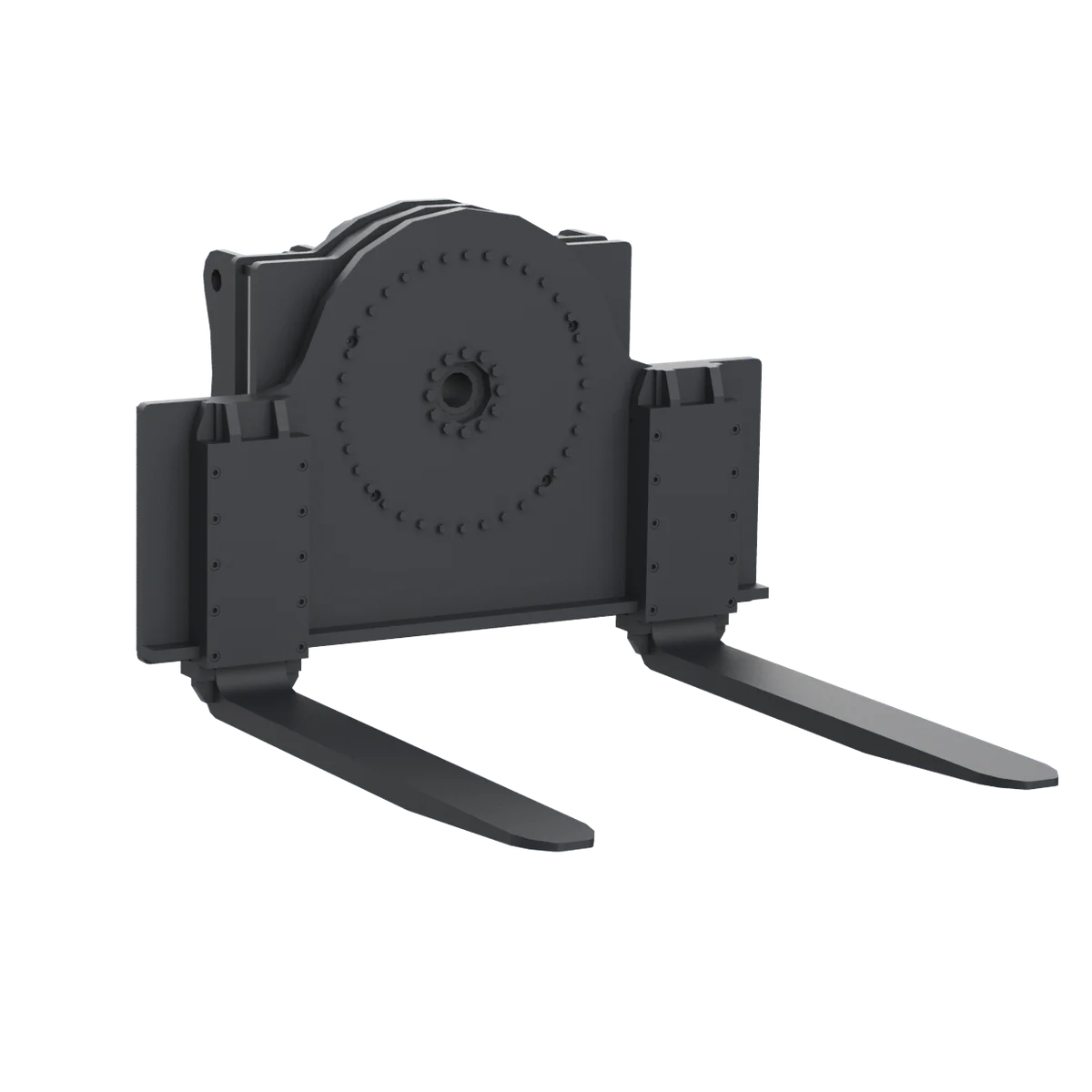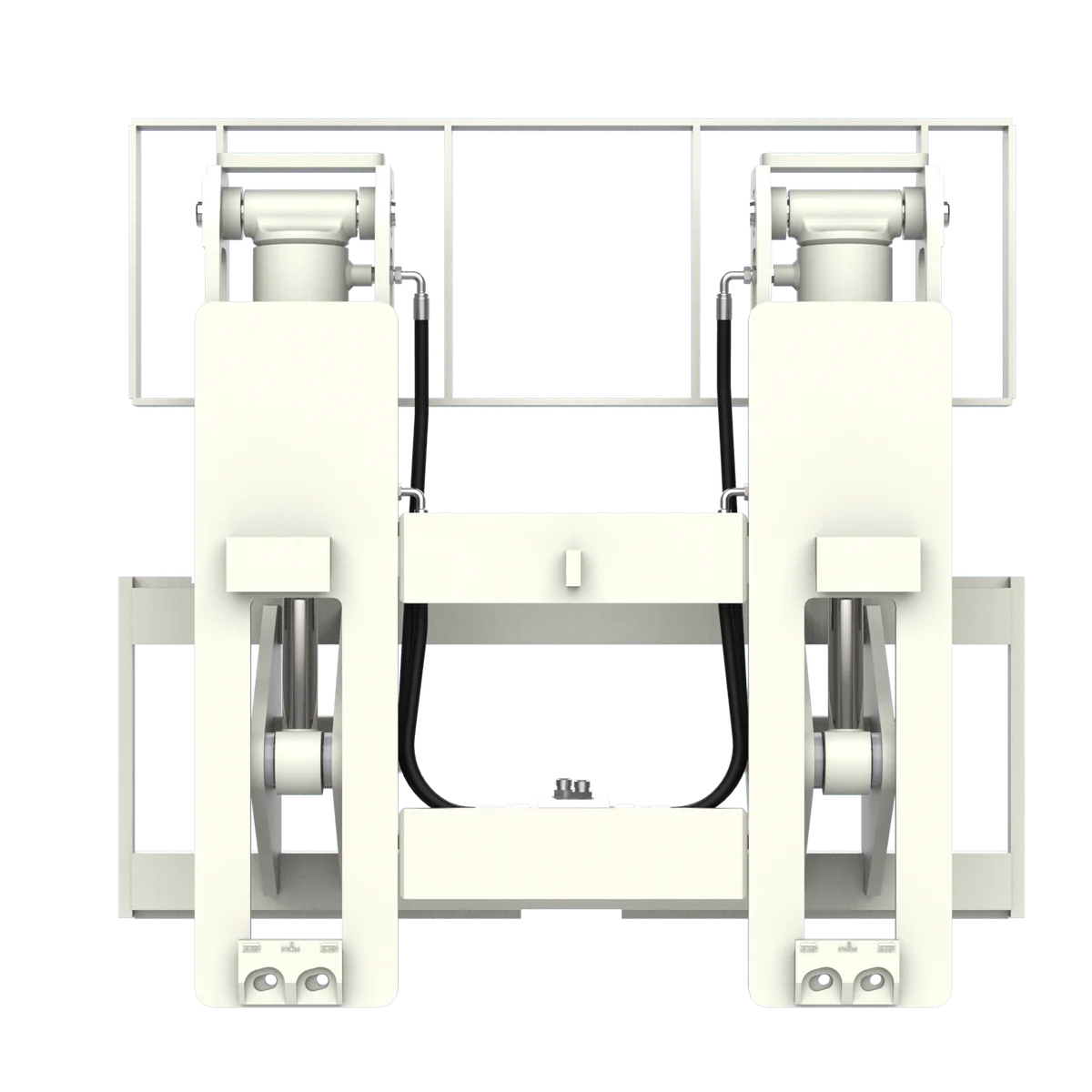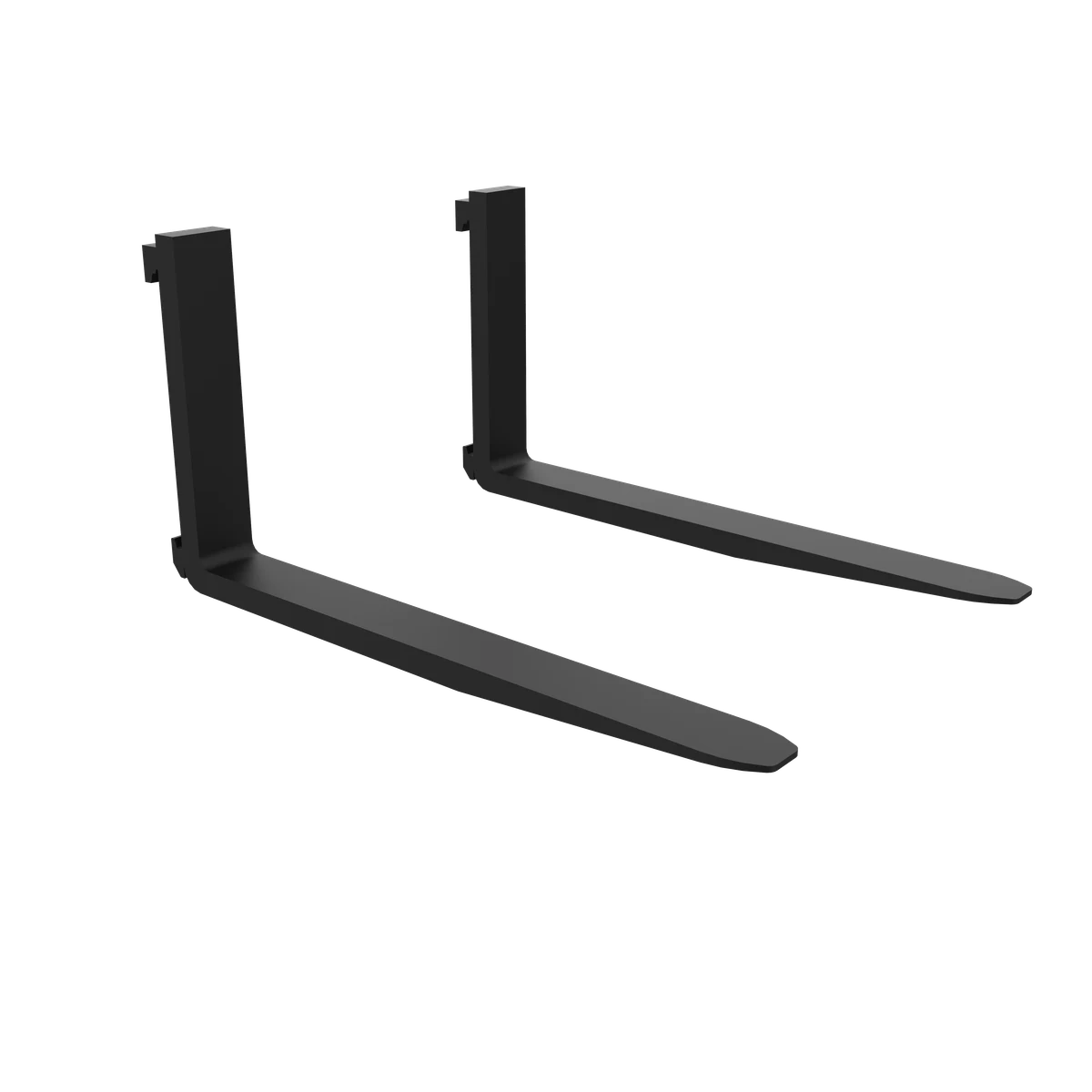

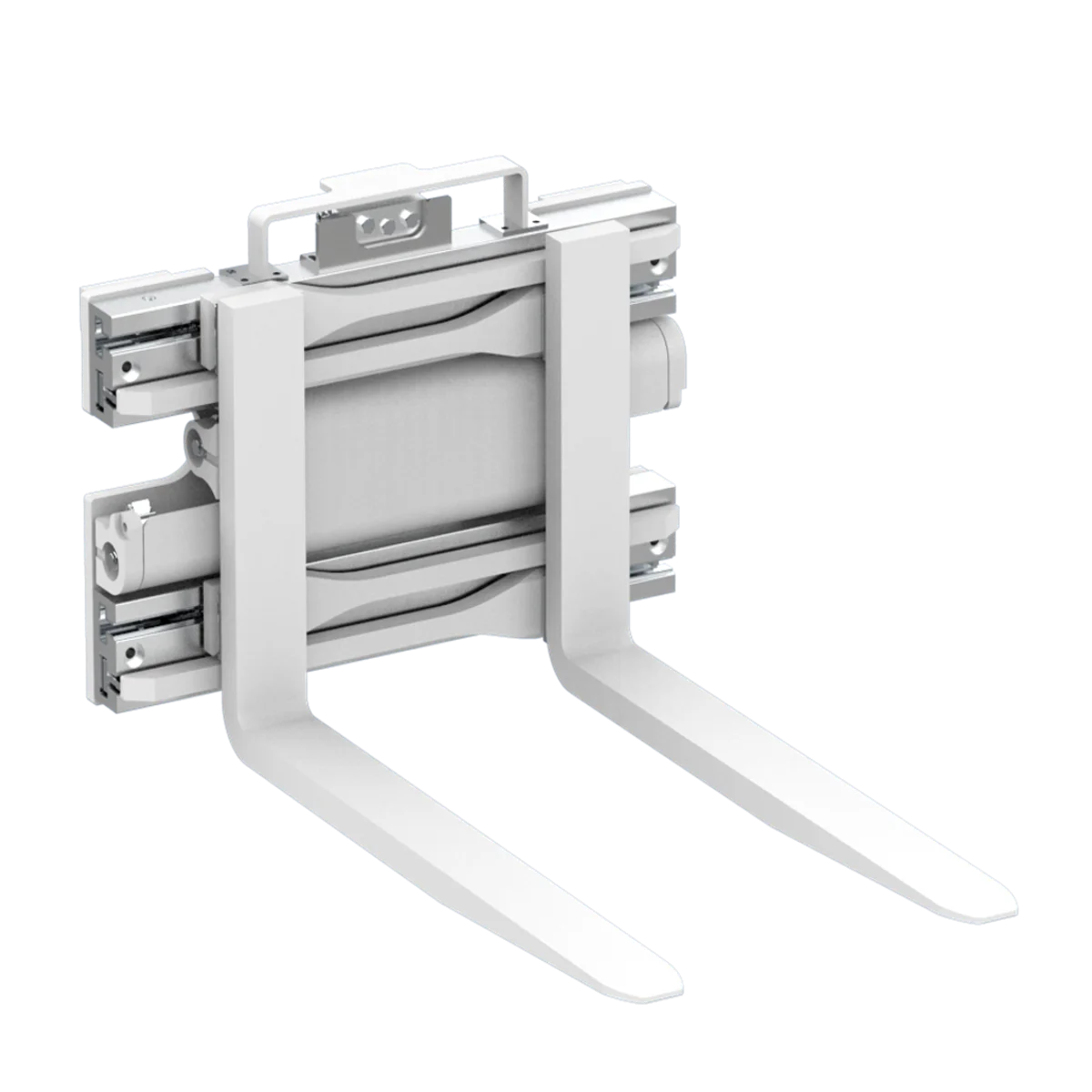
A fork clamp is a hydraulic forklift attachment that replaces the standard carriage and forks with two powered arms. Instead of sliding a pallet onto fixed tines, the operator closes the arms around the load itself, then lifts, carries and — on revolving models — tips or turns it. That single change removes a whole class of handling problems: no pallet required, no load slipping off the tips, and no manual repositioning of the forks between picks.
For buyers comparing a fork clamp against a fork positioner, a bale clamp or a dedicated paper roll clamp, the decision usually comes down to three variables: what the load is, how wide it varies, and whether it needs to be rotated. This guide covers those variables in practical terms, using the configurations WONTONNE builds for export markets.
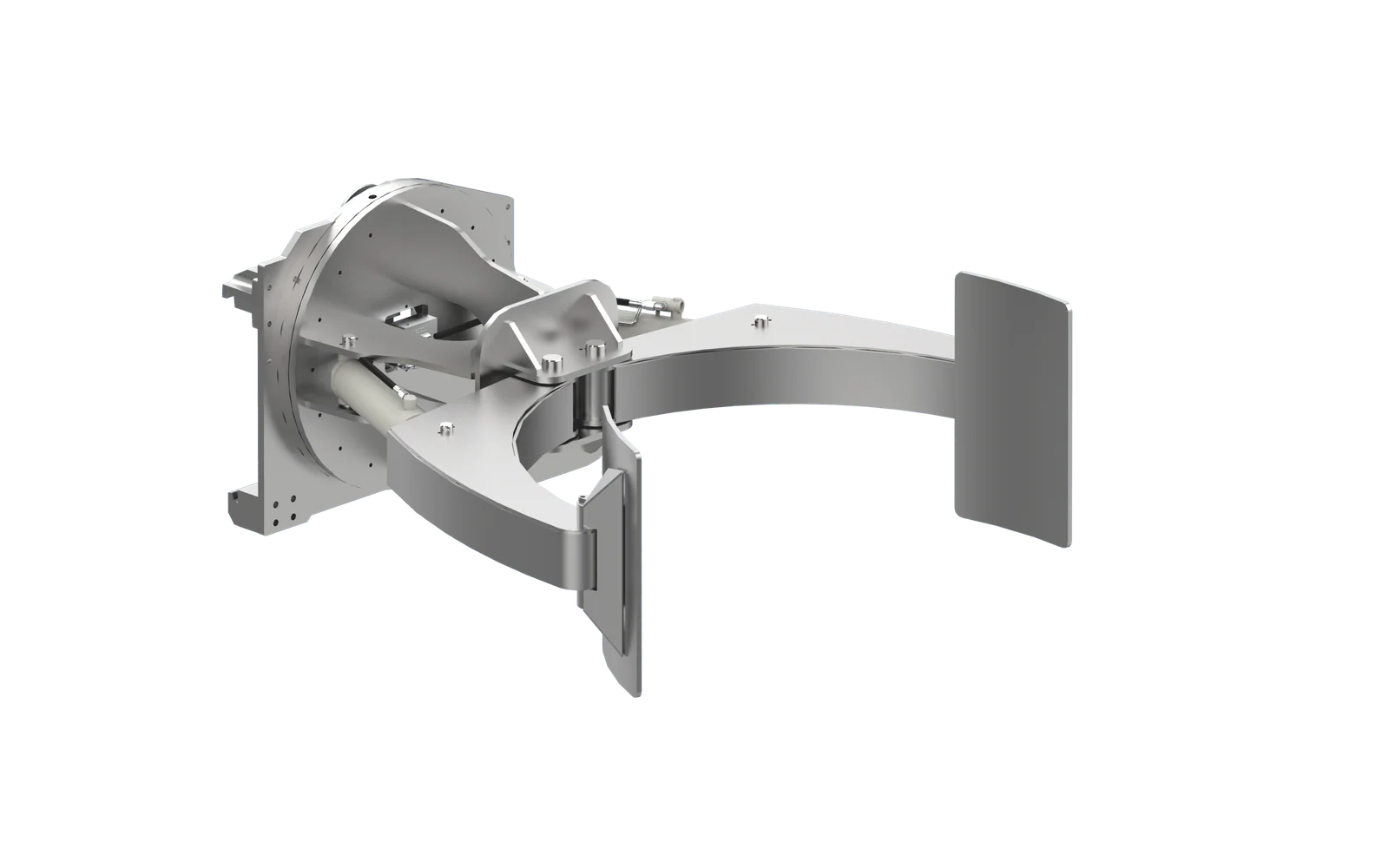
What a Fork Clamp Actually Does
Mechanically, a fork clamp is a carriage-mounted frame carrying two arms that open and close hydraulically. Because the arms are driven by cylinders fitted with check valves, clamping force is generated and held even if the operator releases the lever or hydraulic pressure fluctuates. That holding behaviour is what makes the attachment safe for loads that would otherwise relax, shift or spring open during travel.
In daily use, a fork clamp for forklift work performs two jobs at once:
- Clamping — gripping cartons, bales, crates, drums, tyres and other non-palletised goods between the arms.
- Positioning — adjusting arm spacing to match the load or the pallet, which speeds up handling and reduces wear on wooden pallets because the forks no longer have to be scraped in and out of entry gaps.
On revolving versions the frame also rotates, so the same attachment can tip a bin, empty a container or turn a bale for a cleaner stack. That is the difference between a plain clamp and a rotating fork clamp, and it is usually the first specification question a buyer should answer.
Revolving Fork Clamps: Clamp, Position and Turn
The WONTONNE Fork Clamps (Revolving Type) are built around arms that tilt through 45° and 90°, letting the operator handle cargo directly or on a pallet, clamp and turn bales and cartons, and work comfortably in tobacco, paper, chemical fibre, port and recycling environments. Capacities in this range run up to 2300 kg, with load centres typically at 600 mm and mounting classes covering ISO 2A and ISO 3A.
Two design details matter more than they appear on a datasheet. First, arm travel: the revolving fork clamp range spans roughly 410 mm to 1750 mm of opening depending on the model, which determines the smallest and largest load the attachment can grip confidently. Second, effective thickness — the depth the attachment adds in front of the carriage — which eats into residual capacity and into the space available in a container or trailer.
For lighter, more specialised rotation work, the Turnaforks use a carrying part that turns 45° and 90° for palletised products, barrels, cylindrical bodies, grid boxing and bales, with capacity up to 2000 kg on ISO 3A mounting.
When a Fork Clamp Is the Wrong Attachment
Fork clamps are versatile, but they are not universal. If the load is a single paper roll handled at high frequency, a purpose-built roll clamp will generally give better contact geometry, better visibility and less roll damage. WONTONNE builds these as a separate family — for example the 12G Paper Roll Clamp for rolls up to 1200 kg, the 24G Paper Roll Clamp up to 2200 kg, and the 20G Paper Roll Clamp (Fixed Short Arm) with 360° rotation and a fixed short arm for a clear field of vision.
Similarly, if the load is a billet or a forged component at high temperature, a dedicated Forging Clamp with a 150–650 mm arm range and 3000 kg capacity is the correct tool, not a general-purpose clamp.
The practical rule: use a fork clamp when load shapes and sizes vary across the working day. Use a dedicated clamp when one product family dominates the throughput and contact quality drives your damage rate.
Fork Clamp Specifications at a Glance
The table below summarises the clamp-type attachments in the WONTONNE range so buyers can compare capacity, load centre and mounting class before requesting a quotation.
| Attachment | Capacity | Load centre | Mounting class | Typical use |
|---|---|---|---|---|
| Fork Clamps (Revolving Type) | up to 2300 kg | 600 mm | ISO 2A / ISO 3A | Bales, cartons, palletised and non-palletised cargo |
| Turnaforks | up to 2000 kg | 500 mm | ISO 3A | Barrels, cylindrical bodies, grid boxing |
| Forging Clamps | 3000 kg | 500 mm | ISO 3A | Billets, bars, forged components |
| 12G Paper Roll Clamp | up to 1200 kg | 575–800 mm | ISO 2A | Paper rolls, fixed or positioned arm |
| 24G Paper Roll Clamp | up to 2200 kg | 575–700 mm | ISO 2A / ISO 3A | Standard paper roll handling |
Note that load centre and capacity move together: a clamp rated at a short load centre will not carry the same mass at a longer one. Always match the rating to the actual centre of gravity of your load, not to the rating plate alone.
How to Specify the Right Fork Clamp
1. Define the load envelope
Measure the smallest and largest items you intend to clamp, then add margin. A clamp that only just reaches around your widest load will be operated at its limit all day, which shortens cylinder and arm life.
2. Check residual capacity on the truck
Every attachment adds weight in front of the carriage and moves the load centre forward. Subtract the attachment weight and the lost capacity from the truck's rated capacity before you commit. A revolving fork clamp weighing several hundred kilograms can remove a meaningful share of a 2.5-tonne truck's usable capacity.
3. Decide on rotation
If you only ever pick, carry and set down, a non-rotating clamp is simpler and lighter. If you tip, empty, turn or stack at an angle, specify a rotating fork clamp or a Turnafork from the start; retrofitting rotation is not an option.
4. Match the mounting class
Mounting class must match the truck carriage. ISO 2A and ISO 3A are the common classes in this range, and several models are offered in both so the same attachment family can be fitted across a mixed fleet.
5. Confirm hydraulic supply and visibility
Clamps need a hydraulic circuit with adequate flow and pressure, and the operator needs a clear sightline to the load. Fixed short arm designs and carefully routed hoses both help here.
Frequently Asked Questions
What is the difference between a fork clamp and a fork positioner?
A fork positioner moves the forks sideways to fit different pallet widths but does not grip the load. A fork clamp does both: it positions the arms and applies clamping force to hold the load itself. Many fork clamps are described as 2-in-1 attachments for exactly this reason.
Can a fork clamp handle loads without a pallet?
Yes. Palletless handling is one of the main reasons to specify a clamp. Cartons, bales, crates, tyres and drums can be gripped directly between the arms, which removes pallet purchase and repair costs from the operation.
How do I choose between a revolving fork clamp and a paper roll clamp?
Choose a revolving fork clamp when load shapes vary and you need general clamping plus 45° or 90° tilt. Choose a paper roll clamp when rolls are your core product and you need contact geometry and visibility optimised for cylindrical goods. If both apply, run separate attachments rather than compromising on one.
To compare the full clamp and roll handling range, see all forklift attachments, or send your load details and truck model to our team via Contact WONTONNE for a specification and quotation.