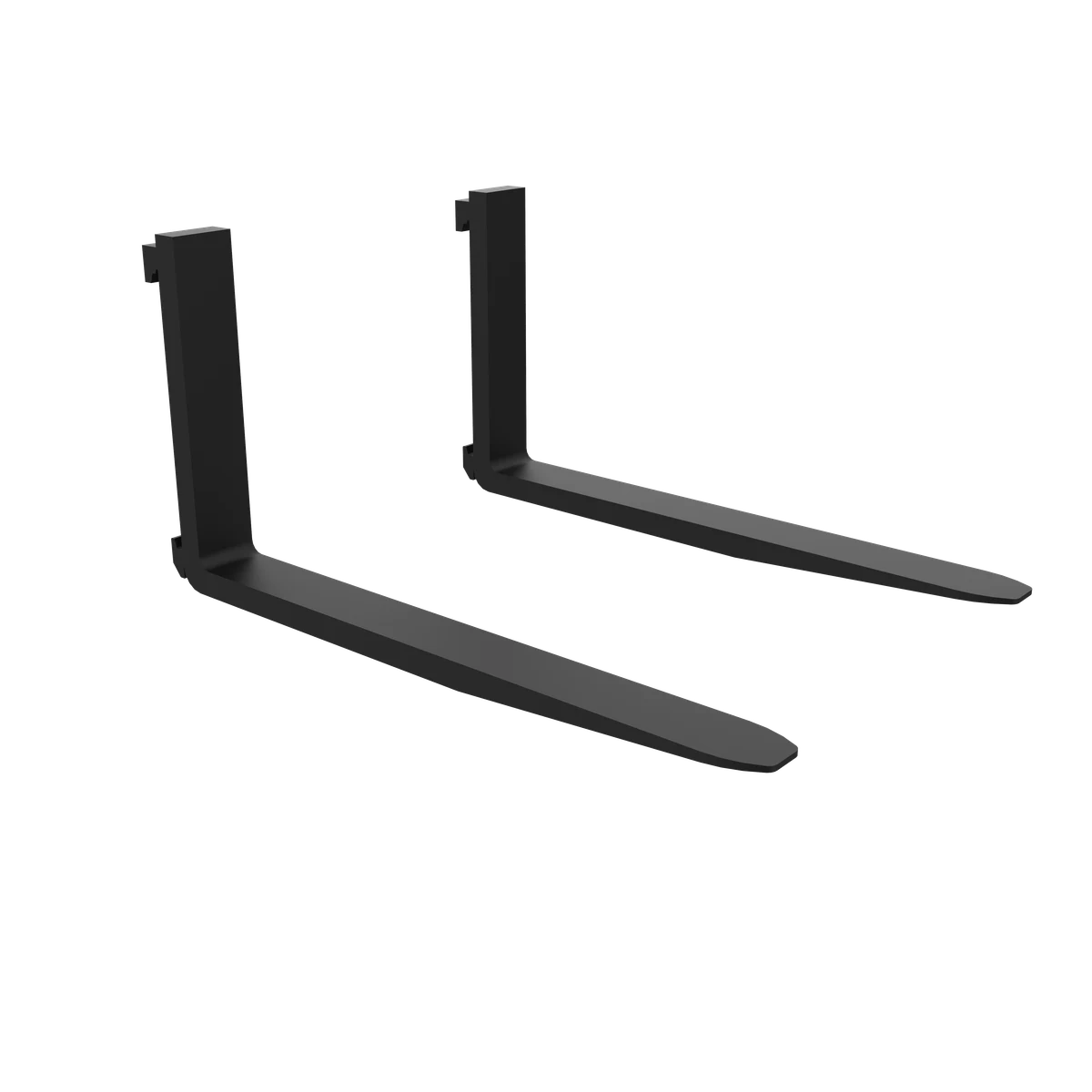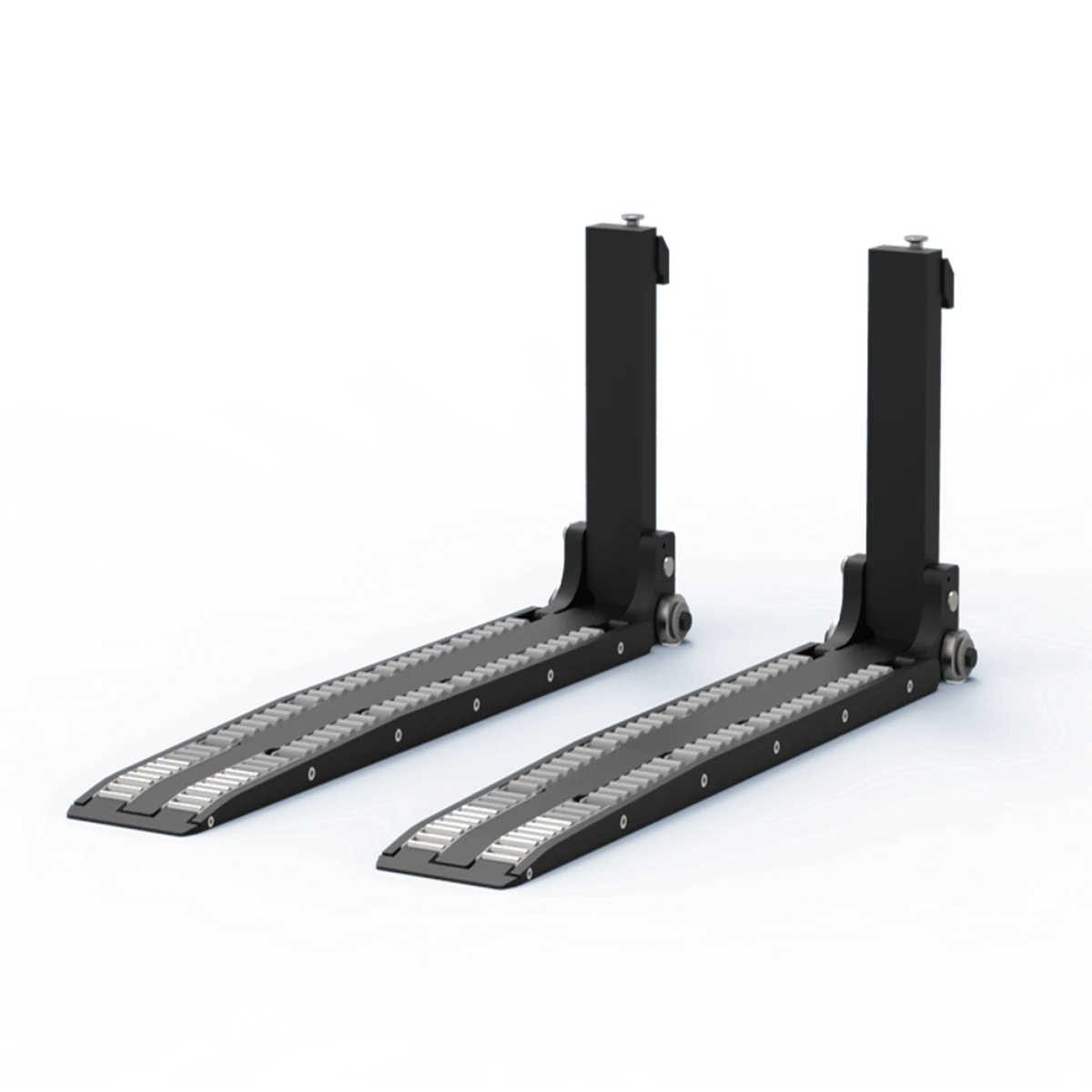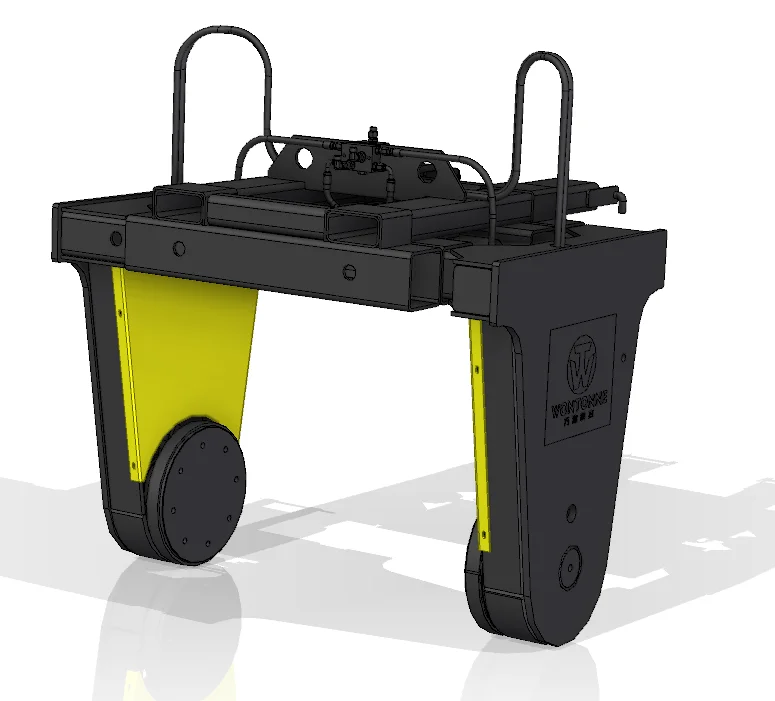

A forklift bucket attachment is a bulk material scoop that mounts to a forklift so the truck can pick up, carry and dump loose loads instead of only palletised ones. It converts a counterbalance or rough-terrain truck into a front-end loader that handles sand, gravel, coal, grain, scrap, mulch and construction debris. There are two mainstream mounting styles — the slip-on bucket that slides over the existing tines, and the quick-tach bucket that pins to the carriage — plus a third option in which a bucket is fitted to hinged forks integrated into the mast. Each has a different effect on residual capacity, dump height and how quickly the truck can be switched back to pallet work.
What a forklift bucket attachment actually does
A conventional forklift is a lifting machine with a narrow load centre and a mast designed for vertical travel. A bucket changes the job description: the truck now has to break out material from a pile, hold it in a curved shell while travelling, and tip it out at a controlled point. That demands three things the bare carriage does not provide — a scoop geometry, a tipping mechanism, and enough hydraulic flow to move both.
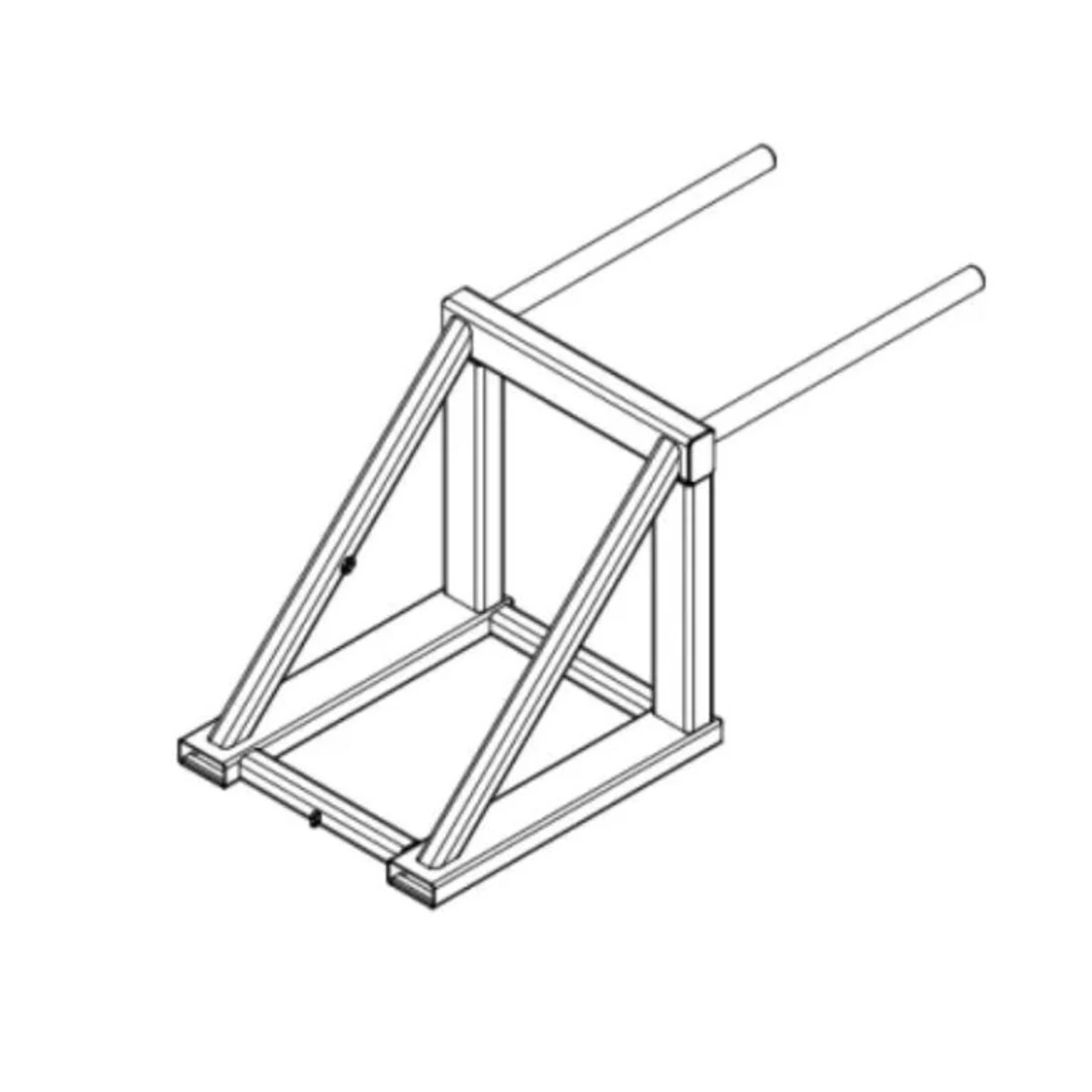
On slip-on designs, the bucket body carries its own hinge and a hydraulic cylinder that rotates the shell forward to dump and back to carry. The tines pass through sleeves welded to the bucket back, and a safety chain or pin arrangement ties the attachment to the carriage so it cannot creep forward under load. On quick-tach designs, the bucket hooks and pins directly to the carriage plate, which removes the tines from the load path entirely and gives a more rigid connection.
The practical result is a machine that can do light excavation, yard clean-up, snow clearing, aggregate spreading and waste consolidation without a second prime mover on site. For operations that already run forklifts, that is often cheaper than adding a skid steer or wheel loader to the fleet.
Slip-on versus quick-tach: choosing the mounting style
The mounting decision usually comes down to how often the truck needs to change roles and how heavy the material is.
- Slip-on buckets slide over the forks and are held by the tines plus a safety chain or clamp. They are the fastest way to add a bucket to an existing truck because nothing has to be removed from the carriage. Changeover back to pallet handling takes minutes.
- Quick-tach buckets pin to the carriage or to a quick-tach frame, so the forks come off first. The connection is stiffer and the bucket sits closer to the mast, which preserves more residual capacity and gives better breakout force at the cutting edge.
- Hinged fork buckets are a different architecture. The forks are embedded in the mast rather than hung on a carriage, and an optional bucket expands them to handle bulk material such as coal, gravel and sand. Because the assembly is integrated, effective thickness is smaller and load loss is reduced, but the bucket is a dedicated configuration rather than a quick swap.
How a bucket changes your truck's real capacity
Every attachment adds weight in front of the mast and pushes the load centre forward. A bucket is heavier than forks, and its centre of gravity sits further out, so the number on the data plate is not the number you can lift with the bucket fitted.
Two figures drive the calculation. The first is attachment weight — the bucket itself, plus any quick-tach frame. The second is load centre, the horizontal distance from the fork face to the centre of the load. A bucket of loose aggregate has a load centre well beyond the standard 500 mm used for pallet ratings, and the further out it sits, the more capacity you lose. The correct procedure is to take the truck's capacity at the actual load centre with the attachment fitted, then subtract the attachment weight from that figure. The remainder is what you can safely scoop.
The same logic applies to dump height. A bucket adds vertical depth below the carriage, so the maximum height at which you can clear a truck bed or hopper wall is lower than the mast's rated lift height. Check the geometry before assuming you can tip over a high-sided container.
Hydraulics and control
A hydraulic bucket needs a third function — a line and control valve that the standard two-function mast does not have. Some trucks are plumbed for it from the factory; others need an auxiliary valve section added. Flow rate matters too: a low-flow truck will move the bucket slowly, which is tolerable for occasional yard work but frustrating in a production loading cycle. Confirm the auxiliary flow available at the carriage before committing to a bucket as the primary tool.
Where buckets fit in a wider attachment strategy
A bucket is one answer to a specific question: how do I move loose material with a truck I already own? Other attachments answer different questions, and the sensible approach is to decide which handling problems are recurring enough to justify a dedicated attachment.
| Handling problem | Attachment type | What it changes |
|---|---|---|
| Loose bulk material — sand, gravel, coal, debris | Forklift bucket attachment or hinged forks with bucket | Adds scooping and dumping; converts the truck to a loader |
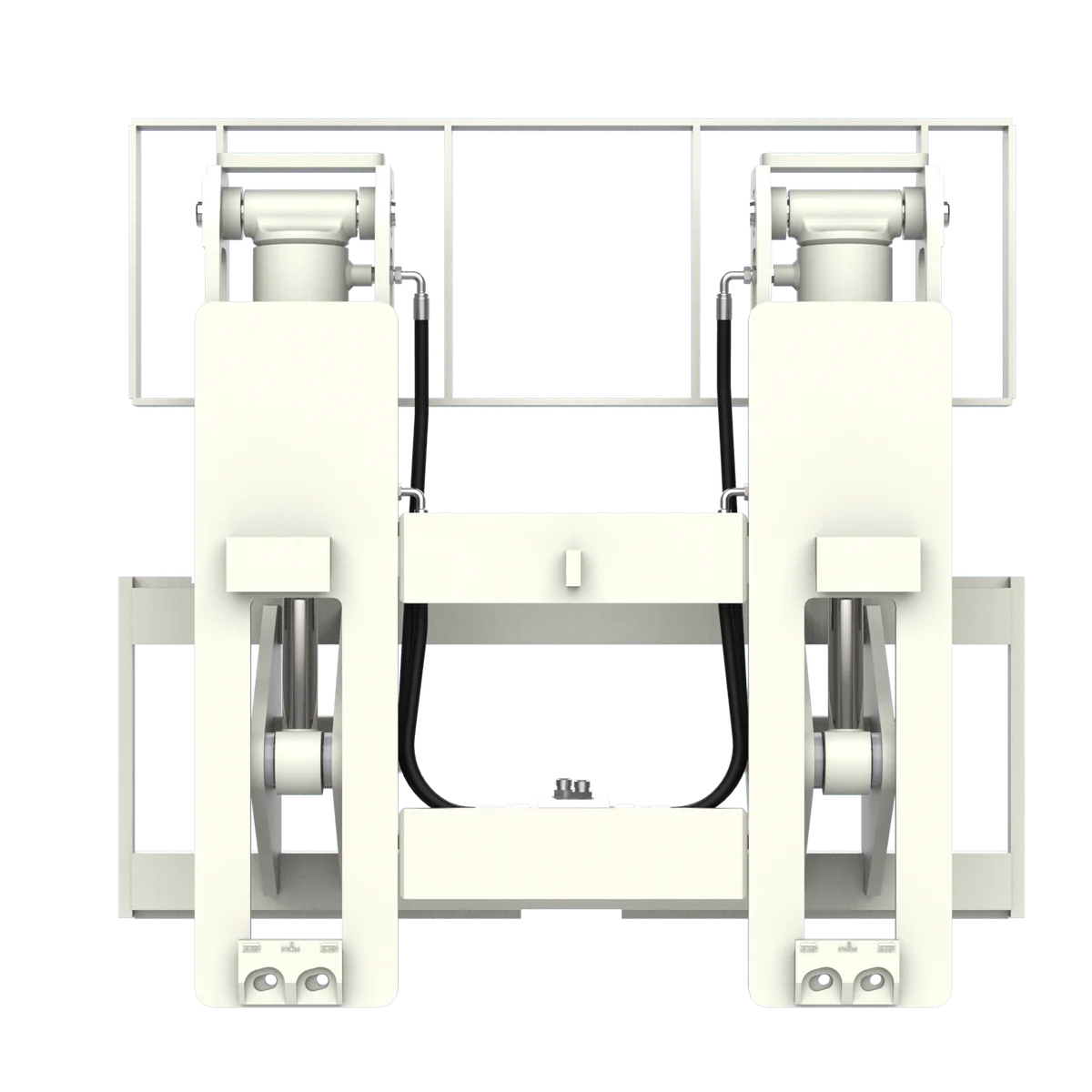
| Pallet placement accuracy in racking | D Series Sideshifters or F Series Sideshifters | Lateral movement of 100 or 150 mm left and right, so the truck does not have to reposition |
| Roll-shaped goods — paper, film, textile rolls | 12G Paper Roll Clamp, 20G Paper Roll Clamp (Fixed Short Arm), 24G Paper Roll Clamp | Clamps and rotates the roll instead of supporting it on tines |
If bulk material is a daily task and roll or pallet handling is occasional, a bucket or hinged fork configuration may be the right primary setup. If bulk work is seasonal — snow clearing, storm clean-up, one construction phase — a slip-on bucket that lives in the yard and goes on when needed is usually the better economics. The full range of options is listed under all forklift attachments.
Specifying a bucket attachment: a practical checklist
- Confirm the carriage class. The attachment must match the ISO mounting class of the truck's carriage. A bucket built for one class will not pin to another without an adapter, and adapters add thickness and cost capacity.
- Establish the material and its density. Sand, gravel, coal and mulch behave very differently at the cutting edge. Heavier, more abrasive material calls for a thicker shell and a reinforced edge.
- Calculate residual capacity at the bucket's load centre. Do this before you buy, not after. Include the bucket weight and any quick-tach frame in the sum.
- Check dump height against your tallest target. Measure the hopper, truck bed or wall you need to clear.
- Verify hydraulic availability. Third function, valve section, flow and pressure at the carriage.
- Decide on changeover frequency. Frequent swaps favour slip-on; permanent bucket duty favours quick-tach or hinged forks.
- Plan the safety chain or retention. Slip-on buckets must be secured so they cannot slide off the tines during a dump cycle.
Operating notes that prevent damage
Buckets are not excavator buckets. Breaking out compacted material by ramming the pile puts the shock load into the mast, carriage and hydraulic system, none of which are designed for it. Approach the pile at low speed, let the cutting edge bite, and curl the bucket rather than driving into the material. Keep the load low while travelling, and never dump with the mast extended forward beyond what the load chart allows. On rough terrain, reduce speed further — the bucket's overhang amplifies any bounce into the mast.
Frequently asked questions
Can any forklift take a bucket attachment?
Most counterbalance and rough-terrain trucks can, provided the attachment matches the carriage class and the truck has an auxiliary hydraulic function for the dump cylinder. The limiting factors are residual capacity at the bucket's load centre and available hydraulic flow, not the truck brand. Very small or narrow-aisle warehouse trucks are usually a poor fit because their rated capacity is consumed by the bucket's own weight.
How much capacity do I lose when I fit a bucket?
You lose the bucket's own weight plus the capacity that the forward load centre costs you. Both figures come from the truck's load chart, not from a rule of thumb — the loss depends on the truck's rating, the bucket's weight and how far forward the load sits. Always work from the chart at the actual load centre with the attachment fitted.
Is a bucket or hinged forks better for bulk material?
Hinged forks keep the attachment closer to the mast, which reduces effective thickness and load loss, and the bucket option expands them to handle coal, gravel and sand. That suits operations where bulk handling is a permanent part of the job. A slip-on or quick-tach bucket suits operations that need to switch between pallet work and bulk work, because it can be removed and the truck returned to standard fork duty. The right answer follows from how often the truck changes roles.
Talk to WONTONNE about your attachment configuration
WONTONNE has manufactured forklift attachments and material handling equipment for more than 20 years, supplying distributors and end users worldwide. If you are weighing a bucket against hinged forks, or need help matching an attachment to your carriage class and load chart, send us your truck details and the material you intend to handle. Our team will confirm the mounting, the hydraulic requirements and the capacity implications before you commit. Contact WONTONNE to start the specification.