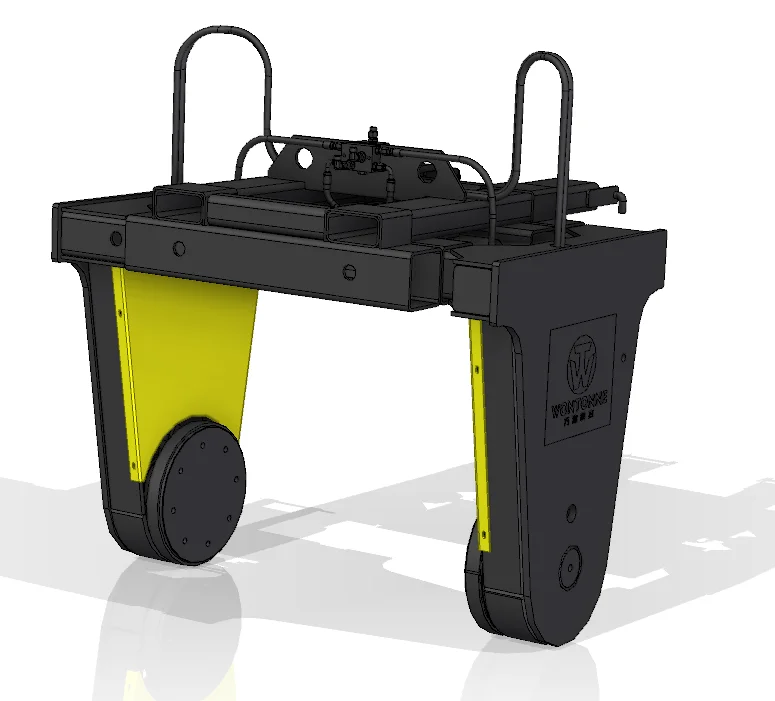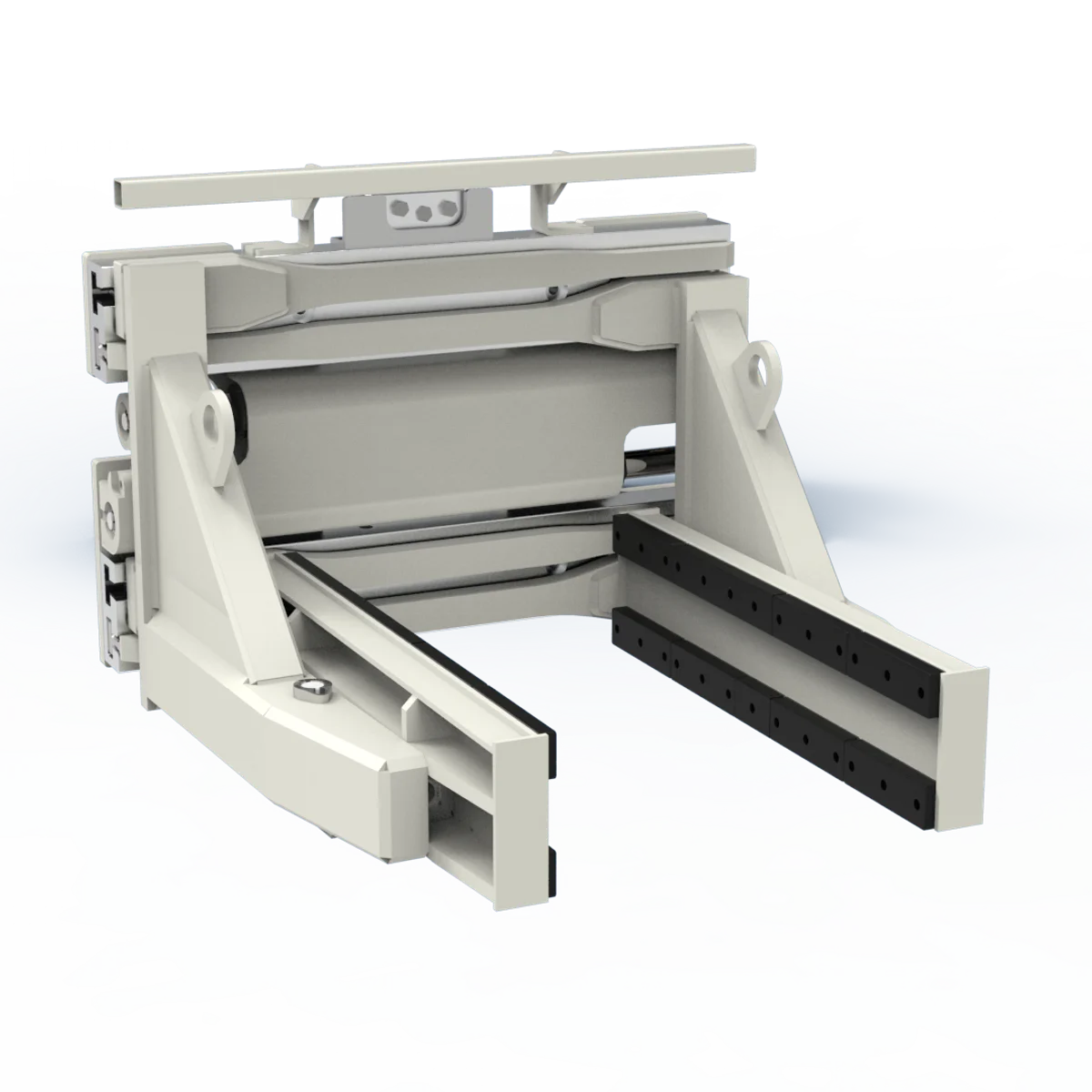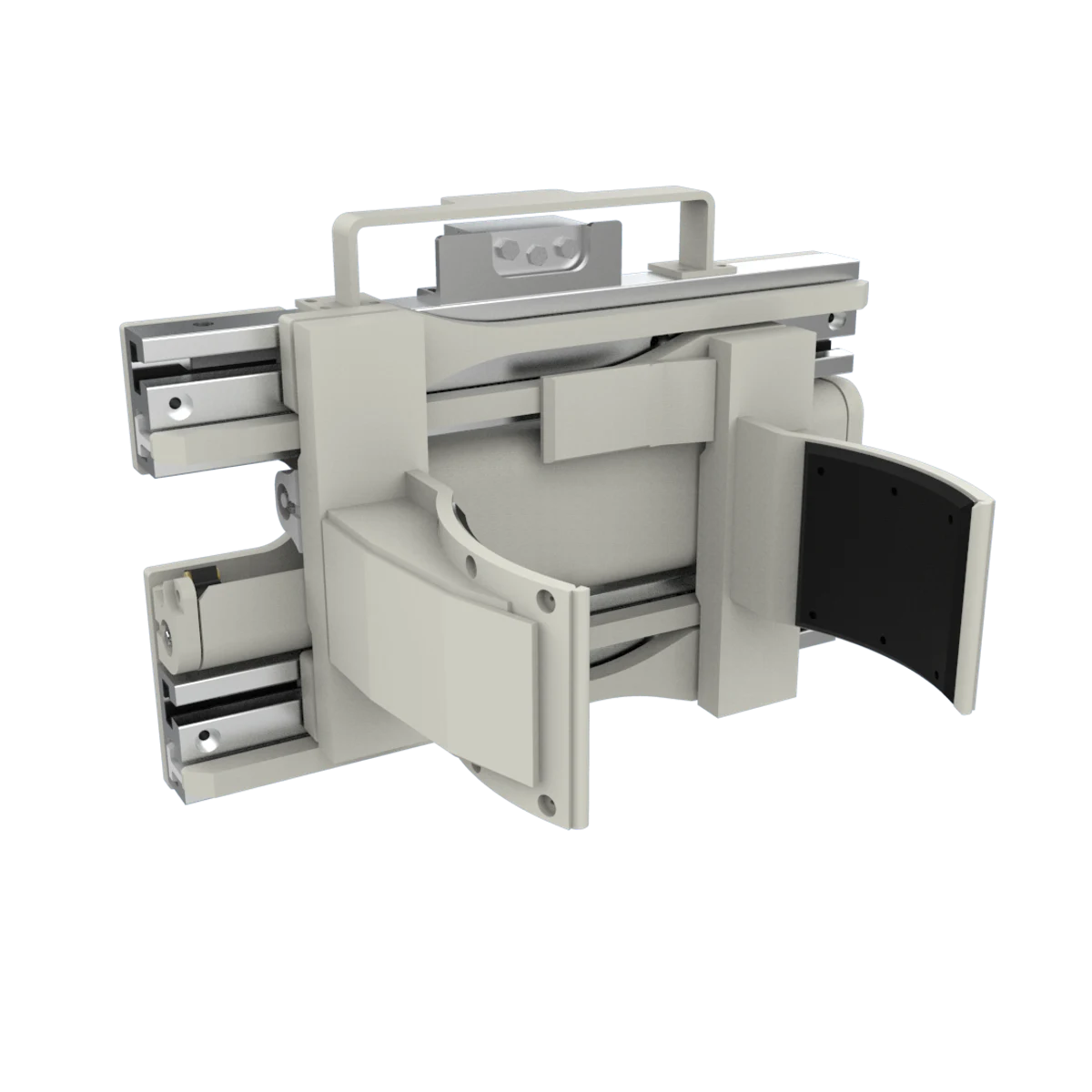

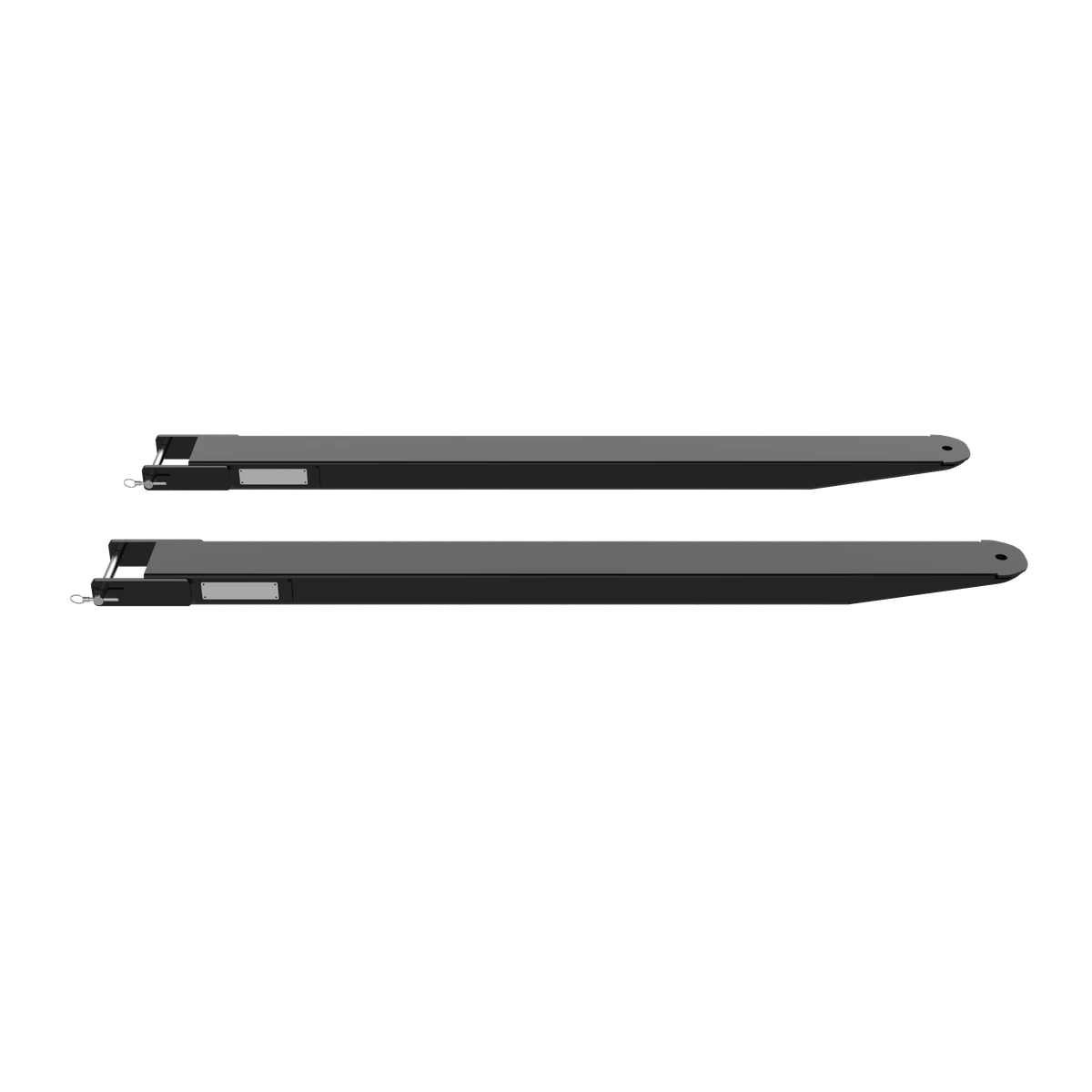
A fork extender is a sleeve or an integral hydraulic attachment that lengthens the effective fork of a lift truck so it can carry loads longer than the original tines. Slip-on extenders slide over the existing forks and are held by a retaining pin or strap; telescopic forks build the extension into the carriage as a hydraulically operated inner section. Both approaches solve the same problem — a load that overhangs the fork tip — but they change capacity, load centre and operating procedure in different ways. This guide explains how each type works, how to size one, and where the real risks sit.
What a Fork Extender Does — and What It Does Not Do
A fork extender increases reach along the length of the fork. It does not increase the rated capacity of the truck, and in most cases it reduces the usable capacity of the combination. The load is carried further from the carriage, so the load centre moves outward; the truck's rating plate is based on a specific load centre, and every millimetre of extra distance reduces the safe lifting figure.
Slip-on extenders also add their own weight to the fork assembly. That weight sits on the tines and must be counted as part of the load. A common mistake is to check the load weight against the truck's rated capacity and ignore the extender's own mass.
Used correctly, extenders are a practical way to handle:
- Long timber, pipe, tube and extrusion bundles
- Wide furniture, panels and prefabricated frames
- Multiple pallets handled in a single lift
- Rolls of carpet, fabric and paper that need a broad support surface
- Loads that must be reached across a truck bed or into a rack bay
Types of Fork Extender
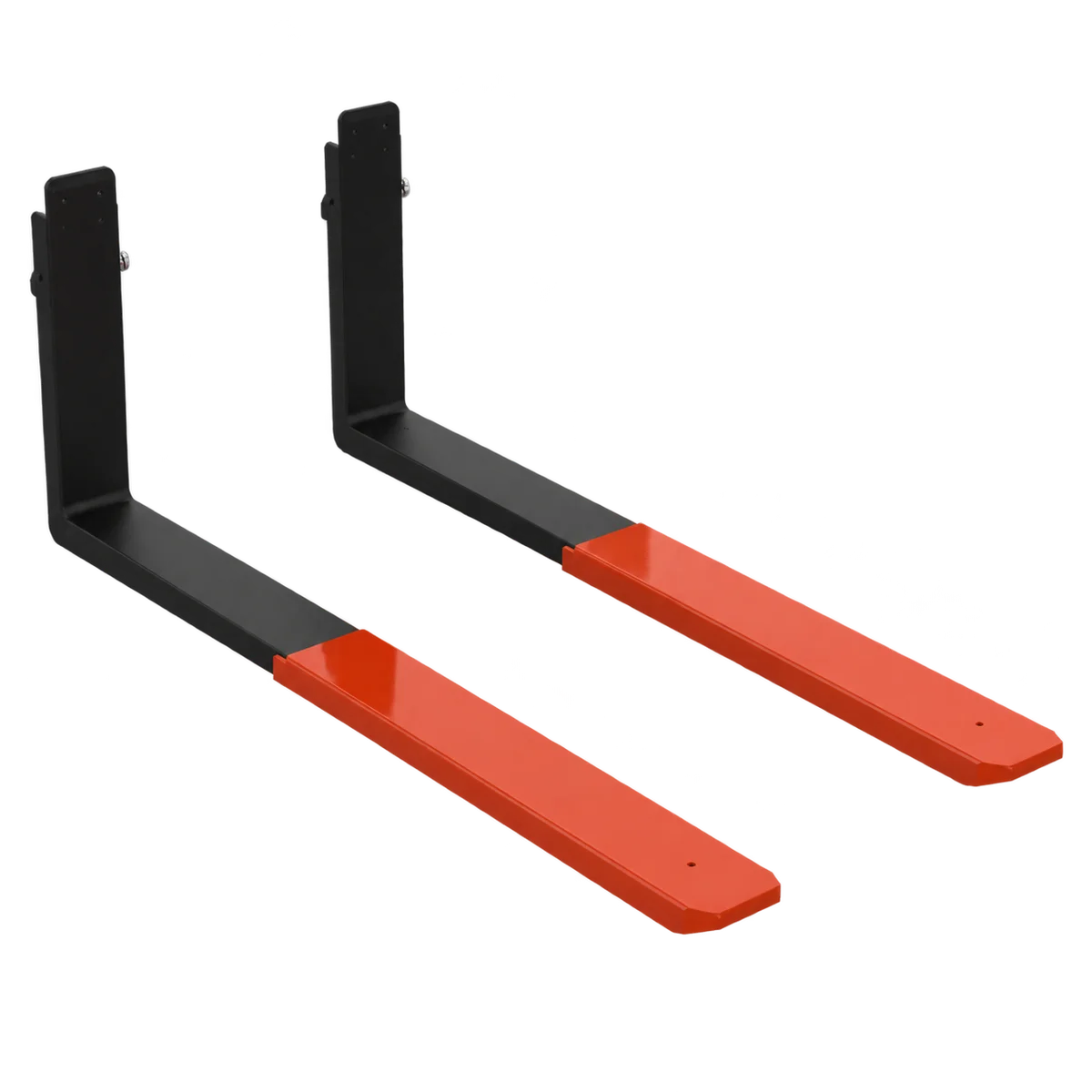
Closed-bottom slip-on extenders
The closed-bottom design is a fully welded sleeve that fits over the fork from the tip. It is the general-purpose option for long, flat loads and gives the tine a continuous bearing surface. The WONTONNE Forklift Extension is rated to 8500 kg and is available in galvanised or painted finish, with model families covering 100x45 mm and 140x55 mm fork sections.
Open-bottom extenders
An open-bottom extender leaves the underside of the sleeve open. This reduces weight, allows the fork to be inspected without removing the sleeve, and suits applications where debris or product build-up must fall clear. The Fork Extension (Open Bottom) is built to the same 8500 kg rating and is often specified when a customer needs a specific fit rather than a catalogue size.
Telescopic forks
Telescopic forks are a hydraulic attachment rather than a sleeve. The inner fork section extends under hydraulic power, so the operator can adjust reach from the seat instead of changing attachments. The WONTONNE Telescopic Forks extend from a retracted 1350 mm to 2350 mm — a 1000 mm stroke — with ISO 2A and ISO 3A mounting options and capacities up to 2500 kg. They are used for double-deep racking and for stacking palletised goods on the far side of a truck, and they remove the need to keep a separate set of slip-on extensions on site.
Fork Extender Sizing: The Numbers That Matter
Three dimensions decide whether an extender is safe and useful: the fork section it must fit, the extended length you need, and the resulting capacity at the new load centre.
| Consideration | What to check | Why it matters |
|---|---|---|
| Fork section | Width and thickness of the existing tine | The sleeve must slide on without binding and without excessive play |
| Extended length | Load length plus a margin for the retaining pin | Too short leaves the load unsupported; too long wastes capacity |
| Load centre | Distance from carriage face to load centre | Capacity falls as load centre increases |
| Extender weight | Mass of the sleeve itself | Counts as part of the load on the tines |
| Retention | Pin, strap or heel stop | Prevents the sleeve creeping forward during travel |
WONTONNE extension families such as FE1-16 through FE1-24 and FE2-16 through FE2-18 are rated at 4500 kg at a 600 mm load centre, which gives a realistic starting point for matching a truck to a load. Always confirm the final figure against the truck's own rating plate with the extender fitted.
Safety Rules for Slip-On Extenders
- Never exceed the reduced capacity. Recalculate for the new load centre before the first lift.
- Fit the retention device every time. An unsecured sleeve can slide forward and drop the load.
- Keep the load centred. Off-centre loading on a long sleeve twists the fork and the carriage.
- Inspect for cracks and deformation. Check the weld at the heel and the retaining pin before each shift.
- Travel with the load low. A long load raises the centre of gravity and increases the tipping moment.
- Do not use an extender as a lever or a spreader. It is a load-bearing sleeve, not a rigging tool.
When an Extender Is Not the Right Answer
If the job is repetitive, the load is always the same length, and the truck spends most of its day on that task, a dedicated long fork is usually the better engineering choice. WONTONNE supplies Forklift Forks (ISO 4A Mount) for 5000–7000 kg trucks in a range of lengths, which avoids the capacity penalty of a sliding sleeve.
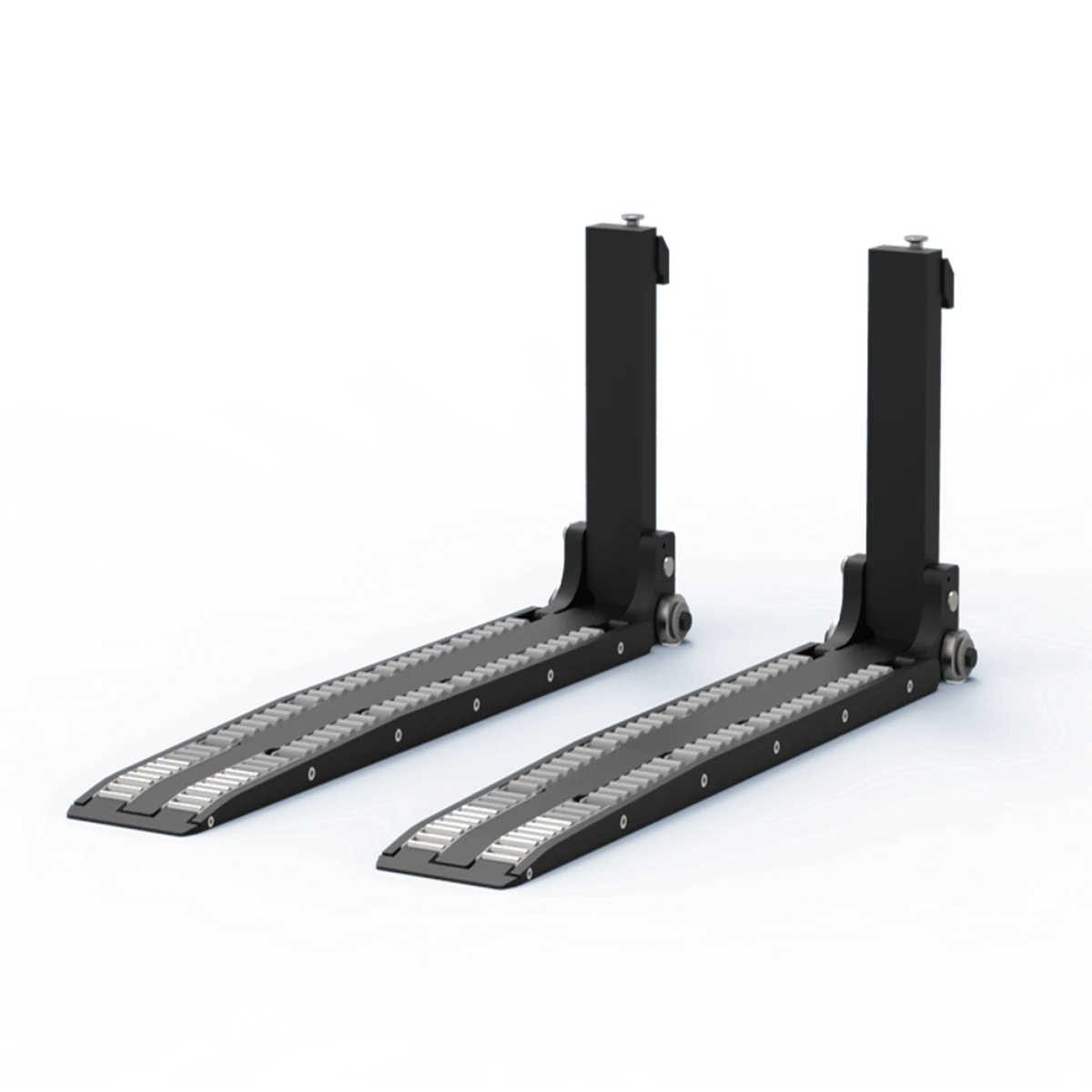
For pallet-less handling of cylindrical or smooth loads, a different attachment principle applies altogether. Roller Forks use an internal rolling mechanism to load and unload pallets and slip-sheets without a pallet, with capacities up to 2000 kg and ISO 2A or 3A mounting.
Where the working environment imposes additional requirements — food, pharmaceutical, cold chain, or a flammable atmosphere — the fork itself may need to be clad rather than extended. WONTONNE builds Stainless Steel Clad Forks for hygienic and corrosion-resistant duties, and Spark-Retardant Brass-Clad Forks for chemical, oil and gas, paint and solvent handling. Where none of the standard families fit, Custom Forks can be engineered to a specified length, width, thickness and mounting type.
Frequently Asked Questions
Does a fork extender reduce my forklift's lifting capacity?
Yes, in almost every case. The extender moves the load centre further from the carriage and adds its own weight to the tines. The truck's rating plate is calculated at a specific load centre, so a longer effective fork means a lower safe working load. Recalculate before the first lift and mark the new limit on the truck.
What is the difference between a fork extender and telescopic forks?
A fork extender is a sleeve that slides over an existing fork and stays fitted for the duration of the task. Telescopic forks are a hydraulic carriage attachment with an inner section that extends on demand — the WONTONNE range extends from 1350 mm to 2350 mm with a 1000 mm stroke. Telescopic forks cost more but remove the manual fitting step and the risk of a loose sleeve.
Can I use pallet fork extenders on any forklift?
Only if the fork section matches and the truck has enough remaining capacity. Extenders are made for common fork sections such as 100x45 mm and 140x55 mm, and the sleeve must fit the tine without binding. If the truck's rating at the new load centre is below the load weight plus the extender weight, the combination is not safe.
Next Step
Send us your fork section, the load length, the load weight and the truck's rated capacity, and we will confirm which extender family fits — or tell you honestly if a dedicated long fork or a different attachment is the better choice. WONTONNE has been manufacturing forklift attachments and material handling equipment for more than 20 years and exports to customers worldwide. Browse the full range at All forklift attachments or Contact WONTONNE with your specification.