
A vblock clamp is a workholding accessory, not a lifting attachment. It is the small clamp that presses a cylindrical workpiece down into the V-groove of a V-block so the part stays centred during milling, drilling, grinding or inspection. That is its entire job, and it does it well on a machine table. It has nothing to do with moving construction materials. If your load is a pack of concrete blocks or a stack of fired clay bricks, the tool you actually need is a forklift brick clamp — a completely different class of equipment with its own capacity, mounting and safety rules. This guide separates the two, then shows how to specify a brick clamp that will not wreck your truck's rated capacity.
What a vblock clamp actually does
A V-block is a block of cast iron or hardened steel machined with a 90° V-shaped groove. Because the groove is symmetrical, a round bar laid into it self-centres: the part's axis sits on the bisector of the V, so the operator can drill, mill or measure without indicating the part each time. The vblock clamp is the accessory that holds the part in that groove.
Typical vblock clamp behaviour:
- The clamp bridges the part and bolts or slots into the V-block body, pressing the workpiece into the groove.
- V-blocks are usually sold in matched pairs so long shafts can be supported at two points.
- Clamps are often slotted for quick installation and may be supplied in cast iron or hardened steel.
- Capacity is measured in workpiece diameter — small sets suit bars up to roughly 32 mm, larger sets go well beyond that.
This is precision workholding. The load is a machined part weighing a few kilograms, the environment is a machine shop, and the failure mode is a scrapped workpiece or a broken cutter. None of that transfers to a construction site.
Where the vblock clamp stops and a brick clamp begins
The confusion usually appears in search results, not on the shop floor. Both tools are called clamps, both grip something, and both are sold by industrial distributors — so buyers sometimes land on V-block pages while looking for a way to move bricks without pallets.
The dividing line is simple: a vblock clamp holds a part stationary against a machine tool. A forklift brick clamp grips a load, lifts it, carries it and releases it. One is a static workholding device; the other is a hydraulic attachment mounted on a lift truck.
If your problem is any of the following, you are in brick clamp territory:
- Bricks or blocks arrive without pallets and must be moved, stacked or loaded onto a truck.
- You are paying for pallets, or losing time returning them.
- Cubes of concrete block need to be rotated or tipped for placement.
- Fragile block faces are being chipped by forks or slings.
How a forklift brick clamp is specified
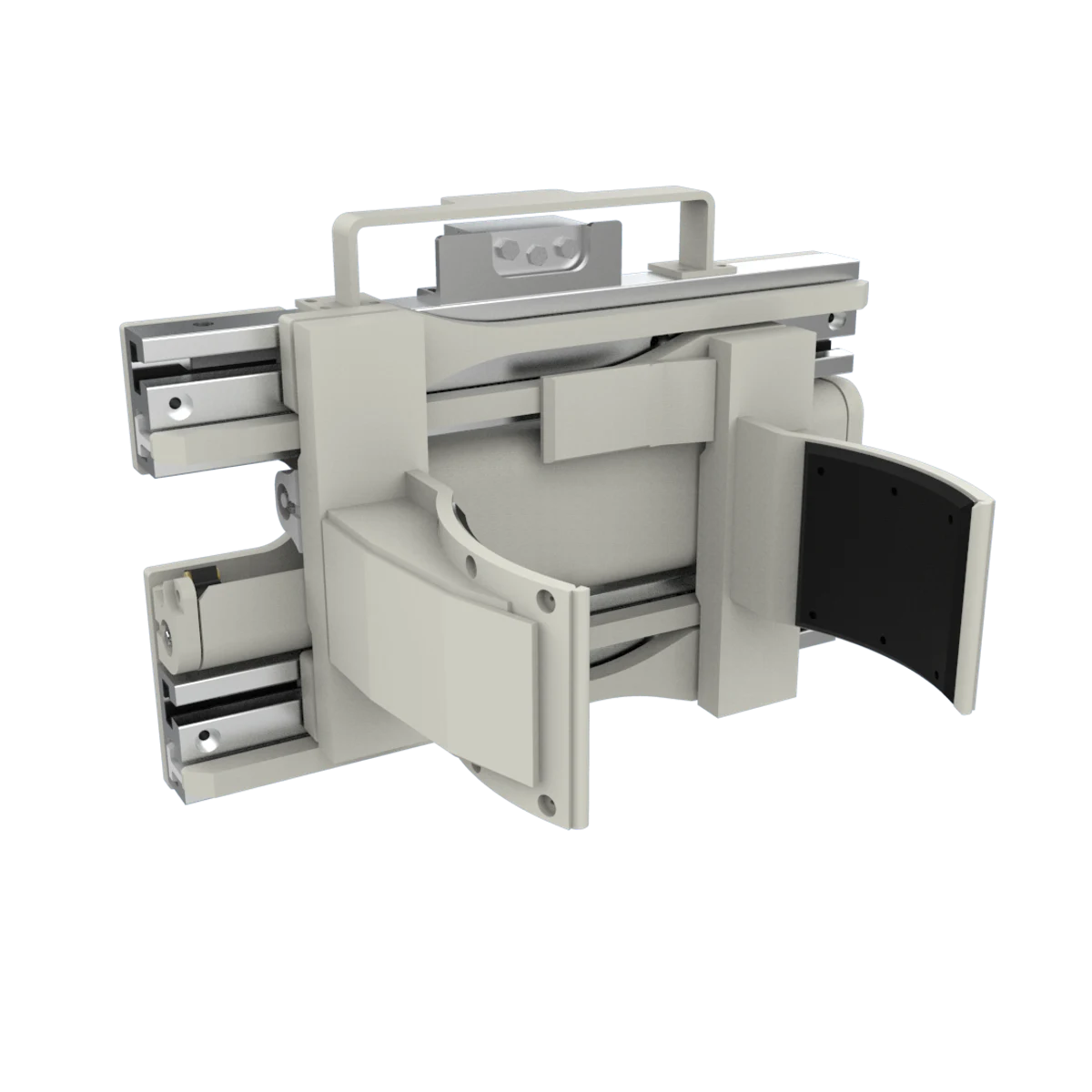
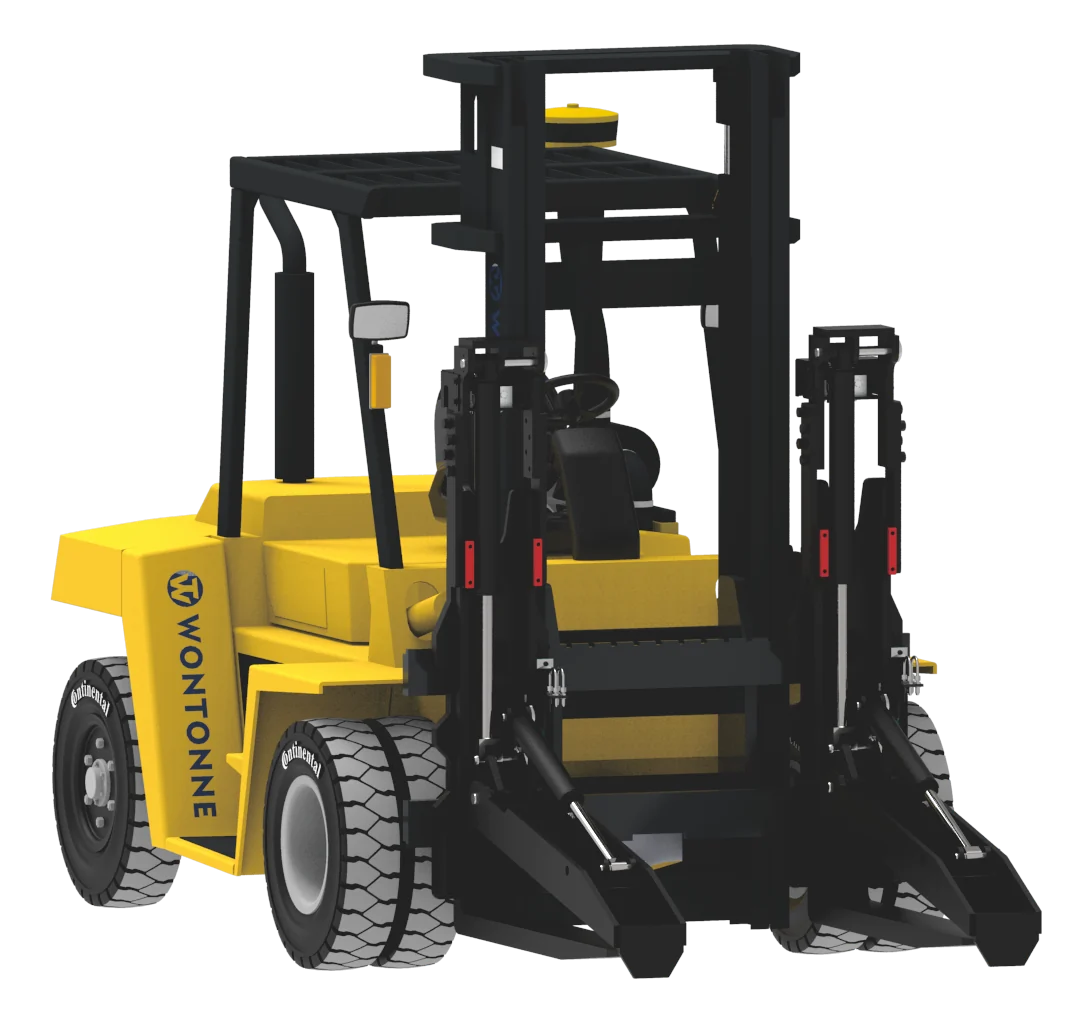
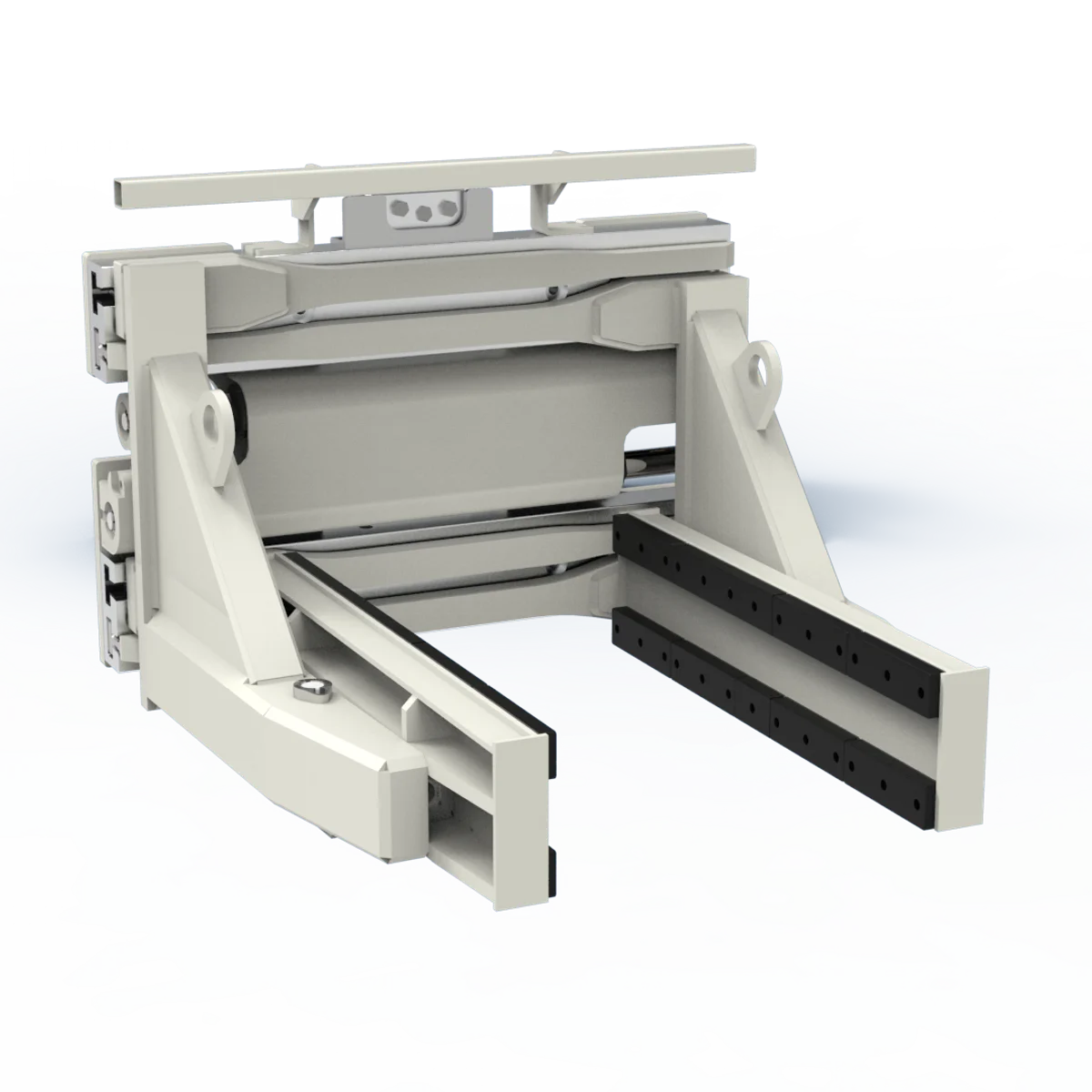
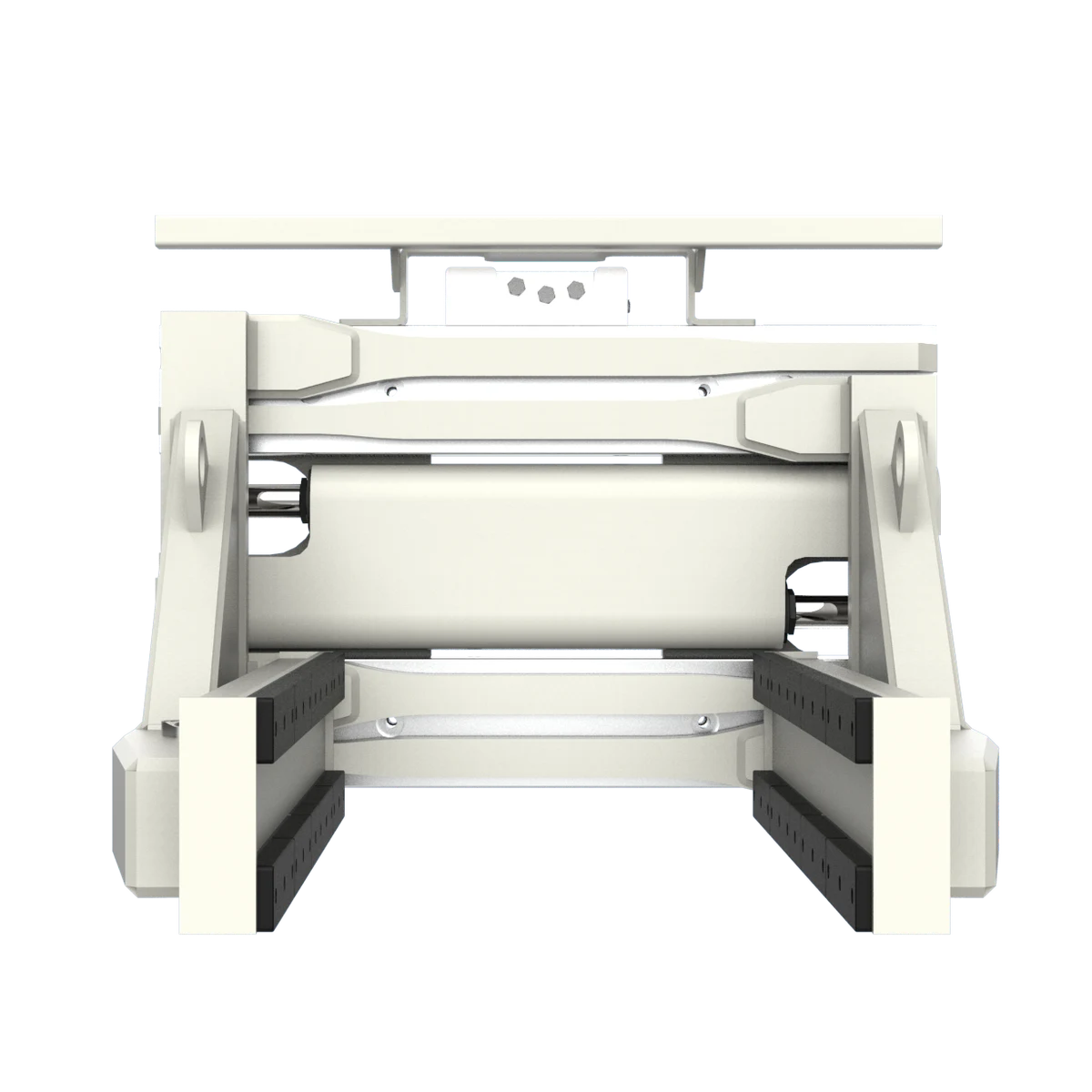
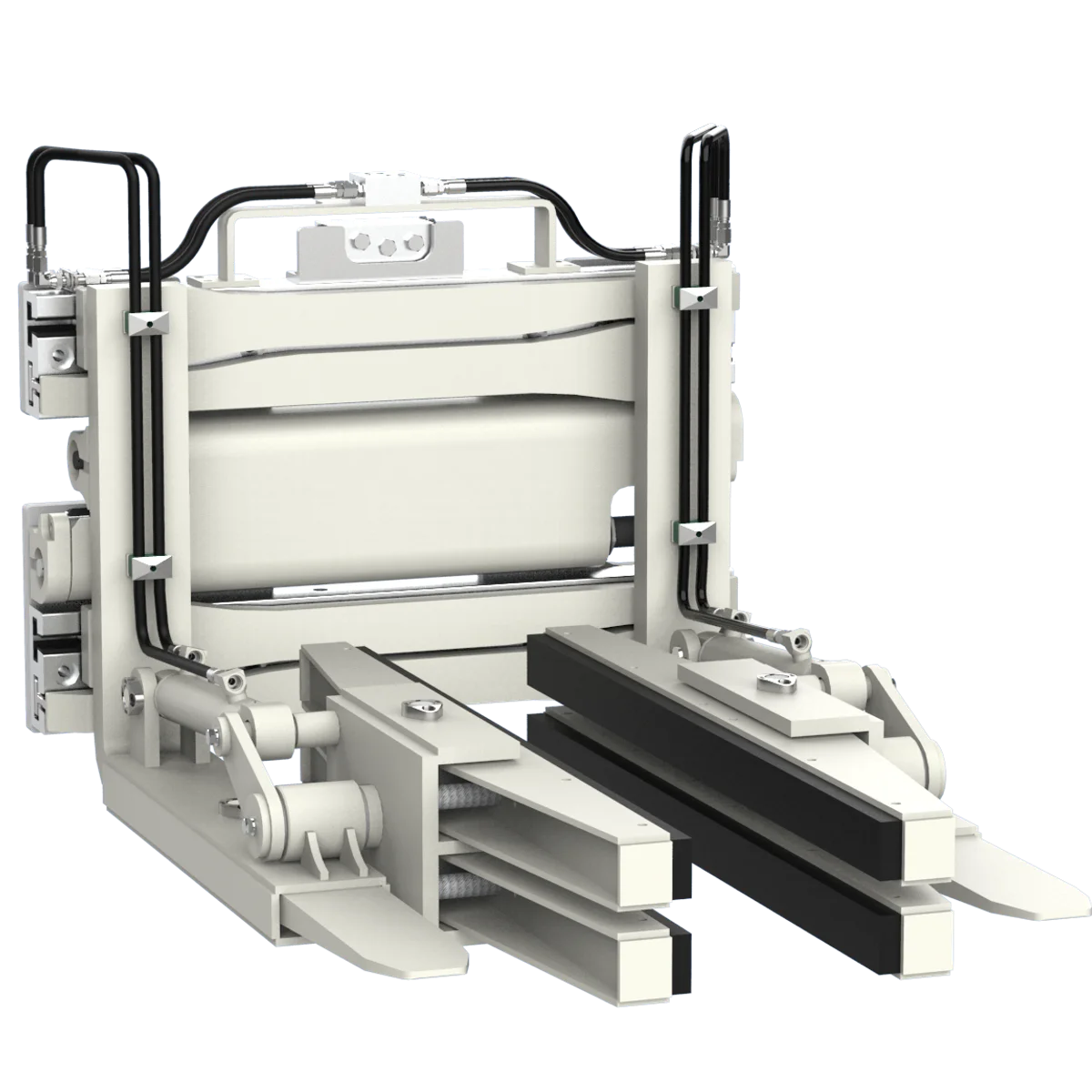
Brick clamps replace the forks. Two arms close on the pack from the sides, using rubber or steel contact pads, and the load is carried by friction plus the clamping force — not by a pallet underneath. That makes pad condition, arm opening range and clamping pressure the variables that decide whether the load arrives intact.
WONTONNE builds six brick clamp families for different jobs. The Block Clamp is the general-purpose unit for mud bricks, concrete blocks and carbon blocks, with picking, lifting and rotating operation and capacity up to 2700 kg. The 2D-Articulation Block Clamp adds two-dimensional arm movement for precise positioning in palletless manufacturing, also up to 2700 kg. For controlled discharge, the Block Clamp (Tipping Type) tips the load for special applications, up to 1800 kg.
Three more cover narrower needs:
- Multi Purpose Block Clamp — clamping and fork functions in one attachment, up to 1800 kg.
- Bell Type Block Clamp — bell-type contact spreads pressure evenly to protect fragile block surfaces, up to 3000 kg.
- Rotating Brick Clamp — slip-on fork mounting with 0-90° rotation, 2500 kg at 700 mm load centre.
Brick clamp comparison: matching the attachment to the load
The table below summarises the WONTONNE brick clamp range. Use it to shortlist, then confirm the exact model against your load dimensions and truck.
| Attachment | Typical use | Capacity | Mounting |
|---|---|---|---|
| Block Clamp | Mud bricks, concrete blocks, carbon blocks | Up to 2700 kg | ISO 3A |
| 2D-Articulation Block Clamp | Palletless manufacturing, precise block positioning | Up to 2700 kg | ISO 3A |
| Block Clamp (Tipping Type) | Non-palletised bricks, blocks and stones with controlled discharge | Up to 1800 kg | ISO 3A |
| Multi Purpose Block Clamp | Block handling plus general fork work | Up to 1800 kg | ISO 3A |
| Bell Type Block Clamp | Fragile block surfaces needing even pressure | Up to 3000 kg | ISO 3A |
| Rotating Brick Clamp | Brick packs requiring 0-90° rotation | 2500 kg @ 700 mm | Slip-on fork |
Two details matter when you read this table. First, capacity is always quoted at a stated load centre — 500 mm on the standard Block Clamp, 700 mm on the Rotating Brick Clamp, and further out on some 2D-articulation models. Second, arm opening range decides what you can actually pick up: the standard Block Clamp opens 290-1610 mm, while the Rotating Brick Clamp opens 1000-2000 mm.
Load derating: the number most buyers forget
An attachment adds weight ahead of the carriage and moves the load centre forward. Both effects reduce what the truck can safely lift. The attachment's own mass is stated on the data sheet — the standard Block Clamp models run from 580 kg to 910 kg depending on configuration, and the Bell Type Block Clamp is 1350 kg. That weight is deducted from the truck's rated capacity before any brick is picked up.
Work through it in this order:
- Start with the truck's rated capacity at the actual load centre you will use.
- Subtract the attachment weight.
- Check the result against the heaviest pack you intend to handle.
- Confirm the arm opening range covers your smallest and largest packs.
If step three fails, a lighter model or a different clamp family is the answer — not a higher pressure setting. Over-clamping crushes block edges; under-clamping drops loads.
Matching the clamp to the material
Dense concrete blocks tolerate high clamping force and reward a firm grip. Fired clay bricks and anything with a fragile face do better with bell-type contact that spreads pressure across a wider area. If the same truck has to handle bricks in the morning and palletised goods in the afternoon, the dual-function design of the Multi Purpose Block Clamp avoids a carriage swap. For a full view of the range, see all forklift attachments.
FAQ
Is a vblock clamp the same as a brick clamp?
No. A vblock clamp is a small workholding accessory that presses a cylindrical part into the V-groove of a V-block on a milling machine, drill press or inspection table. A brick clamp is a forklift attachment that grips and lifts palletless brick and block packs. They share a word, not a function.
Can I use a forklift brick clamp to move cylindrical loads?
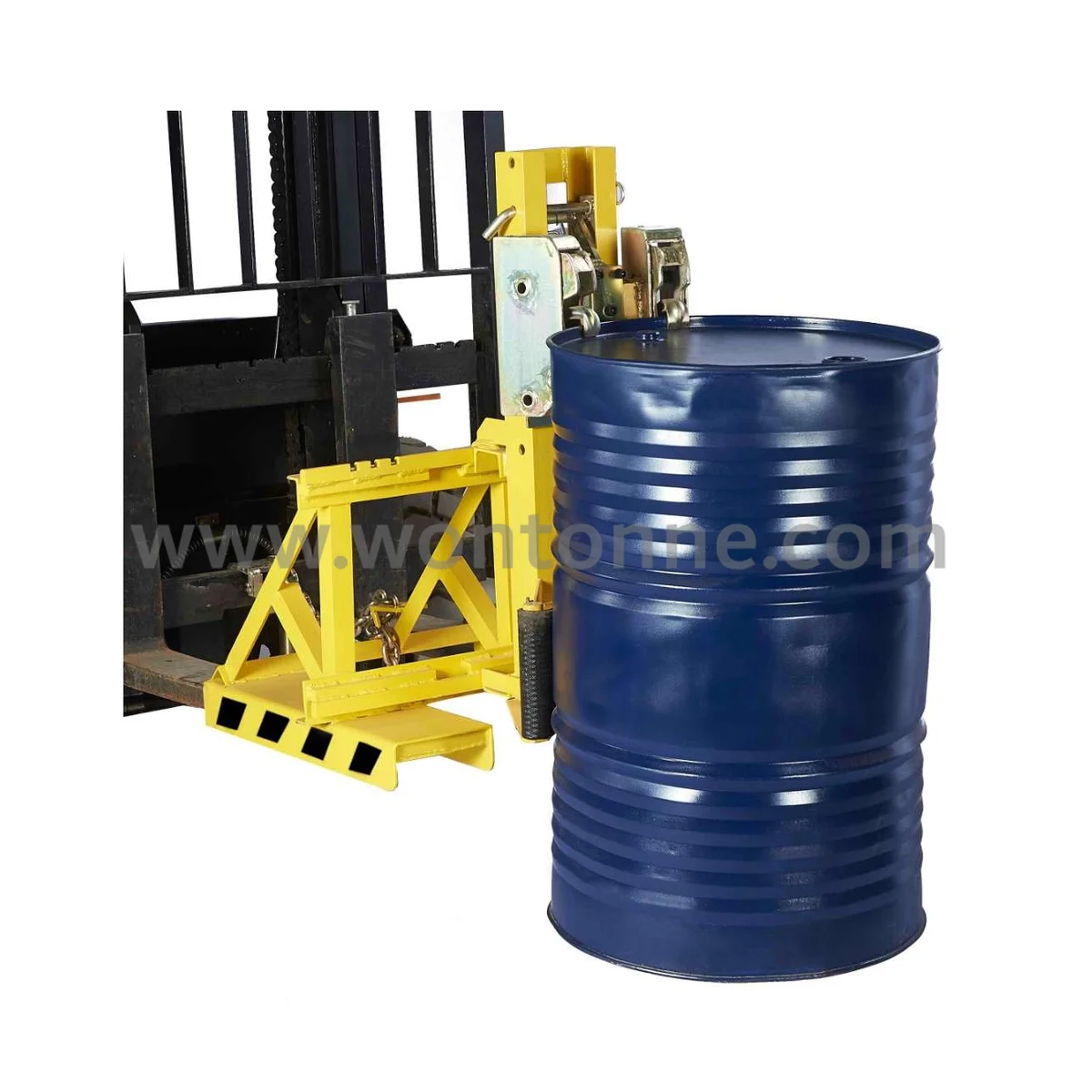
Not as a substitute for V-block workholding. Brick clamps are built for rigid block commodities such as mud bricks, concrete blocks and carbon blocks. Round or unstable loads need a different attachment type and a separate capacity check.
How do I know which brick clamp capacity I need?
Take the truck's rated capacity at your working load centre, subtract the attachment weight from its data sheet, and compare the remainder with your heaviest pack. WONTONNE brick clamps range from 1800 kg to 3000 kg depending on family and model, so the answer usually comes down to load centre and pack size rather than raw tonnage.
Next step
If you are moving bricks, blocks or stone without pallets, a vblock clamp will not help you — a properly specified brick clamp will. Send WONTONNE your load dimensions, pack weight, truck model and mounting class, and our engineers will confirm the right model, opening range and derated capacity before you buy. Contact WONTONNE to start the specification.