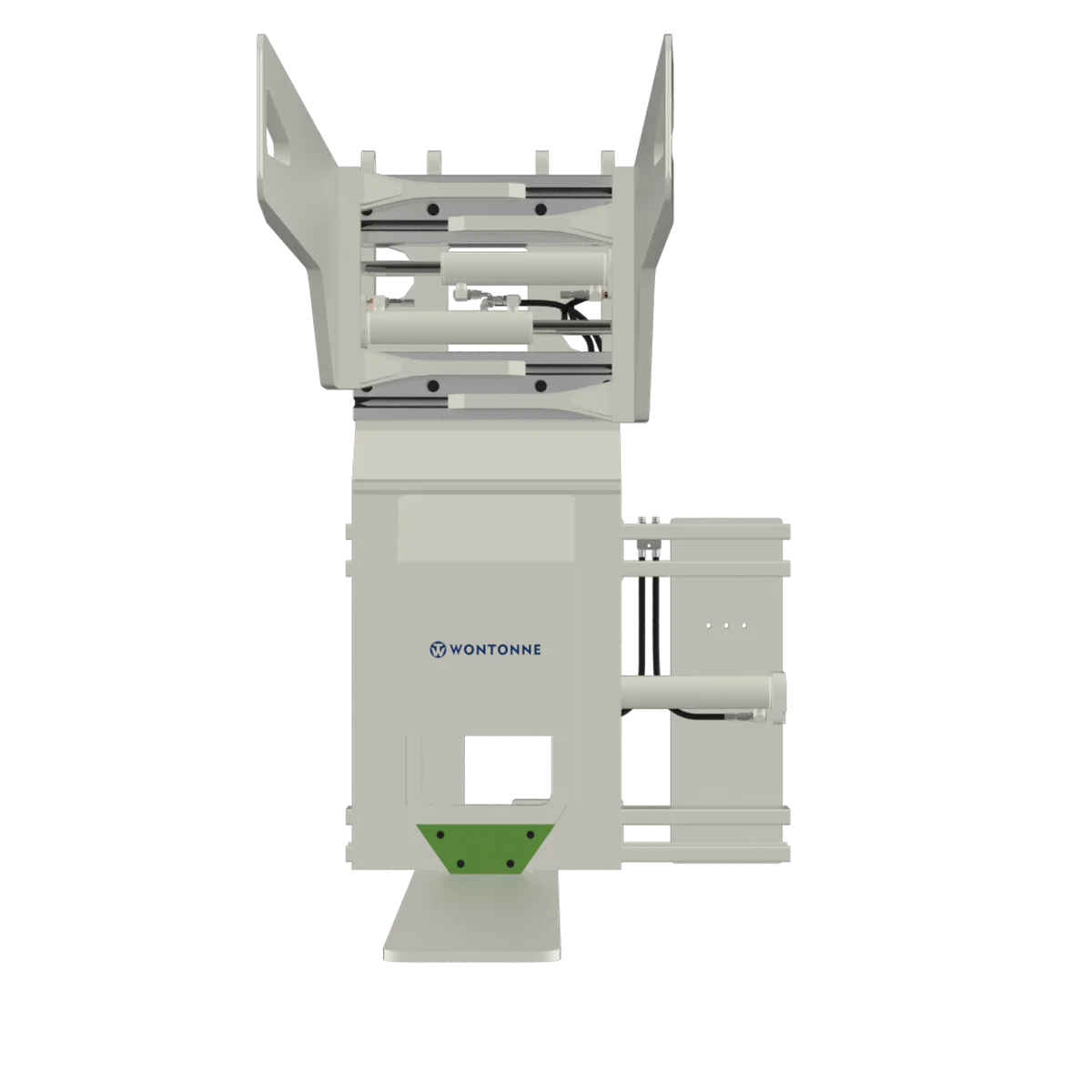

A cascade sideshift is a forklift attachment that moves the forks laterally, left and right, without repositioning the truck. That short movement lets an operator align the forks with a pallet opening, center a load over a rack bay, or nudge a pallet into a tight stack without a second approach. For fleets running high-cycle put-away and retrieval, the time saved on each movement compounds quickly. This guide explains how cascade sideshift attachments work, what to check before specifying one, and how to match common Cascade 55F sideshift and Cascade 55E sideshift references to a practical attachment choice.
How a cascade sideshift changes the handling cycle
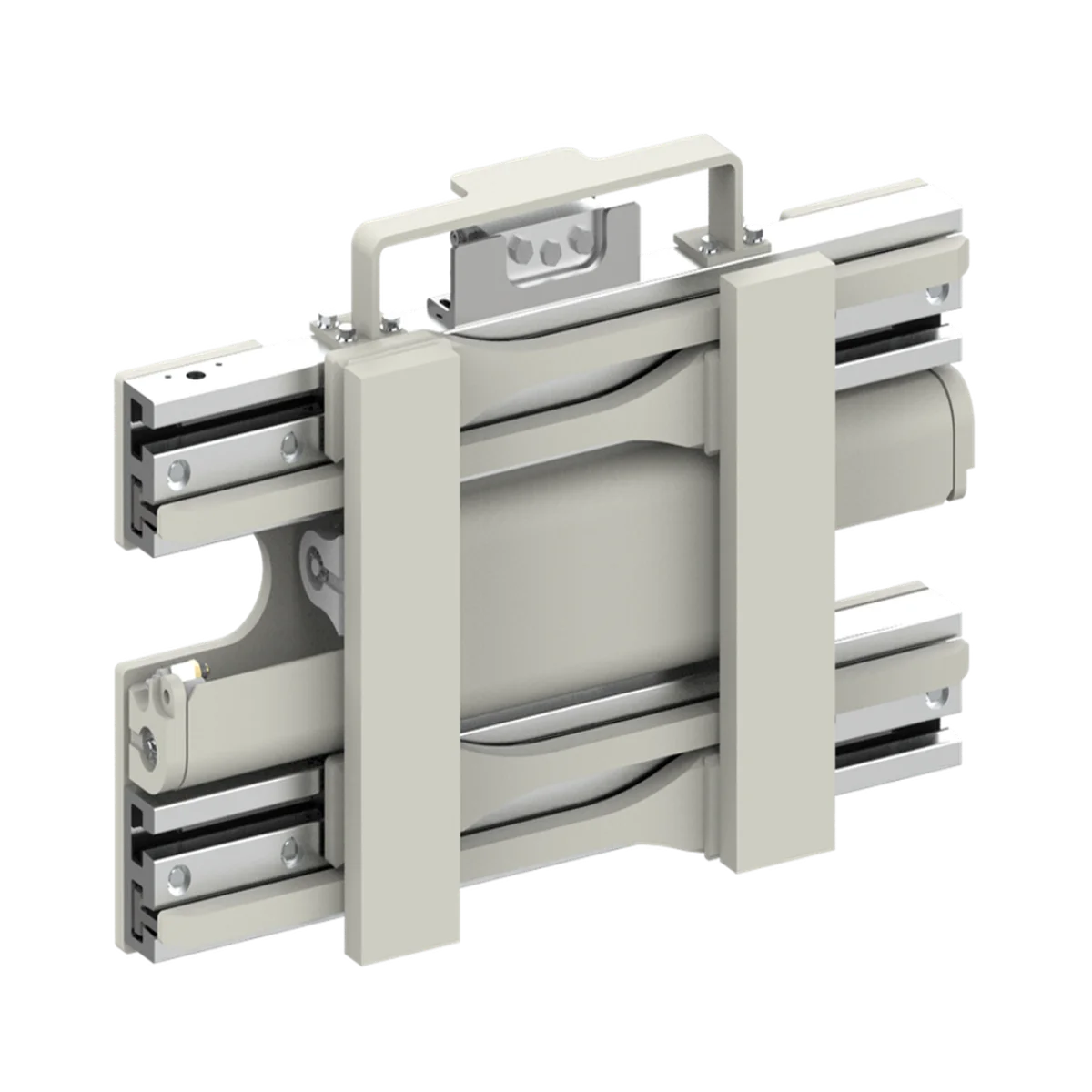
Without sideshift, the operator must judge the fork spacing and the truck position simultaneously. If the forks are a few centimetres off, the truck has to reverse, steer and approach again. A sideshifter removes that second approach by adding a hydraulic lateral movement to the carriage. The forks travel a short distance to the left or right, so the operator can correct alignment while the truck stays in place.
The practical effects are consistent across warehouses, docks and yards:
- Fewer truck movements. Alignment happens at the fork carriage rather than through the steering wheel, which reduces back-and-forth manoeuvring in narrow aisles and at dock doors.
- Less damage to loads and racks. A small lateral correction is gentler than bumping a pallet into position with the truck, which protects pallet boards, product and uprights.
- Neater stacks. Operators can centre loads more accurately, so pallets sit square in the bay and the next retrieval is easier.
- Faster fork engagement. The forks can be shifted to match the pallet entry without repositioning the whole machine.
These benefits are why the sideshifter is often described as the most common forklift attachment. It does not change the fundamental lifting task; it removes the small positional errors that slow the task down.
What to check before specifying a sideshifter
A sideshifter is a relatively simple attachment, but it still has to match the truck, the load and the carriage. Four checks matter most.
1. Mounting class and carriage fit
The attachment must bolt to the truck's carriage class. ISO classes are the common reference: Class II, Class III and Class IV carriages cover different truck sizes and load ranges. A mismatch here is not a minor issue; it affects how the attachment seats, how the load is carried and whether the installation is safe. WONTONNE sideshifters are supplied in ISO 2A, ISO 3A and ISO 4A mounting classes across the range, so the first step is to confirm the truck's carriage class.
2. Capacity and load centre
Attachment capacity is rated at a stated load centre, usually 600 mm for the models in this range. The rated capacity is not the same as the truck's bare capacity. Adding an attachment moves the load forward and adds its own weight, so the combined capacity of truck plus attachment must be checked against the actual load. A sideshifter rated at a given capacity at 600 mm load centre is the starting point, not the final answer.
3. Sideshift stroke
WONTONNE sideshifters allow lateral movement of 100 mm or 150 mm to the left and right. The right stroke depends on the racking, the pallet sizes and how much misalignment the operator typically faces. A larger stroke gives more correction range; a smaller stroke keeps the attachment compact.
4. Visibility and thickness
Every attachment adds effective thickness between the carriage and the fork heels. That thickness affects residual capacity and how close the truck can get to a stack. Visibility over the attachment also matters when placing loads at height. These are design trade-offs to discuss with the supplier rather than afterthoughts.
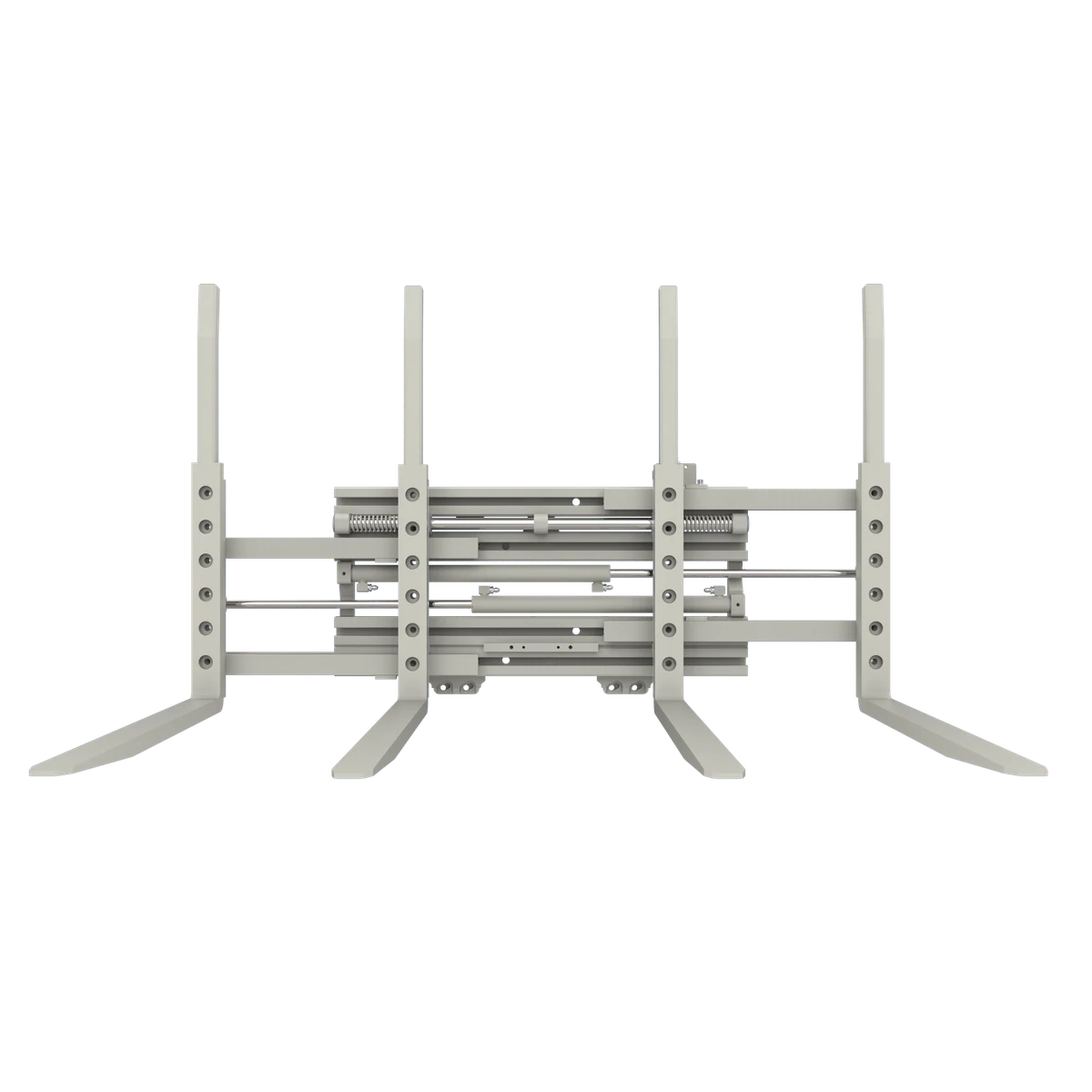
Comparing common sideshifter series
The WONTONNE sideshifter range covers several capacity bands and mounting classes. The table below summarises the main series so a buyer can see where each fits. Model numbers are shown as examples; the full range includes additional widths and capacities.
| Series | Typical capacity | Mounting class | Effective thickness | Where it fits |
|---|---|---|---|---|
| F Series | Up to 3500 kg | ISO 2A | 62 mm (example model SSS25F-920A) | Light to medium warehouse trucks; affordable side shift |
| E Series | Up to 5000 kg | ISO 3A | 75 mm (example model SSS45E-1260B) | General warehouse and pallet operations |
| D Series | Up to 6800 kg | ISO 4A | 84 mm (example model SSS70D-1190C) | Heavier trucks and demanding work situations |
| Triple Sideshifter | Up to 3200 kg | ISO 3A | 128 mm (model SST32F-1800B) | Three pallets side by side; logistics and recycling |
For a closer look at each series, see the F Series Sideshifters, E Series Sideshifters and D Series Sideshifters pages. If the task involves more than one pallet at a time, the Triple Sideshifter and the Single – Double Pallet Handler are worth reviewing.
Matching Cascade 55F and 55E sideshift references
Buyers often arrive with a reference to a Cascade 55F sideshift or a Cascade 55E sideshift. These references usually describe a class of sideshifter rather than a single universal part, and the correct replacement depends on the truck carriage, the load centre and the required stroke. Rather than guessing from a model name alone, collect the following before enquiring:
- The truck make and model, and its carriage class (ISO 2A, 3A or 4A).
- The rated capacity and load centre required for the application.
- The sideshift stroke needed for the racking and pallet sizes.
- The fork width and the effective thickness the truck can accept.
- Any hydraulic flow and pressure constraints from the truck's auxiliary circuit.
With those details, a supplier can match the requirement to a specific WONTONNE model. For example, a truck needing an ISO 2A sideshifter in the light capacity band would map to the F Series, while an ISO 3A requirement in the medium band would map to the E Series. The goal is to match function and fit, not to copy a model number from a different truck.
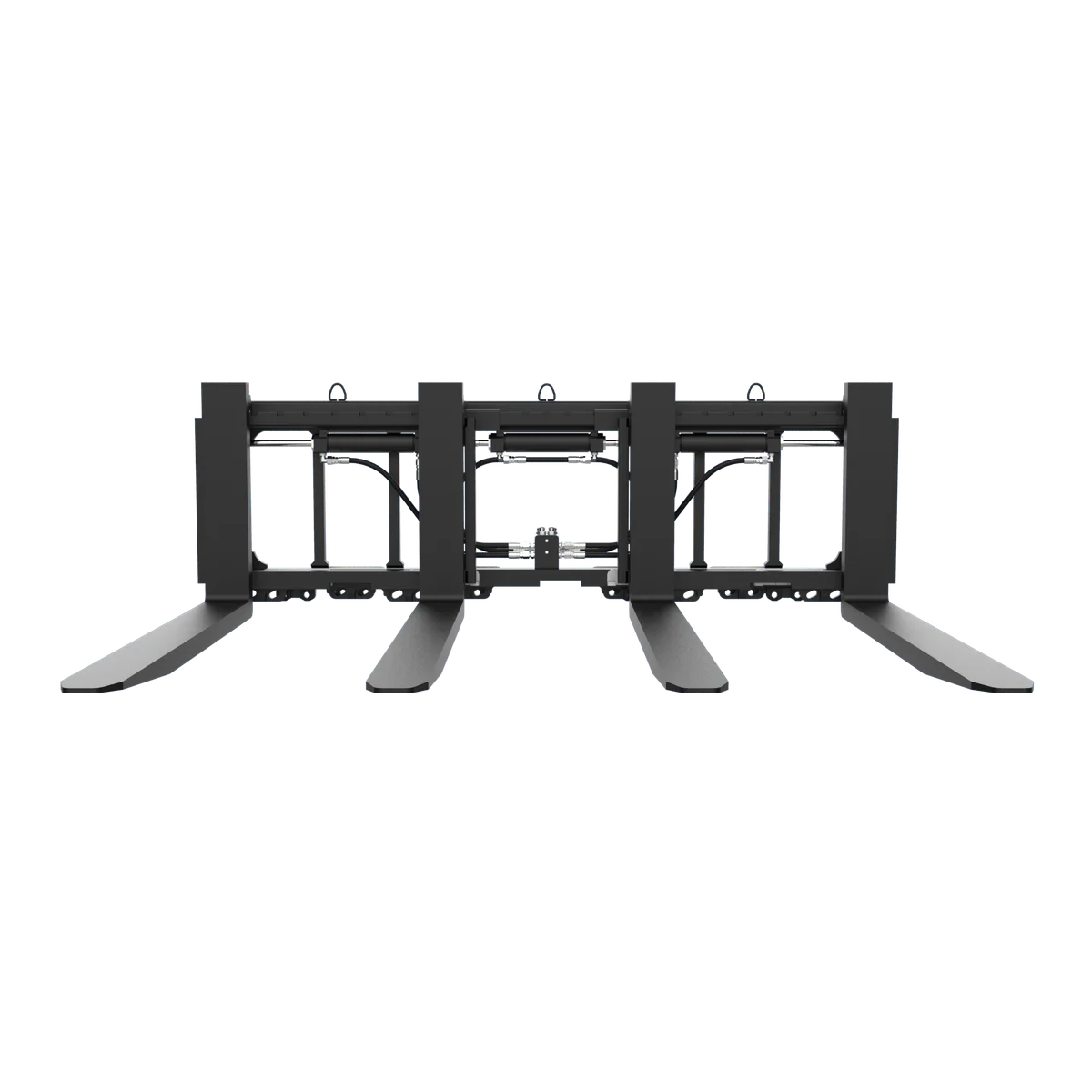
Installation, service and total cost
A sideshifter is a bolt-on attachment. It does not require welding, drilling or tapping on the truck carriage, which keeps installation straightforward and preserves the truck's original mounting points. WONTONNE sideshifters are shipped as complete units with technical support and spare parts available after delivery.
Total cost should be assessed over the life of the attachment, not just the purchase price. Consider the following:
- Residual capacity. A lighter attachment with a well-matched thickness leaves more of the truck's capacity available for the load.
- Wear parts. Sliding bearings and hydraulic components are the parts that wear; check that replacements are available.
- Service access. Easy access to cylinders and hydraulic connections reduces downtime during maintenance.
- Compatibility. The attachment should match the truck's hydraulic circuit without unnecessary adapters.
For special handling where the load cannot be palletised, the No-Arm Clamps (Side Shifting Type) provide a side-shifting clamp frame for customer-specific arms. Review the full forklift attachments range if the application needs more than simple lateral positioning.
FAQ
What is the difference between a cascade sideshift and a standard sideshifter?
In practice, the terms describe the same function: a hydraulic attachment that moves the forks laterally to align with a load. "Cascade sideshift" is often used generically because Cascade is a well-known brand in this category. When specifying, focus on mounting class, capacity at load centre, stroke and effective thickness rather than the brand name alone.
Can I replace a Cascade 55F sideshift with a WONTONNE model?
Often yes, provided the mounting class, capacity, load centre, stroke and hydraulic requirements match. The 55F reference covers a family of sideshifters, so the correct replacement depends on the specific truck and application. Supply the truck details and load data, and the WONTONNE team can identify the closest model in the F, E or D Series.
Does adding a sideshifter reduce my forklift's lifting capacity?
Yes. Any attachment adds weight and moves the load forward, which reduces the net capacity available for the load. The amount depends on the attachment's weight, its effective thickness and the load centre. Always check the combined truck-plus-attachment capacity against the actual load rather than relying on the truck's bare rating.
If you are comparing a Cascade 55F sideshift or Cascade 55E sideshift against a new attachment, send the truck model, carriage class, load weight and required stroke to Contact WONTONNE. The team can confirm the matching series and model, and provide technical support and spare parts for the life of the attachment.