
If you are searching for a bale handler for sale, the decision is rarely about finding the cheapest attachment. It is about matching a clamp or grab to the bale type, the forklift you already run and the way the bales are stored and moved. A hay clamp that grips well on a dry square bale can crush a soft forage bale if the clamping force and arm geometry are wrong, and an attachment that is too heavy for your mast will cost you capacity on every lift. This guide walks through the main bale handling equipment for sale from WONTONNE, the specifications that actually matter, and how to specify a square bale handler or hydraulic bale handler without over- or under-buying.
What a bale handler for sale should actually do
A bale handler is a forklift attachment that grips a bale directly, without a pallet, and holds it securely through transport, stacking and loading. That palletless approach is the core value: it removes pallet purchase, rental, repair and storage from the operation, and it lets you handle bales that were never designed to sit on a pallet in the first place.
There are two broad families in the WONTONNE range:
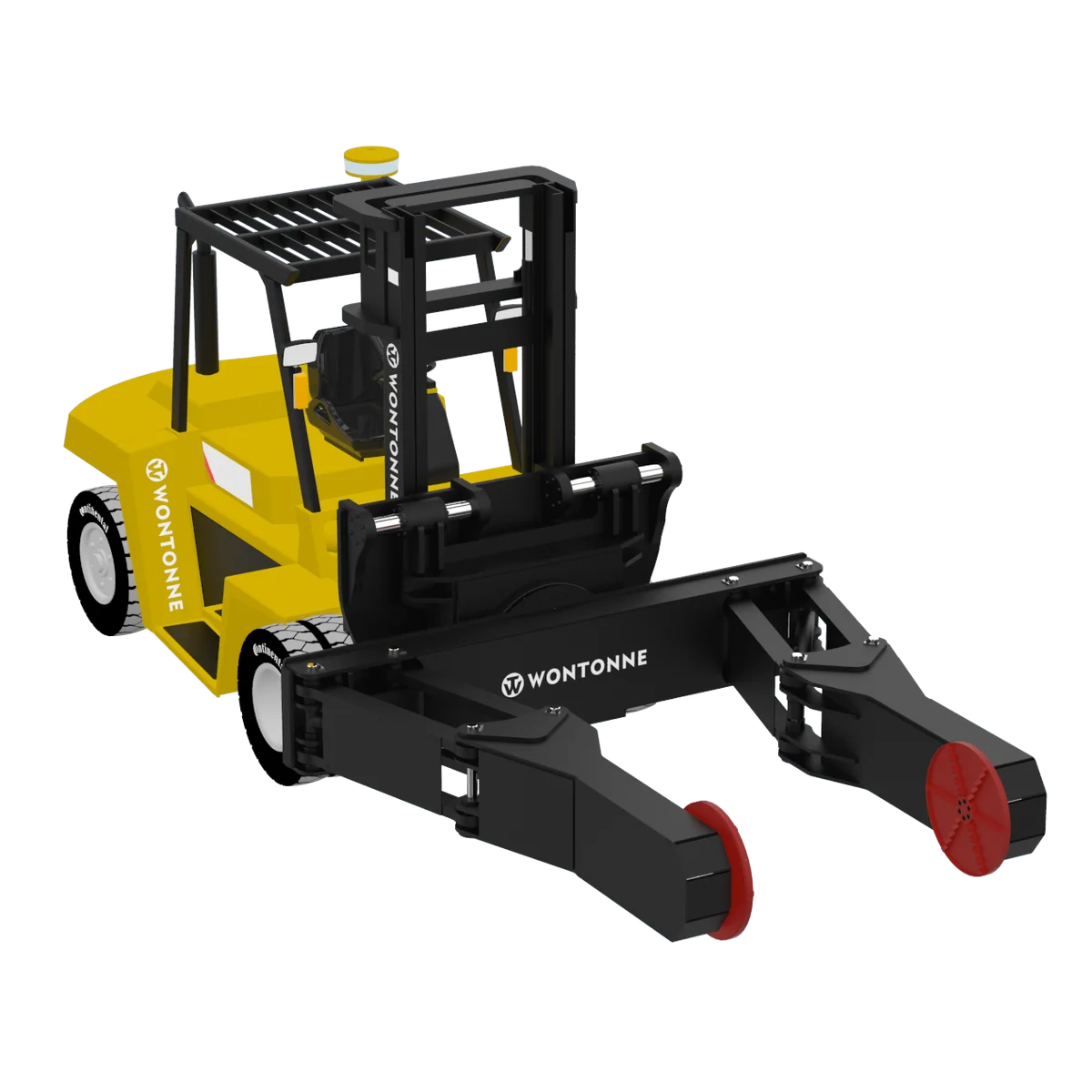
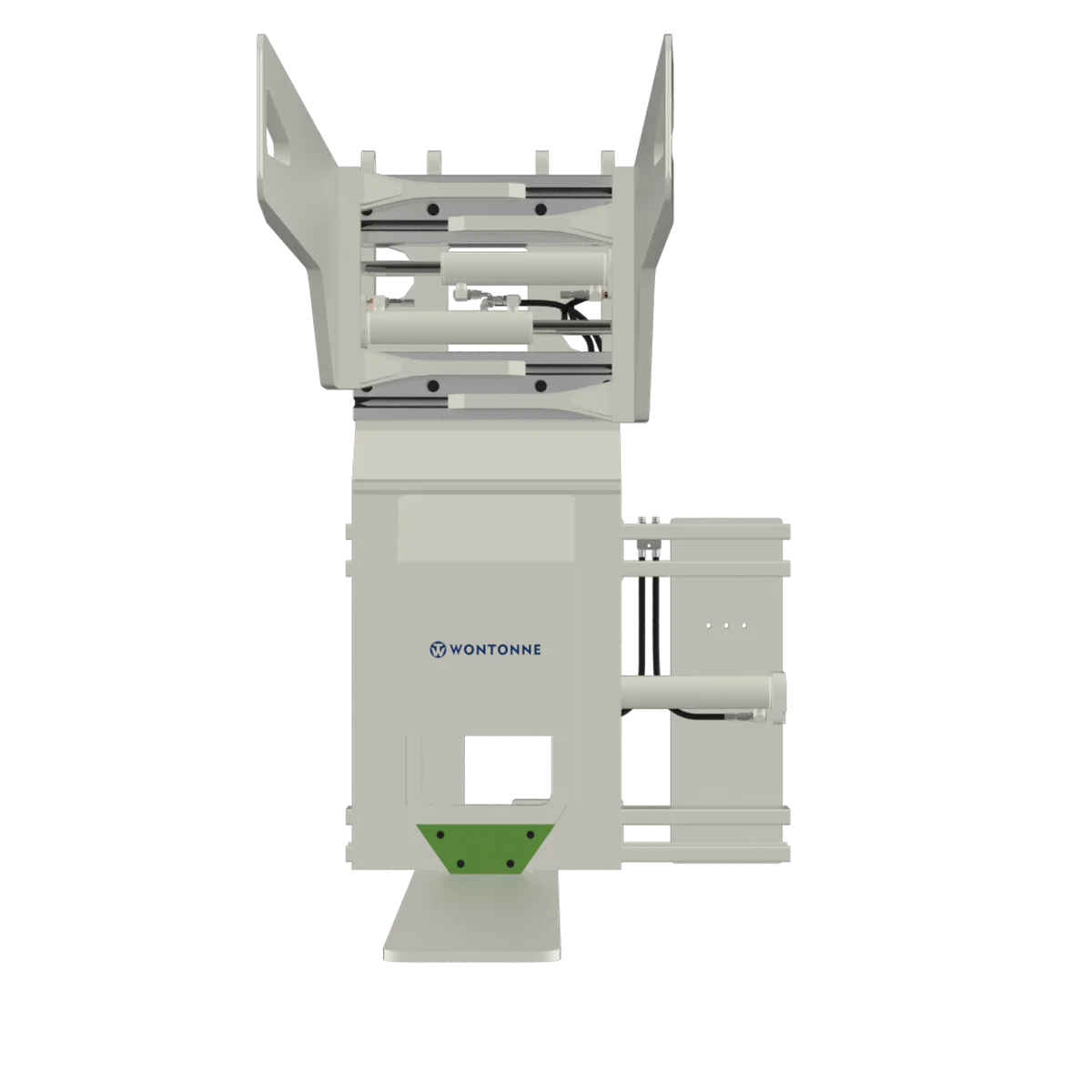
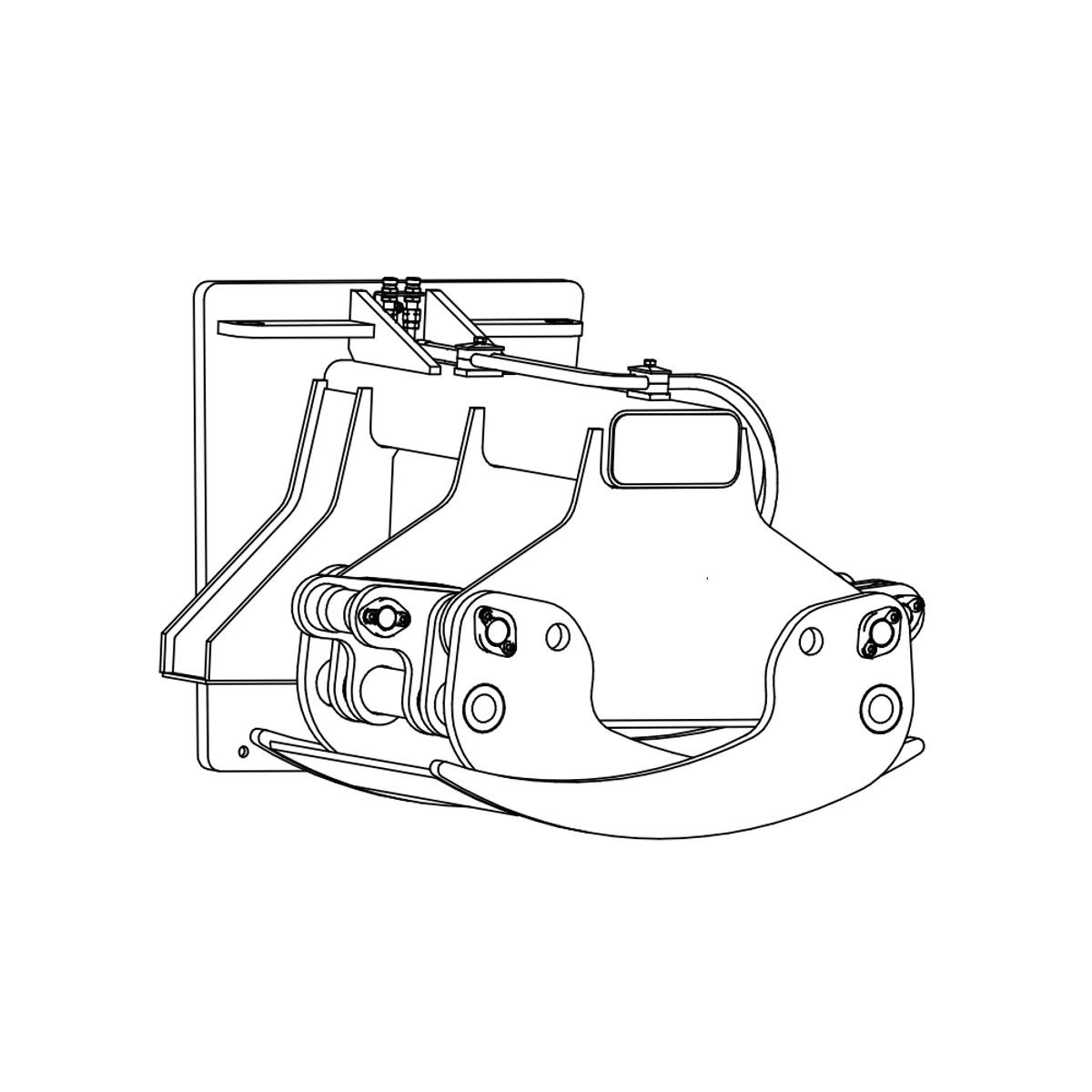
- Dedicated bale clamps such as the Hay Clamp, built around powerful arms and clamping rods for hay and forage bales, with a capacity up to 1000 kg.
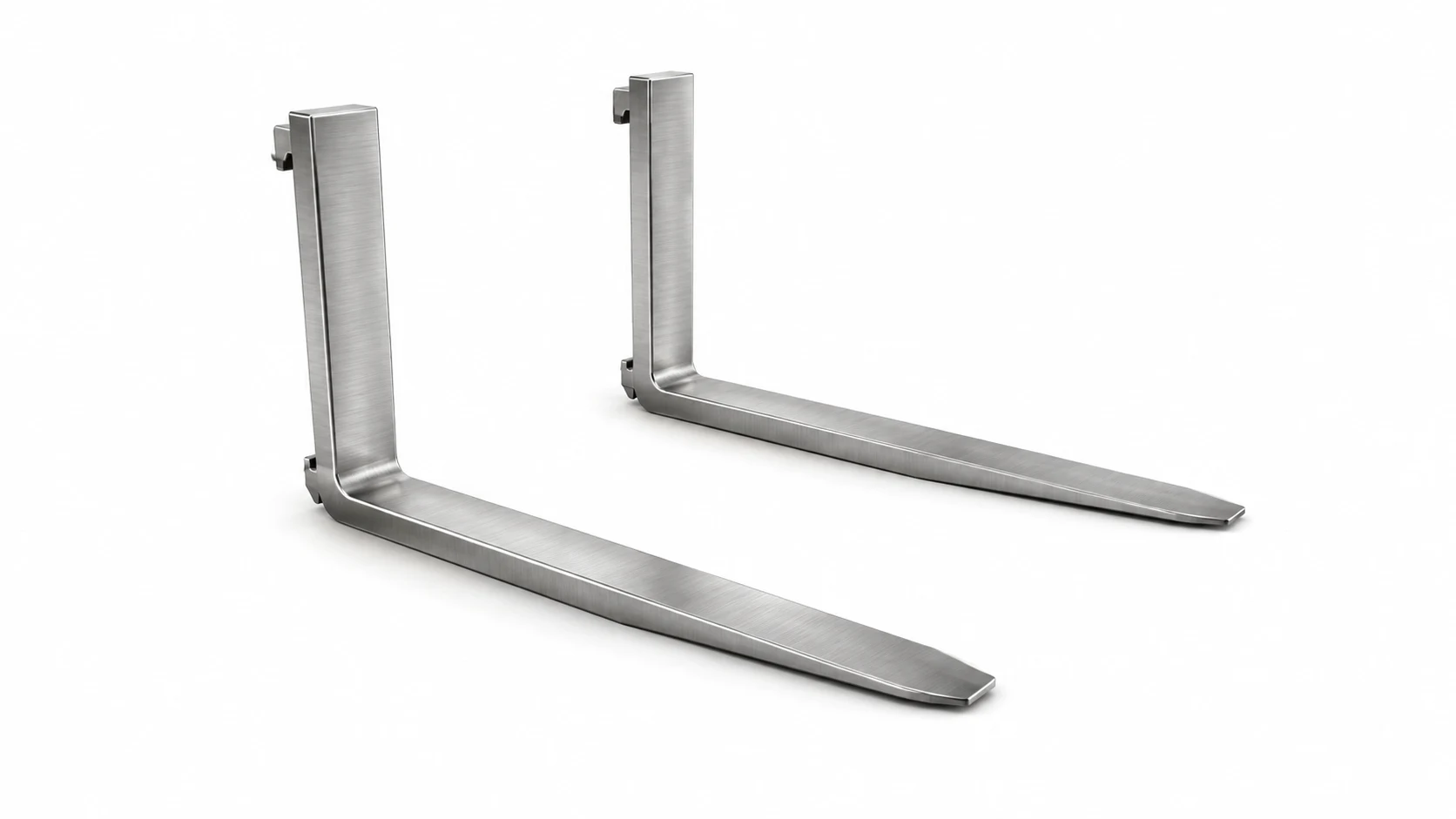
- Revolving fork clamps such as the Fork Clamps (Revolving Type), where the forks tilt by 45° and 90° so the same attachment can clamp, turn and handle bales as well as cartons and other cargo, with capacity up to 2300 kg.
The right choice depends on whether bales are your only load or one of several. A dedicated hay clamp is the efficient tool for a farm or feed operation that handles bale after bale. A revolving fork clamp earns its place where bales, cartons and palletized goods share the same yard.
Square bale handler for sale: what to specify
Square and rectangular bales are the most common request we see, because they are dense, stackable and travel well. When you are buying a square bale handler for sale, work through these points in order:
- Bale dimensions and weight. Confirm the maximum bale weight you will ever lift, not just the average. A clamp rated up to 1000 kg gives you headroom over a 600–700 kg bale, but not over a 1,200 kg one.
- Mounting class. The attachment must match the forklift carriage. The Hay Clamp is supplied in ISO 3A mounting, while the revolving fork clamps include ISO 2A and ISO 3A models. Fitting the wrong class means adapters, lost capacity or a non-starter.
- Opening range. The roll range tells you the widest and narrowest bale the arms can grip. The Hay Clamp has a roll range of 100–2310 mm; the revolving fork clamps range from 410–1660 mm up to 440–1750 mm depending on model.
- Load centre and effective thickness. These two figures determine how much capacity the attachment takes away from your forklift. A clamp with a 500 mm load centre and 196 mm effective thickness behaves very differently from a heavier unit on the same truck.
- Hydraulics. Clamping and rotation need hydraulic flow. Confirm your forklift has the auxiliary circuit and the flow to drive the attachment at a usable speed.
Hydraulic bale handler for sale: clamp, grab or revolving fork?
Most bale handlers on the market are hydraulic in some form, so a hydraulic bale handler for sale search usually means the buyer wants powered clamping rather than a static spike. Within that, the practical question is which hydraulic action you need.
Clamping only
A clamp that opens and closes is enough for loading, unloading and short transport. It is simple, light and fast, and it suits a single bale type handled repetitively.
Clamping plus rotation
Revolving clamps add 360° rotation or fork tilt so the bale can be turned for stacking, feeding or inspection. The Multi-Purpose Clamps (Revolving) go further, handling paper, wooden and metal cartons as well as baled products, with capacities from 1700 kg to 2700 kg across the model range. If your yard handles baled product alongside boxed goods, this is often the most cost-effective single attachment.
When a bale handler is not the right tool
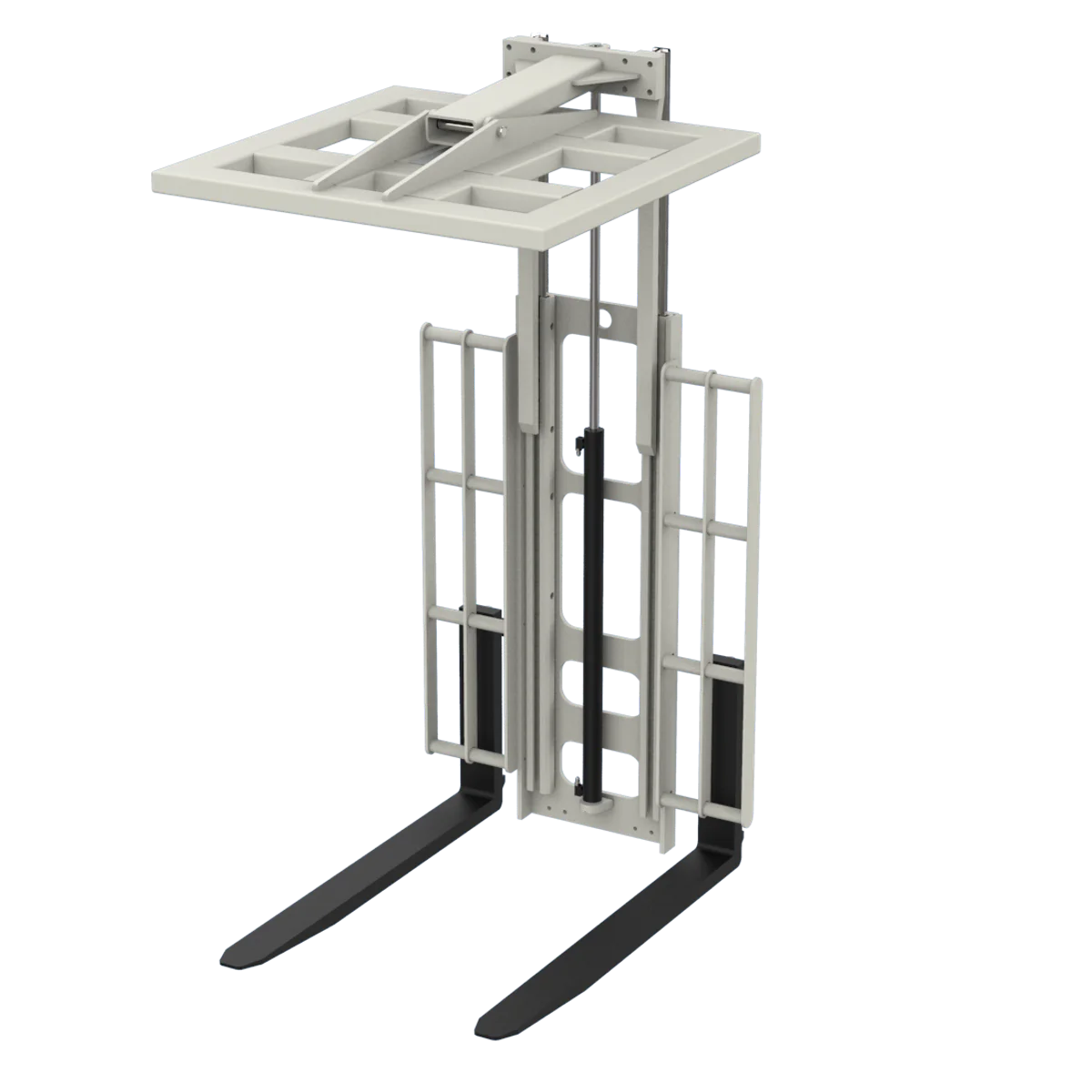
Not every load that looks like a bale should be clamped. For unstable palletized loads, a Load Stabilizer secures the load without gripping it from the sides. For loose bulk material such as sand, gravel or mulch, a Hydraulic Bucket or the larger DBHS-20 Hydraulic Bucket is the correct attachment. Buying a clamp for a job it was never designed for is the most common specification error we see.
Comparison: bale handling attachments at a glance
| Attachment | Primary use | Capacity | Mounting class (example) | Key action |
|---|---|---|---|---|
| Hay Clamp (RGB10A-01B) | Hay and forage bales | Up to 1000 kg | ISO 3A | Powered clamping arms and rods |
| Fork Clamps, Revolving (CFR30D-108B) | Bales, cartons, tobacco, paper | Up to 2300 kg | ISO 3A | Forks tilt 45° and 90° |
| Multi-Purpose Clamps, Revolving (MCR30E-008B) | Baled products, cartons | Up to 2700 kg | ISO 3A | 360° rotation, side clamping |
| Load Stabilizer (LSB20D-022B) | Unstable palletized loads | Up to 2000 kg | ISO 3A | Stabilizes, does not grip bales |
Capacities shown are the attachment ratings from the WONTONNE product data. Always check the residual capacity of your specific forklift with the attachment fitted, because the attachment weight and load centre reduce what the truck can safely lift.
Buying checklist before you place an order
- Measure your heaviest bale and add a safety margin.
- Record your forklift model, carriage class and auxiliary hydraulic flow.
- Decide whether you need clamping only, or clamping plus rotation.
- Confirm the opening range covers both your smallest and largest bale.
- Check the attachment weight and effective thickness against your capacity chart.
- Ask about spare parts and technical support before delivery, not after.
WONTONNE has manufactured forklift attachments and material handling equipment for more than 20 years and exports to customers worldwide. Attachments are compatible with major forklift brands, and comprehensive after-sales service including technical support and spare parts is part of the supply. Where a standard model does not fit the working condition, customised attachments can be quoted against your specifications.
You can review the full range on the all forklift attachments page, or send your bale dimensions and forklift details through the Contact WONTONNE page for a specification recommendation.
FAQ
What is the difference between a hay clamp and a revolving fork clamp?
A hay clamp is a dedicated bale tool with clamping arms and rods, rated up to 1000 kg in the WONTONNE range. A revolving fork clamp uses forks that tilt 45° and 90° to clamp and turn bales as well as cartons, with capacity up to 2300 kg. Choose the hay clamp for repetitive bale work and the revolving fork clamp for mixed cargo.
Can I use a bale handler on any forklift?
Only if the mounting class and hydraulic supply match. WONTONNE bale handling attachments are offered in ISO 2A and ISO 3A mounting classes depending on model, and they require an auxiliary hydraulic circuit for clamping and rotation. The attachment weight and load centre also reduce the forklift's residual capacity, so the truck's capacity chart must be checked with the attachment fitted.
How do I choose between a square bale handler and a multi-purpose clamp?
If you handle square bales only, a dedicated square bale handler such as the Hay Clamp is simpler and lighter. If the same machine also handles baled product, paper cartons, wooden cartons or metal cartons, a revolving multi-purpose clamp with 360° rotation and capacity up to 2700 kg avoids buying two attachments.
Ready to specify a bale handler for your operation? Send your bale weight, dimensions and forklift details to WONTONNE and our team will confirm the right model, mounting class and hydraulic requirement before you commit to an order.