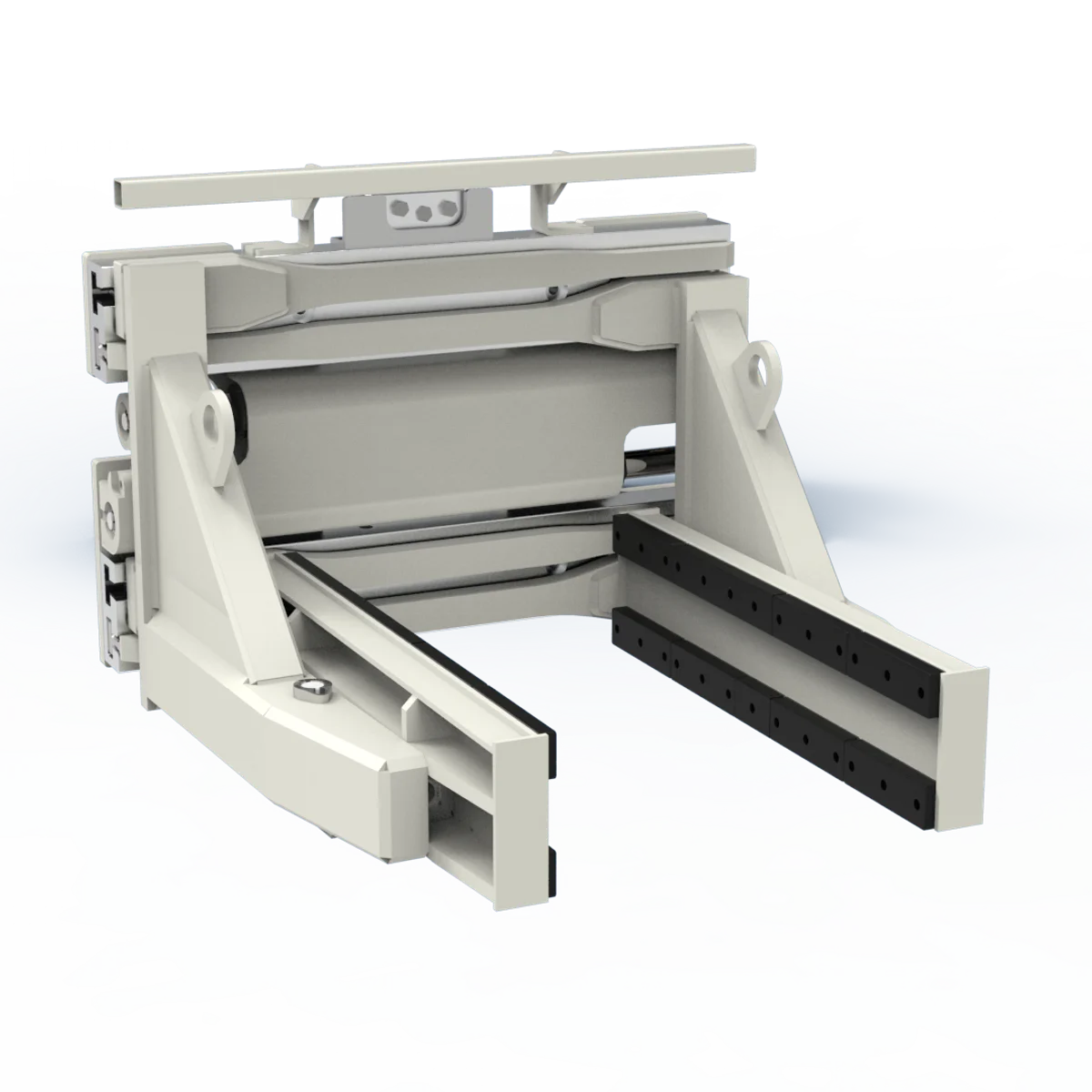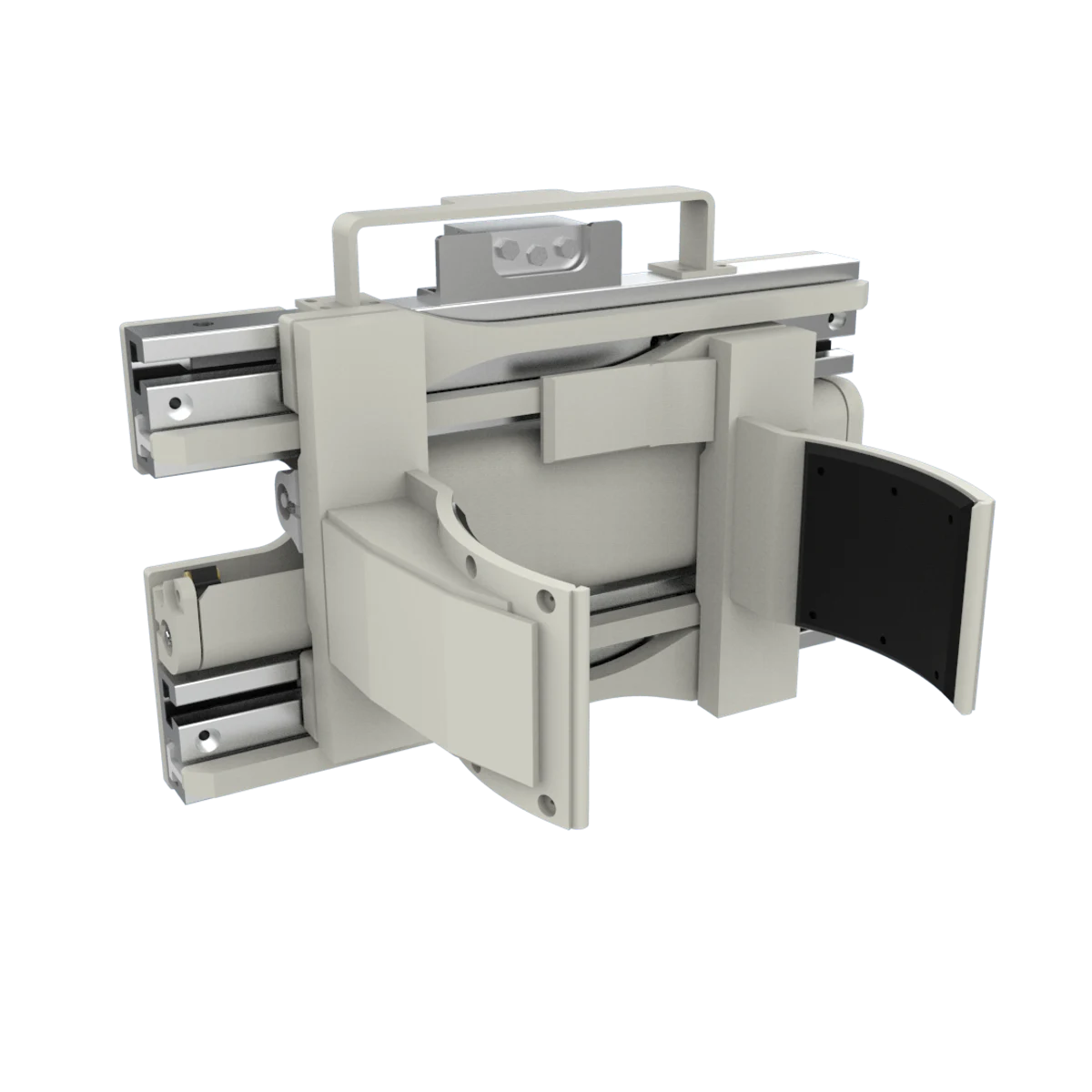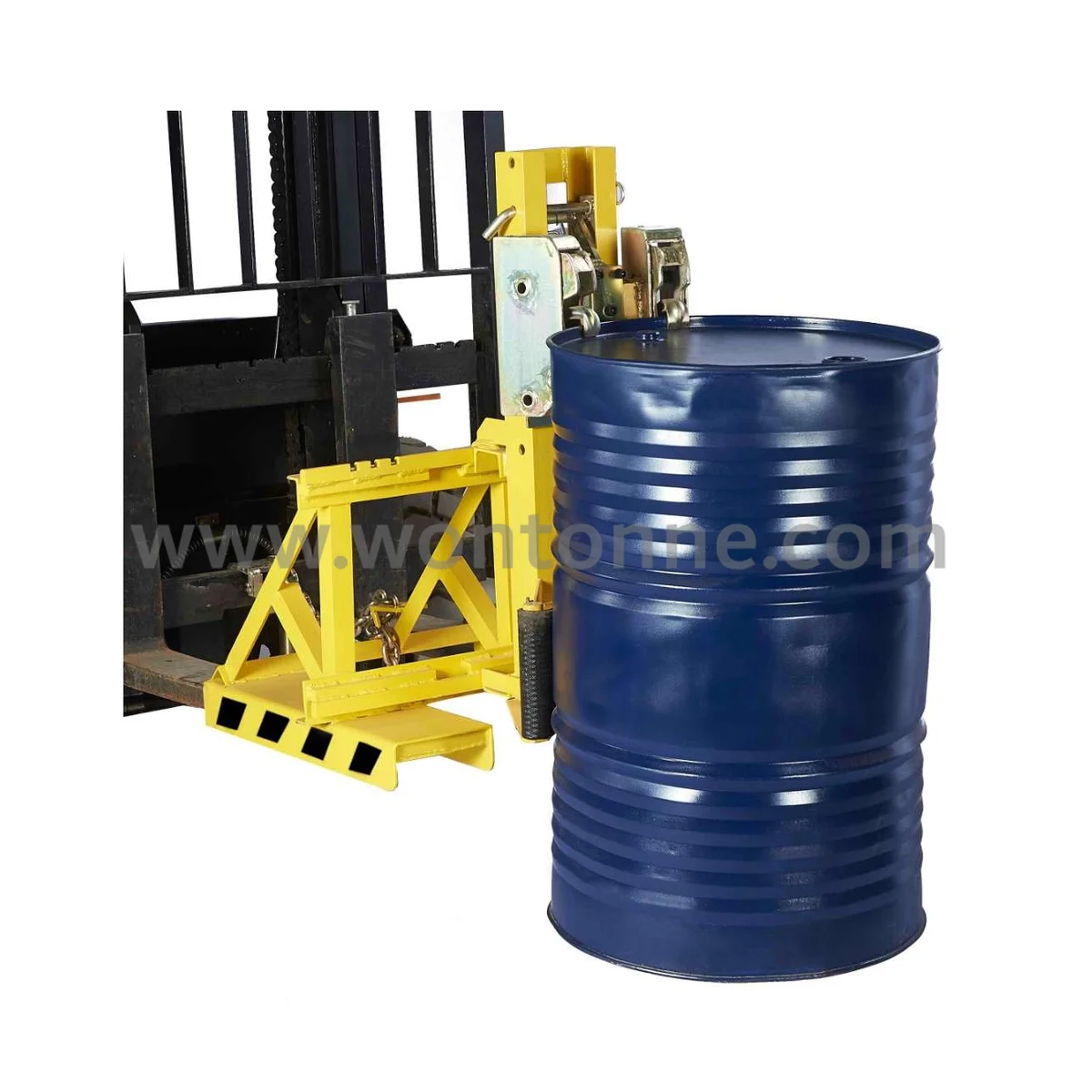

Brick clamps are hydraulic forklift attachments that grip a pack of bricks or blocks between two pads, lift it, and carry it without a pallet. For yards, brickyards, precast plants and builders' merchants, they replace the slow cycle of palletising, strapping and de-palletising with a single squeeze-and-lift motion. WONTONNE has built these attachments for more than 20 years, and the six designs in our brick clamp range cover fired clay bricks, concrete blocks, carbon blocks and stone — from a 1800 kg tipping unit to a 3000 kg bell-type clamp for fragile surfaces.
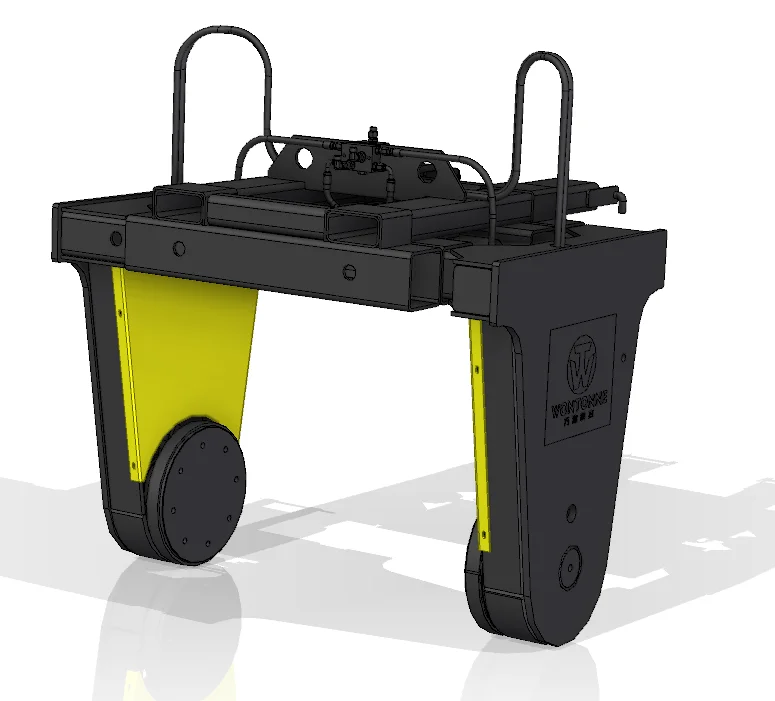
How a forklift brick clamp actually works
A brick clamp is a load-handling attachment, not a hand tool. Two arms carry contact pads that close hydraulically onto opposite faces of the pack. The clamp force is generated by the forklift's auxiliary hydraulic circuit, and the load is held by friction between the pads and the brick faces — so pad condition, pad geometry and clamping pressure matter as much as nominal capacity.
Three variables decide whether a clamp suits your product:
- Opening range. The minimum and maximum gap between the arms. A pack that is too narrow will not be gripped evenly; a pack that is too wide simply will not fit. WONTONNE ranges start at 180 mm on the multi-purpose unit and reach 2000 mm on the rotating clamp.
- Load centre. The distance from the carriage face to the centre of gravity of the load. A clamp rated 2700 kg at 500 mm load centre is not the same attachment as one rated 2700 kg at 1050 mm.
- Arm type. Fixed arms are the workhorse for straight stacking. Rotating arms add 0–90° positioning so the operator can place a pack lengthwise or crosswise without turning the truck.
Because the attachment itself weighs several hundred kilograms, always deduct its weight from the truck's residual capacity before you quote a load. A 900 kg rotating clamp on a 2.5 t truck leaves noticeably less usable capacity than the bare carriage.
Matching the clamp to the material
Fired clay bricks and concrete blocks
These are the standard duty for a Block Clamp. The WONTONNE block clamp is built for normal-temperature hard block goods — mud bricks, concrete blocks, carbon blocks — with a capacity up to 2700 kg, an opening range of 290–1610 mm, ISO 3A mounting and a 150 mm effective pad thickness. It handles picking, lifting and rotating, and it is the right starting point for most builders' merchants.
Packs that need to be turned or placed precisely
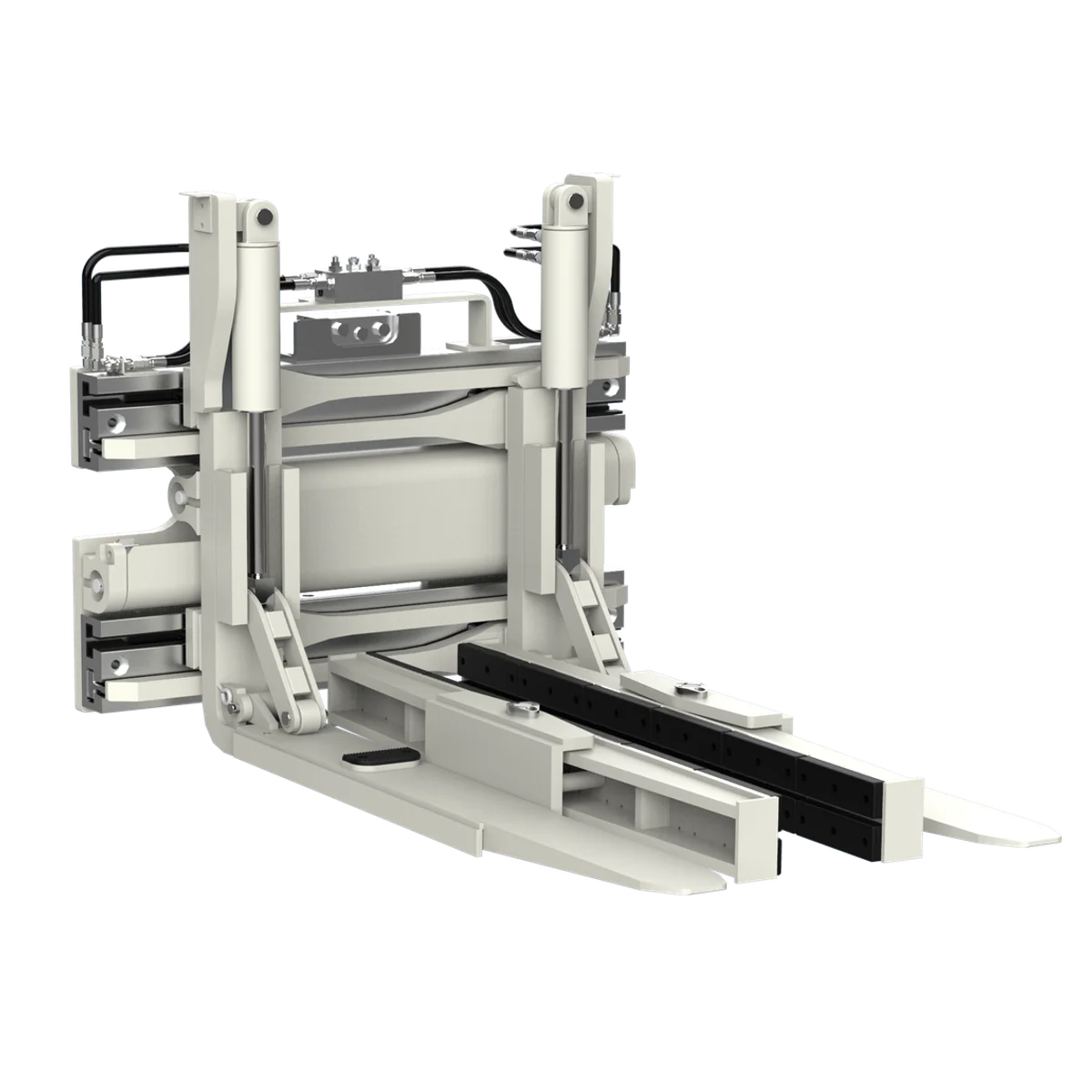
Where the pack has to be laid in a specific orientation — for example feeding a block-making line or stacking against a wall face — the Rotating Brick Clamp adds 0–90° rotation on φ400 mm contact pads. It mounts by slipping onto standard forks, so it can be fitted without removing the fork carriage, and it is rated 2500 kg at 700 mm load centre with a 1000–2000 mm opening range.
Fragile or surface-critical blocks
AAC, lightweight and decorative blocks mark easily under point loading. The Bell Type Block Clamp uses a bell-shaped contact that spreads pressure more evenly across the face, protecting the block surface while still picking, lifting and rotating. It reaches 3000 kg capacity at 1050 mm load centre.
Palletless production and tight positioning
For manufacturing lines that run without pallets, the 2D-Articulation Block Clamp adds a second axis of arm movement for precise block positioning. Capacities step down as load centre increases — 2700 kg at 450 mm through to 1900 kg at 700 mm — with opening ranges around 510–1860 mm.
Brick clamp comparison: WONTONNE range at a glance
| Model series | Capacity | Load centre | Opening range | Mounting | Best for |
|---|---|---|---|---|---|
| Rotating Brick Clamp (ZBR25D-001T) | 2500 kg | 700 mm | 1000–2000 mm | Slip-on fork | 0–90° placement, clay bricks and concrete blocks |
| Block Clamp (CKS30D series) | 2700 kg | 500 mm | 290–1610 mm | ISO 3A | General brick and block handling, non-palletised transport |
| 2D-Articulation Block Clamp (CKS30D-090B to -140B) | 1900–2700 kg | 450–700 mm | 510–1860 mm | ISO 3A | Palletless manufacturing, precise positioning |
| Block Clamp (Tipping Type) (CKT30D-002B) | 1800 kg | 700 mm | 250–1570 mm | ISO 3A | Controlled discharge, building and landscaping |
| Multi Purpose Block Clamp (CTB30D-001B) | 1800 kg | 710 mm | 180–1500 mm | ISO 3A | Mixed fleets needing clamp and fork in one attachment |
| Bell Type Block Clamp (BRB30D-020B) | 3000 kg | 1050 mm | — | ISO 3A | Fragile blocks, even pressure distribution |
All six designs are compatible with major forklift brands and are backed by WONTONNE technical support and spare parts. Special configurations are built to the working condition — if your pack size or block type falls outside these ranges, the attachment is customised rather than forced into a standard model.
What buyers searching for fitz, ox, rhino or BT brick clamps should check
Searches for fitz brick clamp, ox brick clamps, rhino brick clamps, bt brick clamps and bt engineering brick clamps usually come from two very different groups: tradespeople looking for a small hand tool, and buyers looking for a machine attachment. They are not the same product.
Hand-held brick tongs and brick clips — the sort of item listed on brick clamps amazon, brick clamps b&q, brick clamps toolstation, or a fitz brick clamp ebay listing — carry one or two bricks at a time and are sold in singles. A forklift brick clamp carries an entire pack, weighs several hundred kilograms and is mounted on the carriage. If you have arrived here looking for a fitz brick clamp for sale to lift bricks by hand, you are in the wrong category; if you need to move bricks by the pack, the models above are the relevant comparison.
When comparing any of these names, ask for four numbers before you commit:
- Rated capacity at a stated load centre — not just a headline tonnage.
- Opening range in millimetres, minimum and maximum.
- Attachment weight, so you can calculate residual truck capacity.
- Pad type and thickness, matched to the block surface you handle.
If a supplier quotes capacity without a load centre, the figure is not usable for a capacity calculation.
Specifying a brick clamp: a short checklist
- Block type and surface finish — fired clay, concrete, carbon, AAC or stone.
- Pack dimensions: width, height and weight of the heaviest pack you will lift.
- Whether the pack must be rotated or tipped during the cycle.
- Whether pallets are used at any point in the process.
- Truck model, carriage class and auxiliary hydraulic flow.
- Ground conditions and travel distance, which affect how much clamp force you need to hold the load safely.
Working through this list before you request a quotation avoids the most common mistake in this category: buying a clamp that is strong enough but too narrow, or wide enough but rated at the wrong load centre.
FAQ: brick clamps
What is the difference between a brick clamp and a brick clip?
A brick clip is a small metal hanger that grips a brick with a recessed mortar joint so you can hang a picture or decoration without drilling. A brick clamp is a hydraulic forklift attachment that grips a whole pack of bricks or blocks for lifting and transport. The two share a name but nothing else.
Can a brick clamp work without pallets?
Yes — that is one of its main advantages. The WONTONNE block clamp, 2D-articulation block clamp and tipping-type block clamp are all specified for non-palletised transport, which removes pallet purchase, return freight and de-palletising labour from the cycle.
How do I know which capacity I need?
Start from the heaviest pack you will lift, add a margin for wet or uneven loads, then confirm the clamp is rated for that weight at your actual load centre. Deduct the attachment weight from the truck's capacity before confirming the combination is safe.
Next step
Tell us your block type, pack dimensions and truck model, and WONTONNE will confirm the right brick clamp from our range or specify a custom build for your working condition. Browse the full forklift attachments catalogue or contact WONTONNE with your load data for a model recommendation, capacity calculation and quotation.