When buyers search for cascade forklift attachments, they are usually not looking for a brand name — they are looking for a proven way to turn a standard counterbalance truck into a machine that can rotate, clamp, push, pull or upend a load. Cascade built its reputation on exactly that idea, and it is the reference point against which every hydraulic attachment is judged. WONTONNE has manufactured attachments and forks for over 20 years and exports them worldwide, so we know where the reference design works, where it needs adapting, and what a buyer should check before signing a purchase order.
This guide walks through the main attachment families, the numbers that decide whether a truck can actually carry the load, and the questions to ask a supplier before you commit.
What "Cascade Forklift Attachments" Really Describes
The term covers a whole class of hydraulic and electric front-end equipment rather than a single product. In practice, most of the market divides into four functional groups:
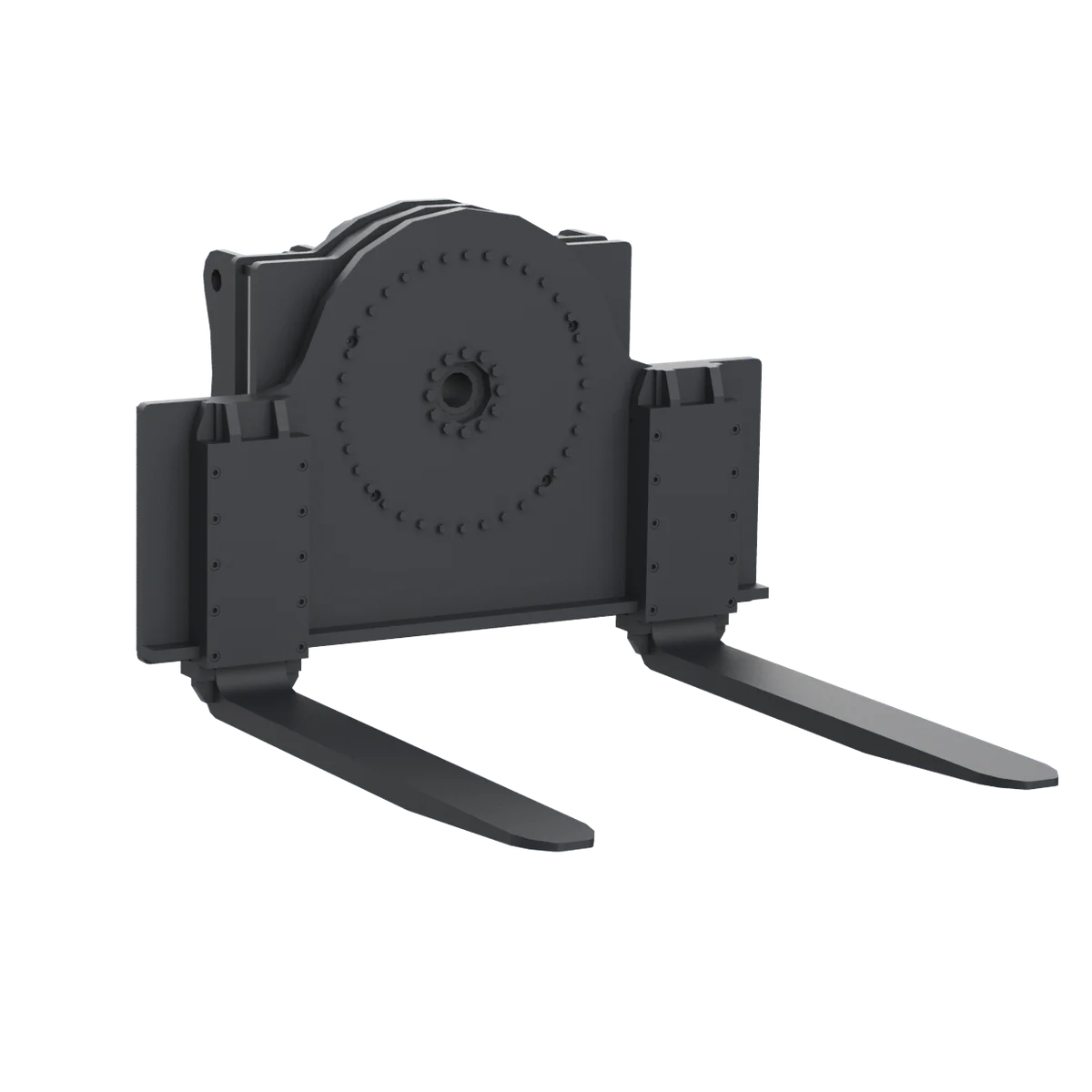
- Rotating attachments — rotators, turnaforks and revolving clamps that turn a load through a fixed angle or a full 360°.
- Clamping attachments — fork clamps, bale clamps and carton clamps that grip a load instead of supporting it from below.
- Positioning attachments — fork positioners and side shifters that move the forks laterally without the operator leaving the seat.
- Load extension and support — fork extensions, hinged forks and high-capacity forks that change how the load is picked up.
Kaup forklift attachments, Bolzoni and Durwen equipment follow the same functional logic. The differences sit in the detail: mounting class, effective thickness, hydraulic circuit design, and how much residual capacity is left on the truck after the attachment is fitted.
How the Main Attachment Families Compare
The table below maps the applications we see most often in export enquiries to the attachment type that solves them, using specifications from the WONTONNE range.
| Attachment | Typical application | Motion | Capacity range |
|---|---|---|---|
| D Series Rotator, Standard Type | Container tipping, food, chemical, recycling, smelting | 360° rotation with forks or hoppers | Up to 6800 kg |
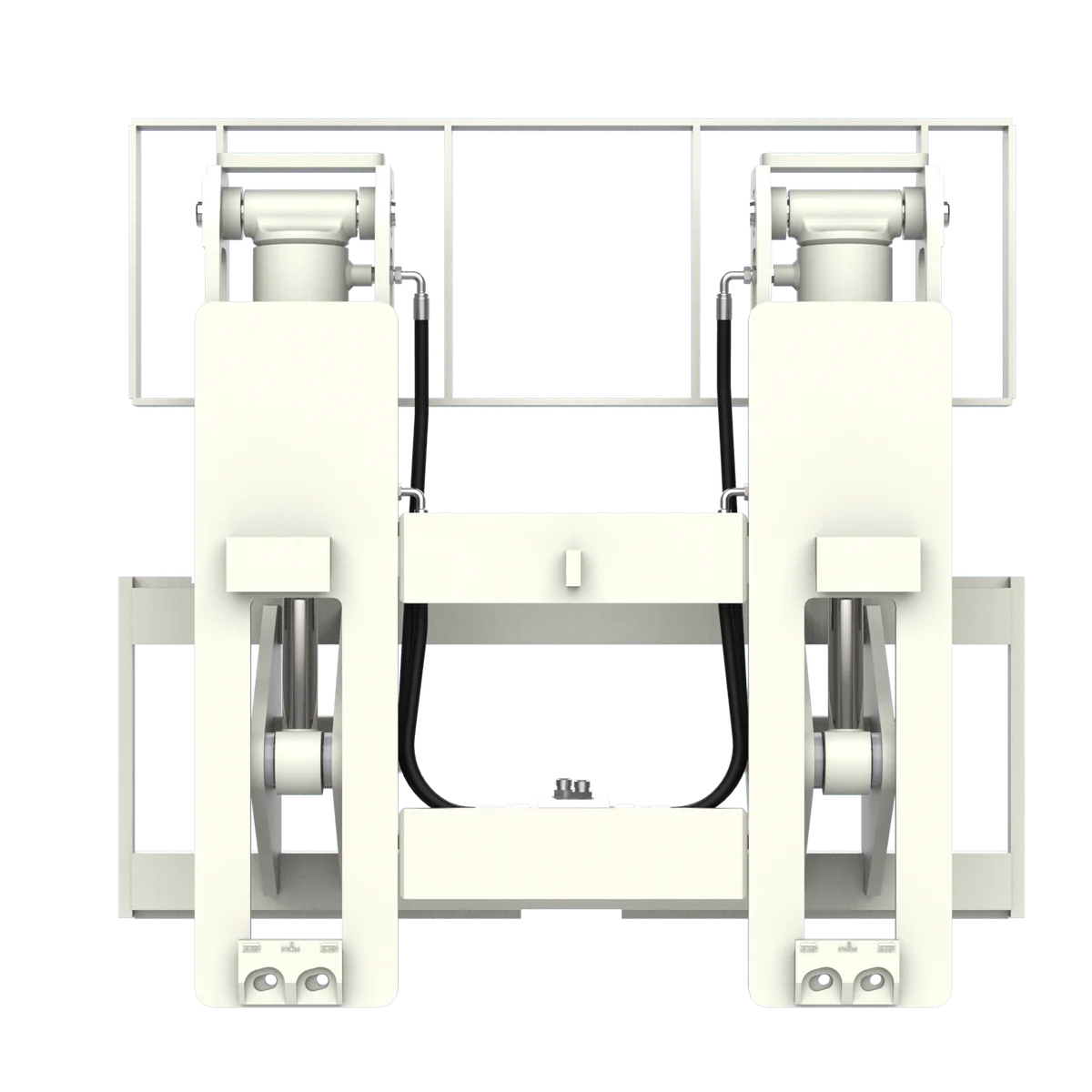
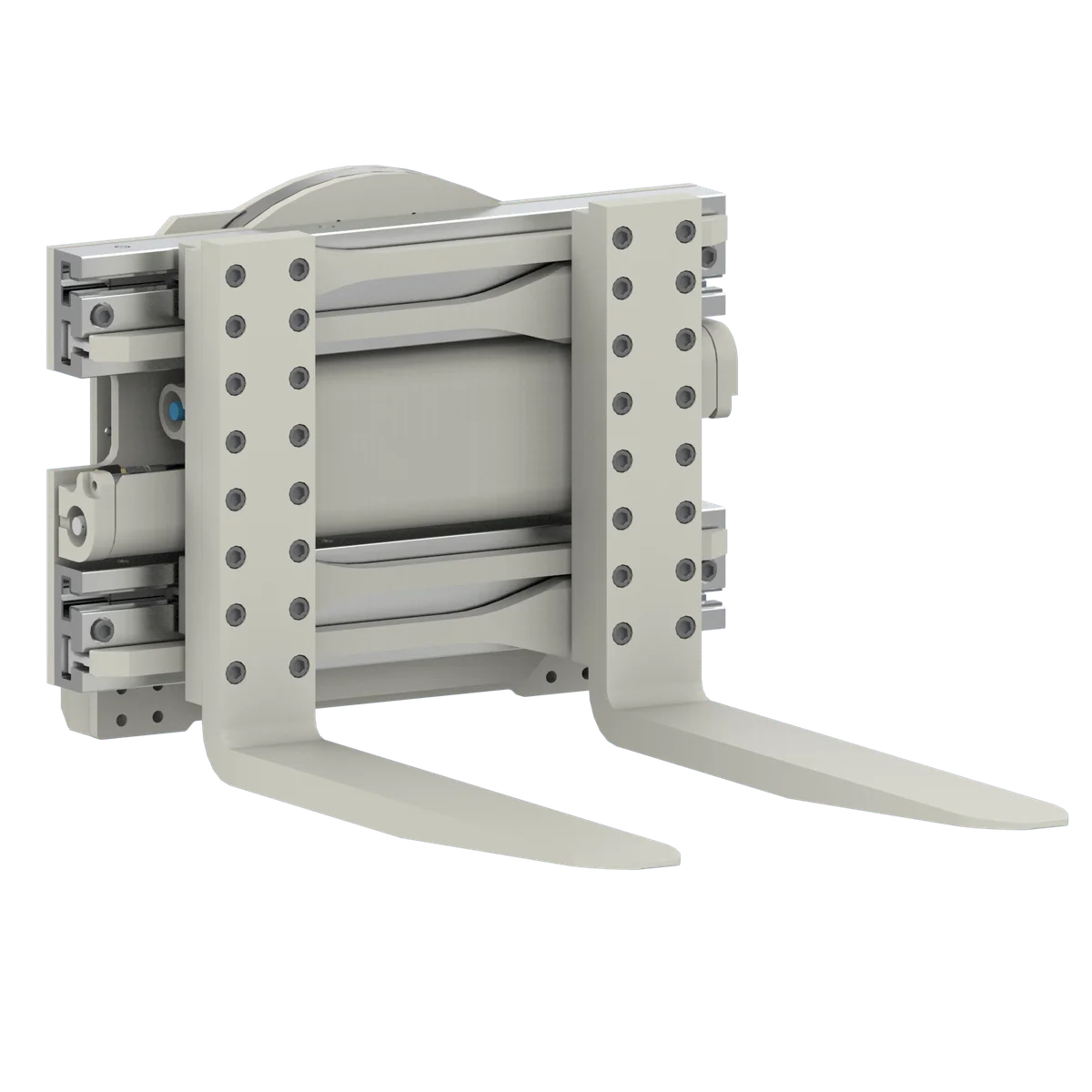
| Fork Clamps (Revolving Type) | Tobacco, paper, chemical fibre, ports, recycling | Forks tilt 45° and 90° for clamp and turn | Up to 2300 kg |
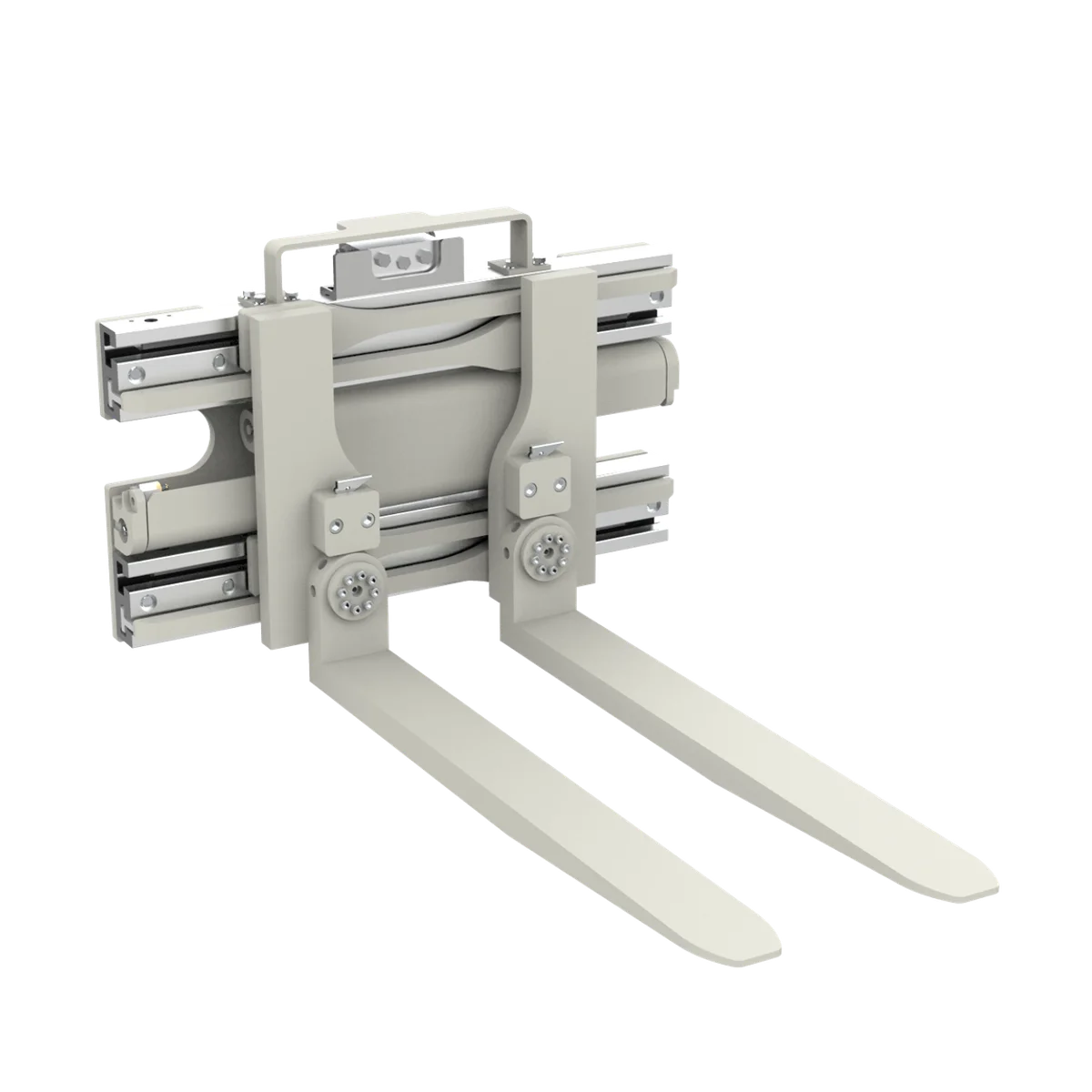
| Turnaforks | Palletised products, barrels, cylindrical bodies, bales | Carrying part turns 45° and 90° | Up to 2000 kg |
| Hinged Forks | Wood, construction, metal, livestock, bulk materials | 45° forward tilt, 25° rear tilt | Up to 5000 kg |
| Forklift Extension | Long or oversized loads on standard forks | Slips onto existing forks | Rated to 8500 kg |
Capacity figures are attachment ratings at the stated load centre. They are not the capacity of your truck once the attachment is mounted — see the section below.
Sizing the Attachment Without Losing Your Truck's Capacity
This is where most specification errors happen. Every attachment adds weight and moves the load centre forward, and both effects reduce the net capacity of the truck. Three numbers control the calculation:
- Attachment weight. A revolving fork clamp in the WONTONNE range weighs between 561 kg and 704 kg depending on model. That mass sits on the carriage and comes straight off your payload.
- Effective thickness. The distance the attachment adds between the carriage and the load face. Hinged forks range from 340 mm to 430 mm of effective thickness across the range; the D Series rotator runs from 127 mm to 201 mm.
- Load centre. Most of our clamp and rotator models are rated at a 500 mm or 600 mm load centre. Push the load further out and the rating drops.
Work through the truck's residual capacity chart with the attachment weight and the new load centre before you specify. If the margin is thin, a lighter attachment or a shorter fork length is usually the better answer than a larger truck.
Mounting class has to match
Attachments are built to ISO mounting classes. ISO 2A suits smaller carriages, ISO 3A covers the mid-range, and ISO 4A is used on heavier trucks. Our Forklift Forks (ISO 2A Mount) are intended for 1200–2500 kg capacity forklifts, the ISO 3A range for 3000–4000 kg trucks, and the ISO 4A range for 5000–7000 kg machines. A mismatch here means the attachment will not pin up correctly, regardless of rated capacity.
Choosing Between a Rotator, a Clamp and a Turnafork
These three overlap in marketing literature, so it helps to separate them by what the load needs.
Use a rotator when the load must be emptied or inverted
A 360° rotator is the right tool when the container itself has to be tipped — a bin, a hopper, a drum or a box of loose material. The D Series Rotator, Standard Type uses a hydraulic motor drive and a rotating mechanism designed for repeated cycles, and is used with forks or hoppers. It is common in food processing, chemical plants, recycling yards and foundries.
Use a clamp when the load has no pallet
Revolving fork clamps handle cargo directly or on a pallet, with forks that tilt through 45° and 90° so the operator can clamp, lift and turn in one sequence. They are widely used for bales and cartons in tobacco, paper and chemical fibre operations, and in ports and recycling. Capacity in our range reaches 2300 kg.
Use turnaforks for mixed palletised and cylindrical loads
Turnaforks combine a turning carrying part with hook-on fork work, which makes them a practical compromise where a fleet handles palletised goods, barrels and cylindrical bodies on the same shift. The carrying part turns 45° and 90°, and the range is rated to 2000 kg.
Forks, Extensions and the Rest of the Front End
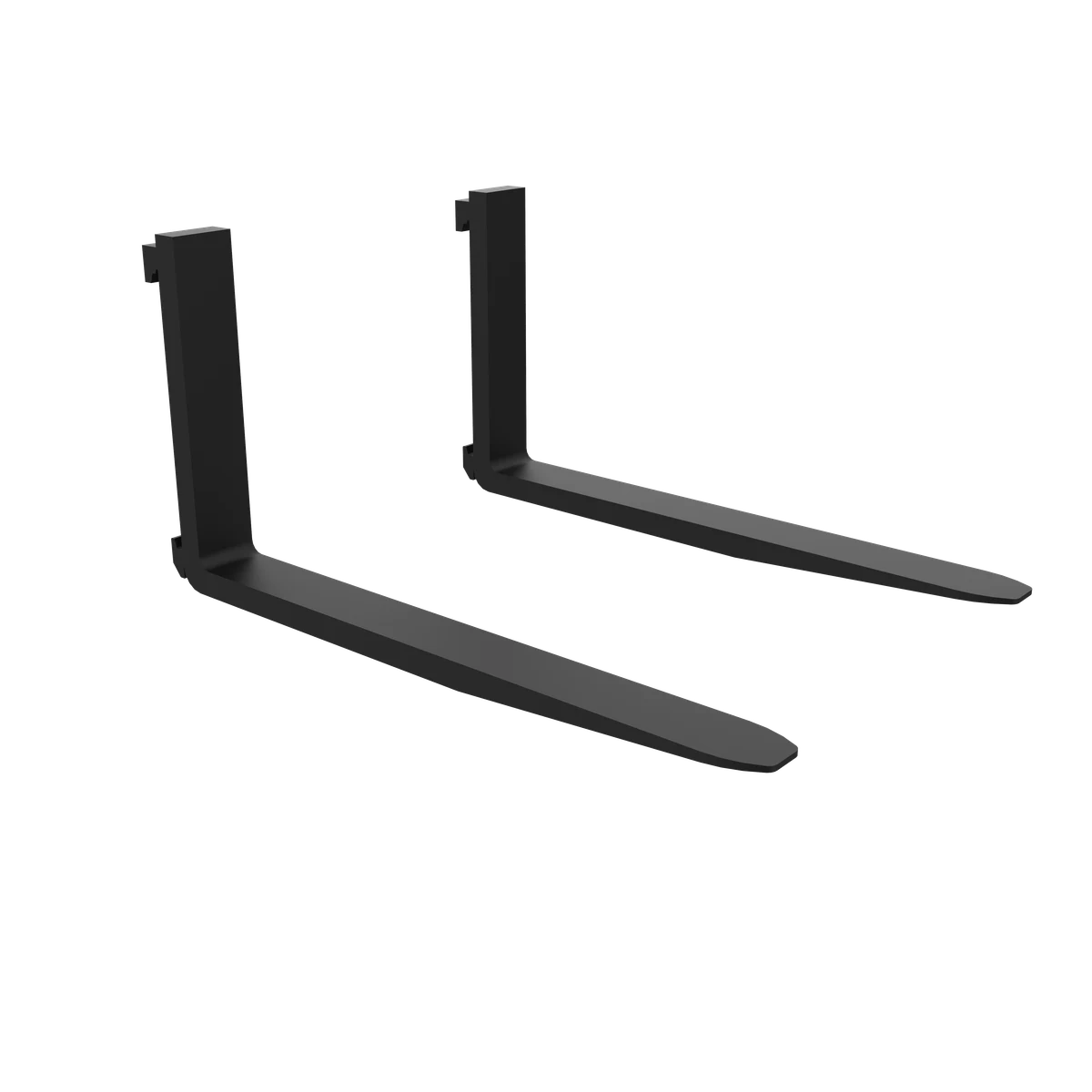
Attachments only perform as well as the forks underneath them. Cascade forklift forks are sold on the same logic we apply: forged or heat-treated steel, the correct mounting class, and a length that suits the racking and the load. Our ISO 3A forks use high quality heat-treated steel, while the ISO 4A forks are built as a multi-purpose handling tool supporting fork, clamp, push and pull operations with side shift.
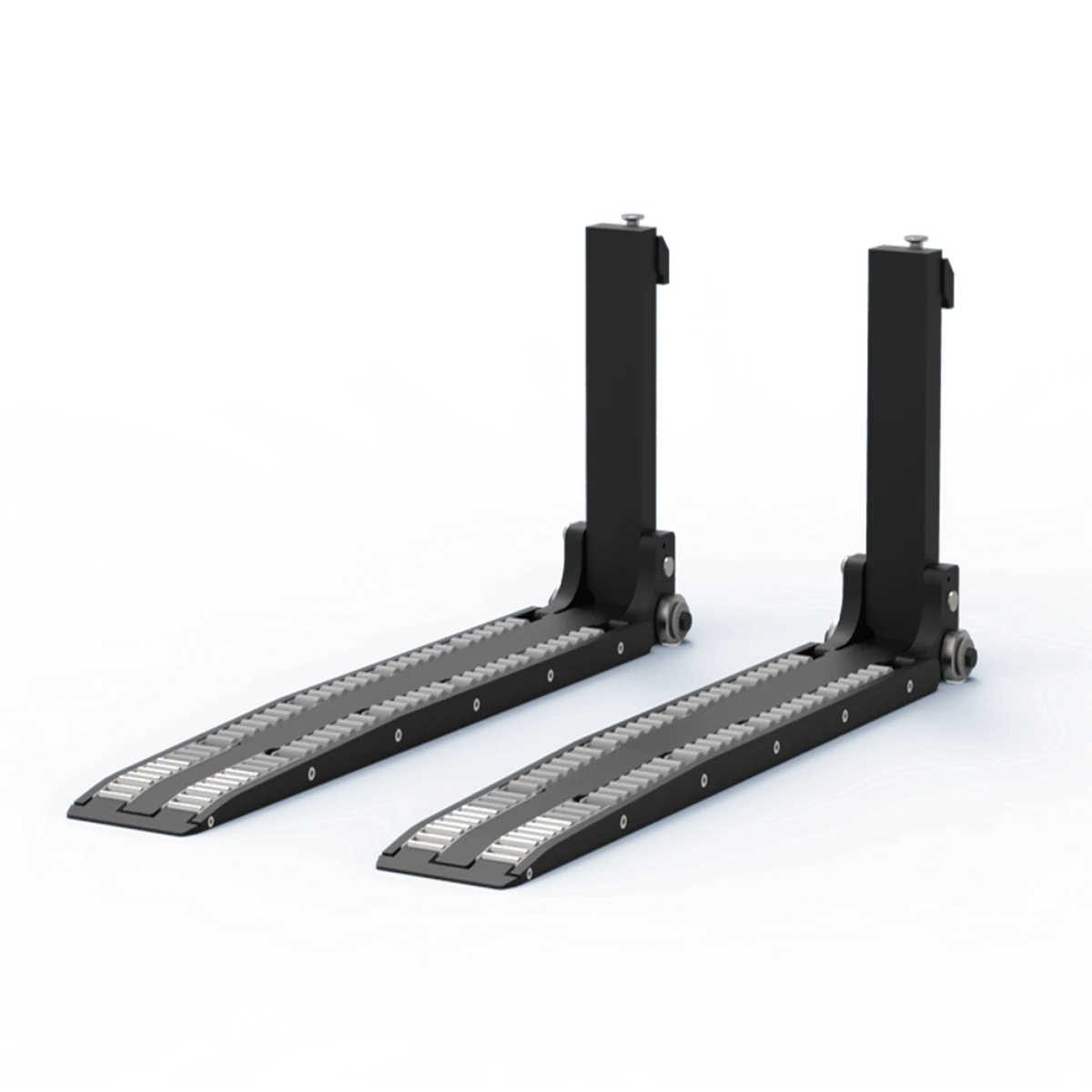
Where the load is simply too long for the truck, a Forklift Extension slips onto the existing forks with a closed-bottom design and a galvanized or painted finish, rated to 8500 kg. For operations that need the fork to tilt with the mast rather than the carriage, Hinged Forks are embedded in the mast, which reduces effective thickness and therefore load loss, with a check valve locking pressure safely.
You can review the full line on our all forklift attachments page.
Frequently Asked Questions
Are WONTONNE attachments compatible with Cascade-style carriages?
Our attachments are built to ISO mounting classes and are compatible with major forklift brands, so they mount to standard carriages in the same way as Cascade or Kaup equipment. Always confirm the mounting class and hydraulic circuit of your truck before ordering.
How much capacity do I lose when fitting a rotating attachment?
It depends on attachment weight, effective thickness and the resulting load centre. A revolving fork clamp, for example, weighs between 561 kg and 704 kg and is rated at a 600 mm load centre, so the loss is significant on a small truck. Calculate residual capacity before you specify.
Can one attachment handle both palletised and unpalletised loads?
In many cases yes. Revolving fork clamps handle cargo directly or by pallet, and turnaforks combine turning with hook-on fork work for palletised products, barrels and cylindrical bodies. If your mix includes loose bulk material, consider hinged forks with the optional bucket instead.
Next Step
Send us the load weight, load dimensions, load centre, truck model and mounting class, and we will confirm which attachment in the WONTONNE range fits — including the models, capacities and fork lengths that match your application. Our team supports technical selection, spare parts and after-sales service for every unit we ship. Contact WONTONNE to start the specification.