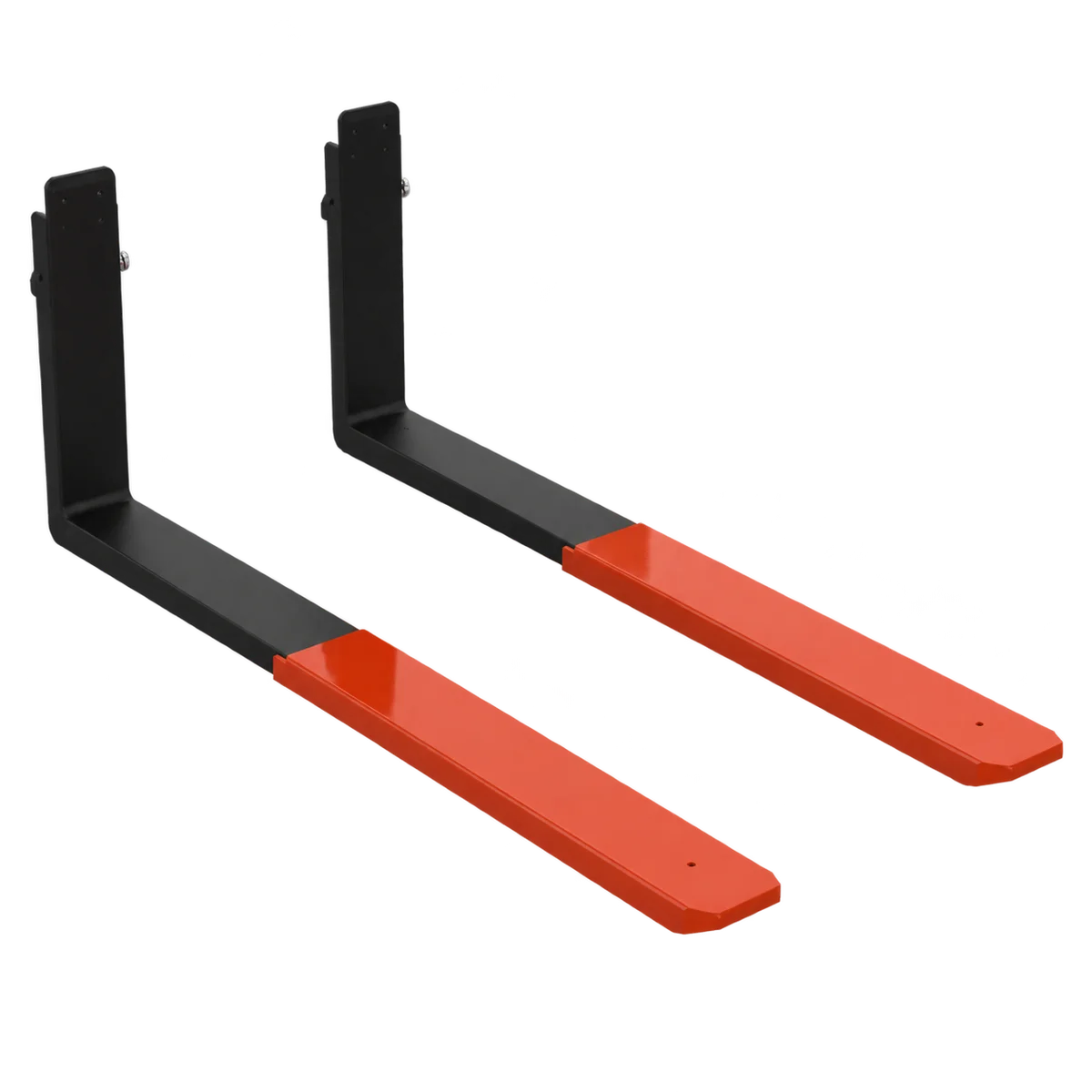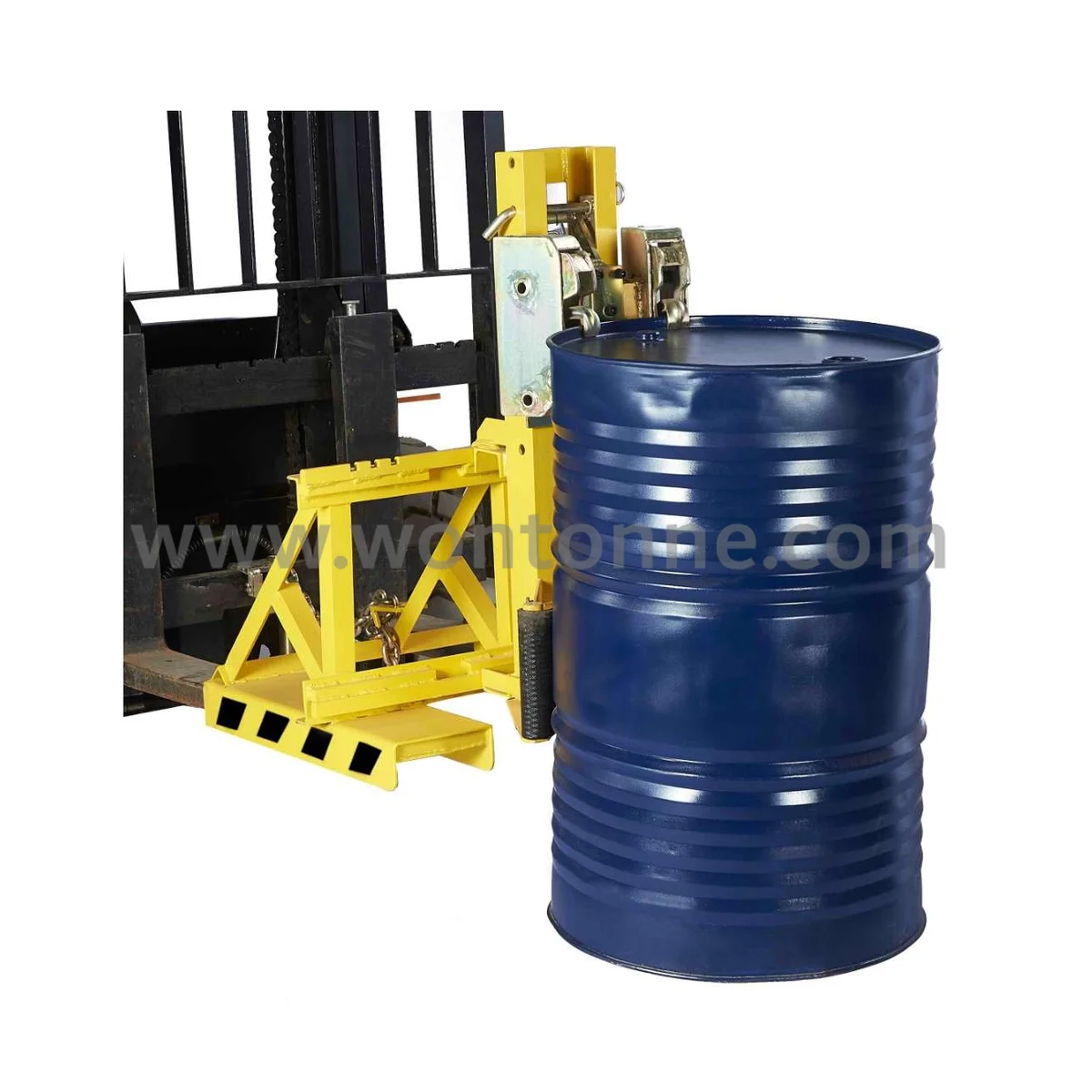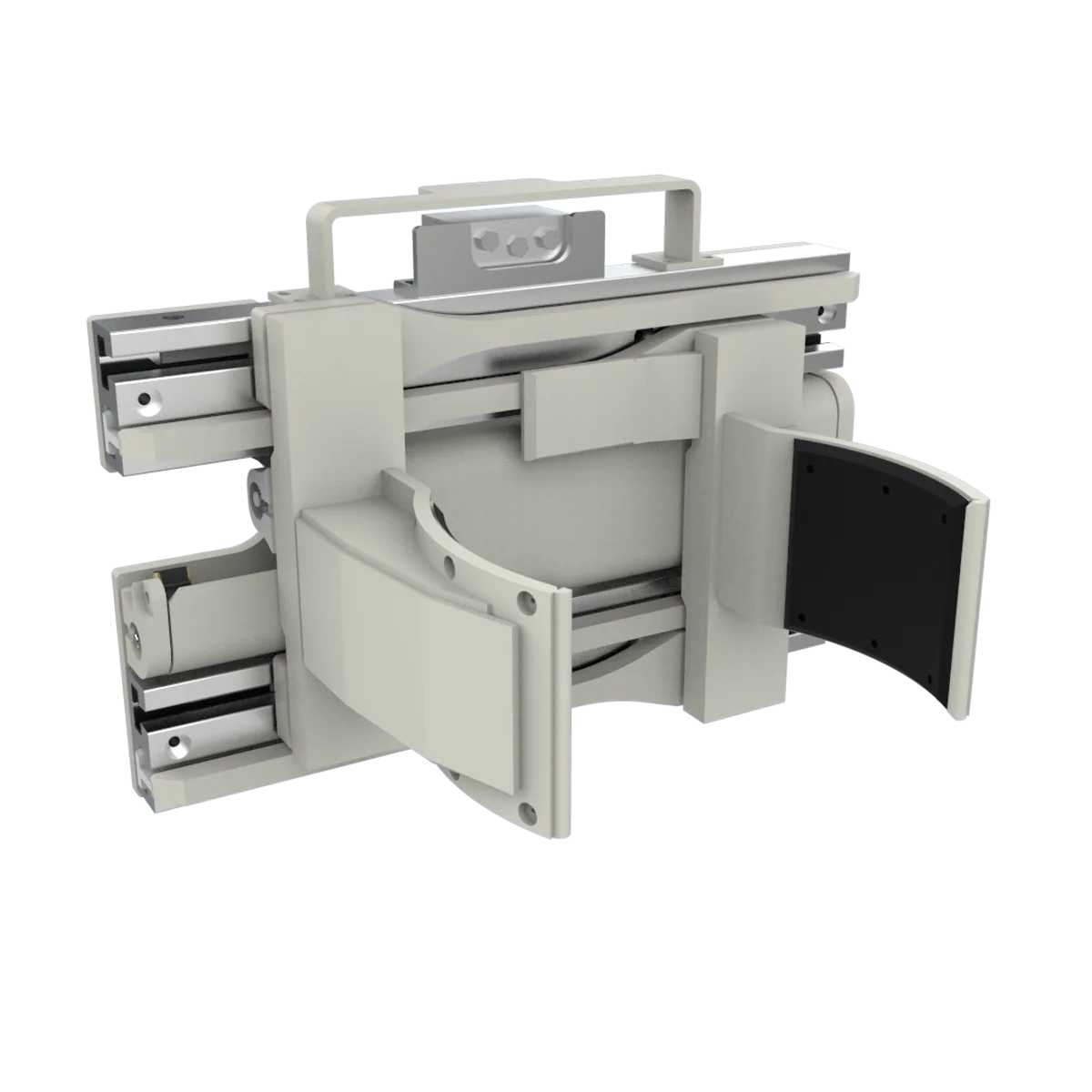

A crane hook is the interface between a lifting machine and the load: the point where a sling, shackle or below-the-hook device is attached so the load can be raised and moved under control. On a forklift, that interface is created by a jib crane or hook attachment that mounts to the fork carriage and presents one or more hoist hooks beyond the mast. The difference between a good and a poor choice is rarely the hook itself — it is how the attachment is mounted, how far the load hangs from the carriage, and how much rated capacity is left after the attachment is fitted.
WONTONNE has manufactured forklift attachments and material handling equipment for more than 20 years, and we export jib cranes and hook attachments to industrial buyers worldwide. This guide explains the design logic behind crane hook attachments, the specifications that actually govern safe working load, and how to choose between a fixed jib and a telescopic one.
What a crane hook attachment does on a forklift
A forklift is designed to carry a load on its forks, close to the carriage and low to the ground. A suspended load behaves differently. Once a load hangs from a crane hook, it can swing, rotate and shift its center of gravity, and the load center moves forward of the fork face. The attachment has to transfer that hanging load back into the carriage without overloading the mast, the carriage or the truck.
Three design decisions follow from that:
- Mounting. The attachment must engage the fork carriage securely. The mounting class describes which carriage it is built for, and it must match the truck.
- Effective thickness. Every millimeter of structure between the carriage and the hook pushes the load center forward and reduces the capacity the truck can safely handle.
- Hook configuration. One hook is enough for a single sling; multiple hooks let the operator pick a position that keeps the load balanced and the sling angle reasonable.
This is why a crane hook attachment is specified as a system — carriage interface, structure, hook positions and rated capacity — rather than as a hook alone.
Fixed jib or telescopic jib: matching reach to the load
The two families of forklift jib crane solve different handling problems.
Fixed-arm jib cranes
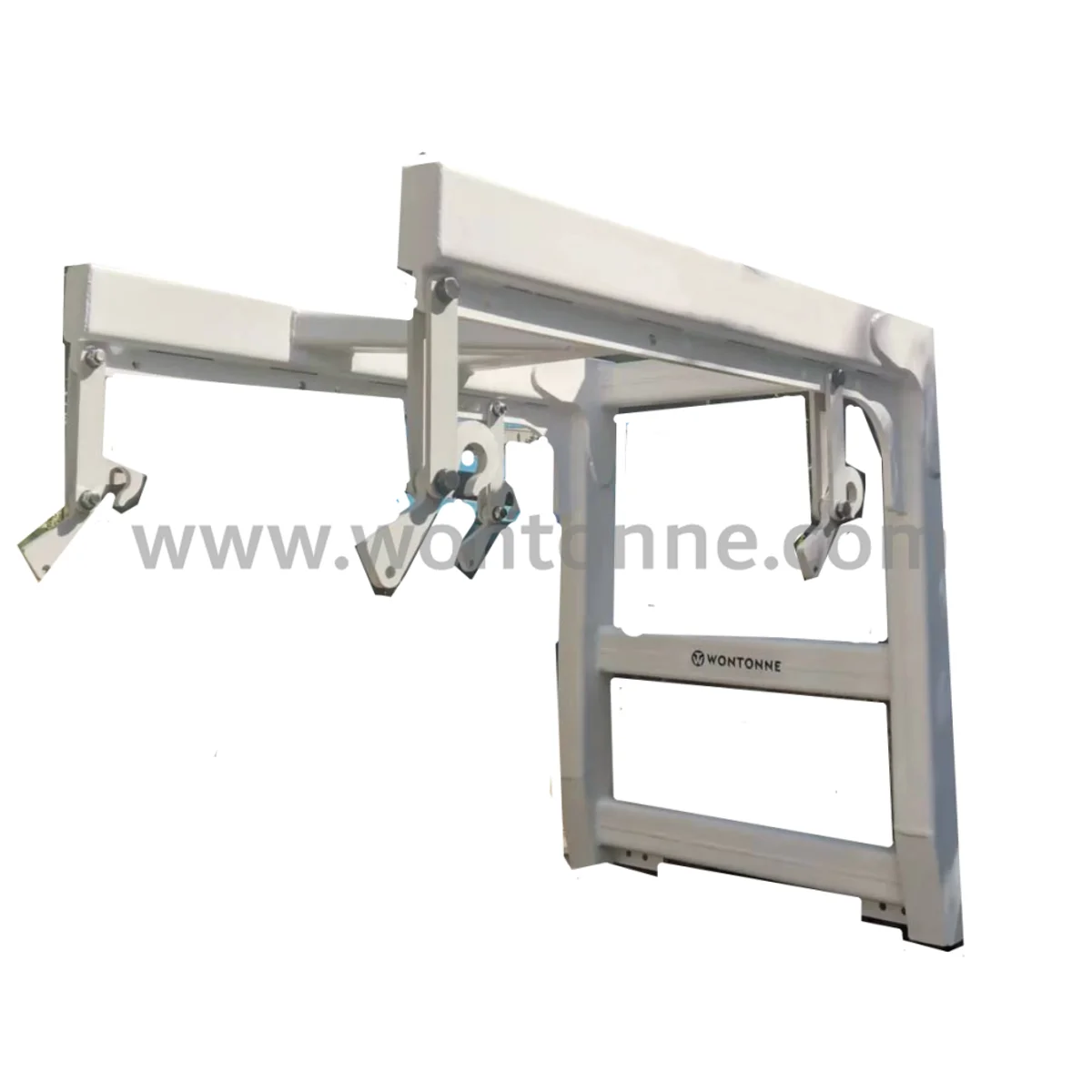
A fixed jib holds the hook at a set distance from the carriage. The geometry is simple, the structure is stiff, and there are no moving sections to inspect. The WONTONNE DB Series Jib Crane is built on this principle: it hooks onto the fork carriage with a short effective thickness to preserve load capacity, and it provides four hoist hooks so the operator can spread or reposition slings for a stable lift. It is rated up to 3000 kg and is available in ISO 3A mounting class models.
Telescopic jib cranes
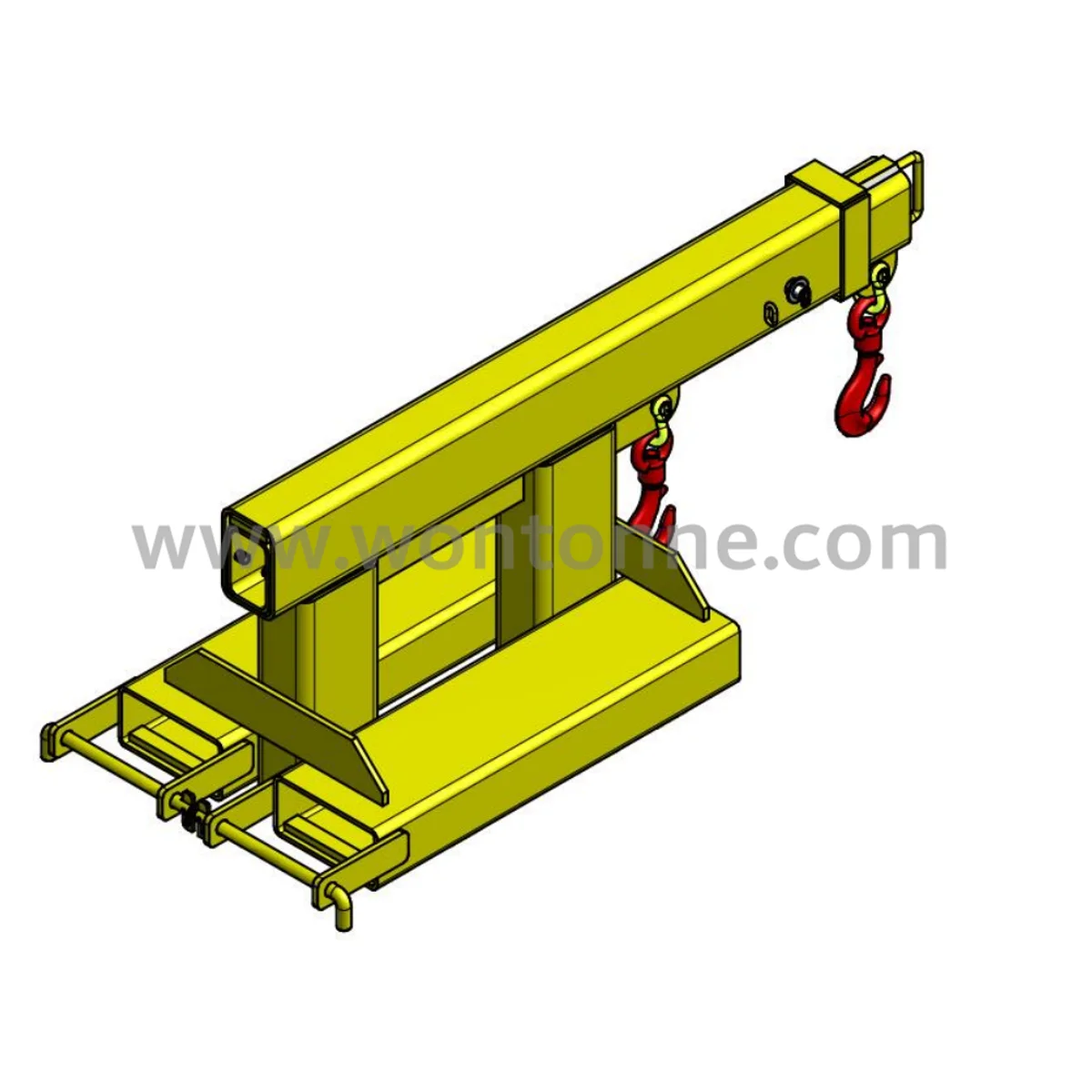
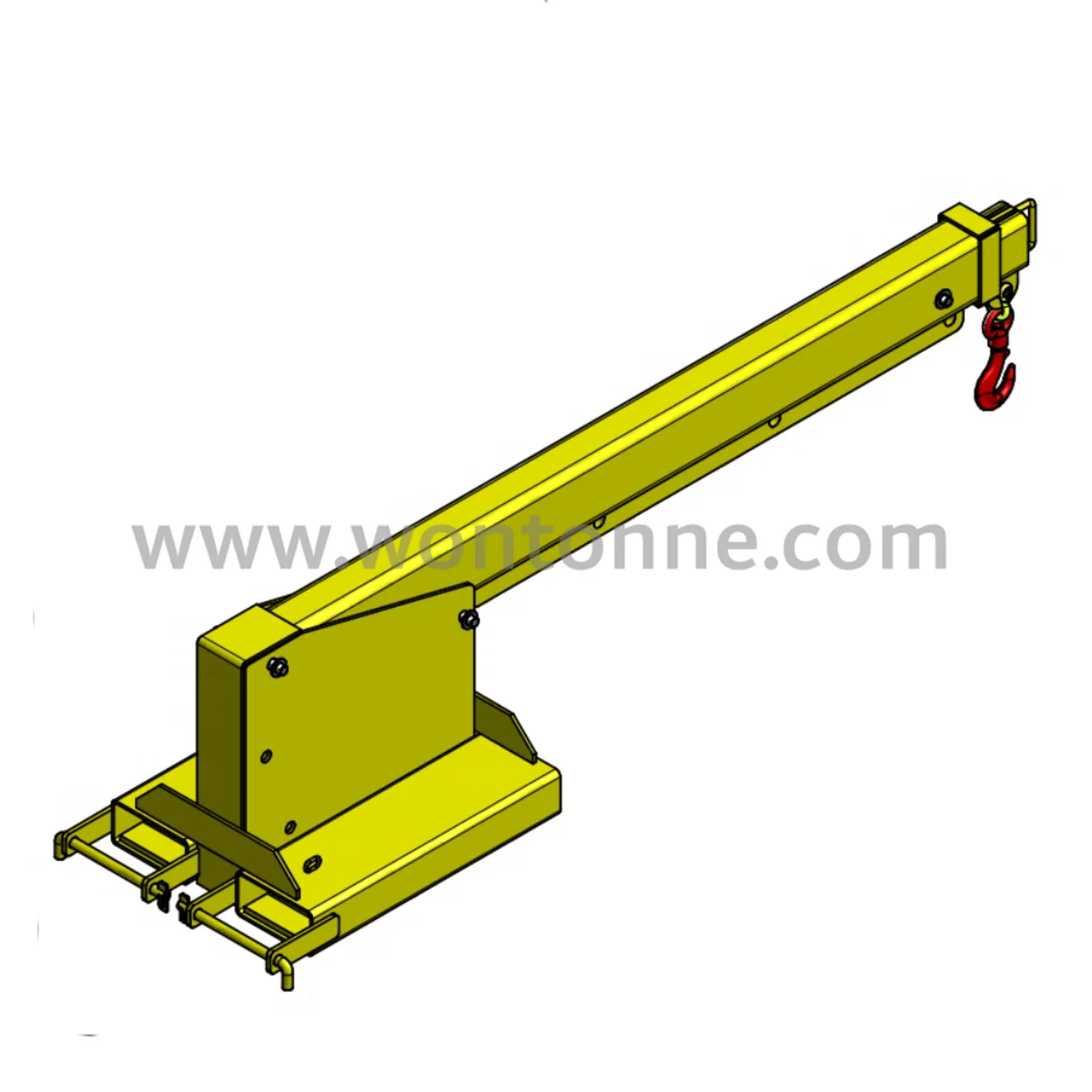
A telescopic jib extends in length, so the same attachment can reach a load close to the mast or further out, depending on where the load sits. That flexibility matters when the load position varies — for example, lifting through a doorway, over an obstacle or into a container. The trade-off is that capacity falls as the jib extends, because the load center moves further from the carriage.
WONTONNE builds two telescopic families. The FJ Series Telescopic Forklift Jib Crane extends in length and is available with painting or electric galvanized surface treatment, rated up to 2000 kg. The TJ Series Telescopic Forklift Jib Crane both extends in length and changes angle, which suits more versatile lifting operations, and is rated up to 3000 kg. Both are compatible with major forklift brands.
Specifications that decide real lifting capacity
Buyers often compare attachments on headline capacity alone. In practice, four figures determine whether a crane hook attachment is safe on a given truck.
| Specification | What it means | Why it matters |
|---|---|---|
| Rated capacity | Maximum load the attachment is designed to carry | Sets the upper limit before truck derating is applied |
| Load center | Distance from the carriage to the load position | The further out the load hangs, the lower the usable capacity |
| Mounting class | Carriage interface the attachment is built for | Must match the truck; an incorrect class cannot be fitted safely |
| Effective thickness | Structure depth between carriage and hook | Adds to the load center and consumes capacity |
| Weight | Attachment's own mass | Counts as part of the load on the mast and front axle |
| Roll range | Extension travel on telescopic models | Defines how far the hook can reach and where capacity applies |
Take the FJ Series as an example. Model FJC20-001A is rated 2000 kg at a 600 mm load center, weighs 190 kg, uses ISO 2A mounting, has a roll range of 1000–1800 mm and an effective thickness of 100 mm. The TJ Series model TJC30-001A is rated 3000 kg at a 600 mm load center, weighs 250 kg, uses ISO 3A mounting, has a roll range of 1000–2000 mm and an effective thickness of 120 mm. Those numbers, not the headline capacity, are what an engineer checks against the truck nameplate.
How to select a crane hook attachment in five steps
- Read the truck nameplate. Record the original rated capacity and load center before any attachment is fitted.
- Measure the load. Note the weight, the dimensions and how far the hook must be from the carriage to reach it.
- Choose the arm type. Fixed jib for a consistent pick position; telescopic for variable reach; telescopic with angle change when the lift path is not straight.
- Apply the derating. Use the attachment manufacturer's data for the specific truck and attachment model to establish the new rated capacity at the new load center.
- Verify the mounting class and hook count. Confirm the carriage interface matches and that the number and position of hoist hooks suit your sling arrangement.
If the resulting capacity is below what the job needs, the answer is a different attachment or a larger truck — not a shorter sling or a heavier counterweight.
Safety points that apply to every crane hook attachment
Hook attachments introduce suspended-load risks that normal fork work does not have. A few rules keep the operation predictable:
- Never lift a load that exceeds the derated capacity at the actual load center in use.
- Keep the load directly under the hook; a side-pulled hook loads the attachment and mast in a direction they were not designed for.
- Use a sling arrangement that keeps the load balanced across the available hoist hooks.
- Inspect hooks, latches and mounting points before each shift, and check the attachment structure for cracks or deformation.
- Travel with the load as low as the route allows, and avoid sudden braking or turning with a suspended load.
WONTONNE supplies technical support and spare parts for its attachments, so inspection and replacement parts stay consistent with the original design.
Frequently asked questions
What is the difference between a crane hook and a forklift hook attachment?
A crane hook is the load-carrying hook itself, fitted to a crane or hoist. A forklift hook attachment, such as a jib crane, is the structure that mounts on the fork carriage and presents one or more hoist hooks so a forklift can lift suspended loads. The hook is a component; the jib crane is the complete attachment.
Does fitting a jib crane reduce my forklift's lifting capacity?
Yes. The attachment's own weight, its effective thickness and the load center of the suspended load all reduce the capacity available at the hook compared with the truck's original fork rating. The correct working capacity is determined by applying the attachment manufacturer's derating data to the specific truck and attachment model.
How do I choose between the DB, FJ and TJ series?
Choose the DB Series when the pick position is fixed and you want a simple, stiff jib with multiple hoist hooks. Choose the FJ Series when the hook must extend to different distances and a 2000 kg class rating suits the load. Choose the TJ Series when the jib must both extend and change angle for more versatile lifting, with capacity up to 3000 kg.
Next step
Matching a crane hook attachment to a truck is a specification exercise, not a catalogue exercise. Send us your truck model, nameplate capacity, load weight and the reach you need, and WONTONNE will recommend the right jib crane from the full range of forklift attachments and confirm the derated capacity at your working load center. You can reach our team through the contact page for technical support and spare parts enquiries.