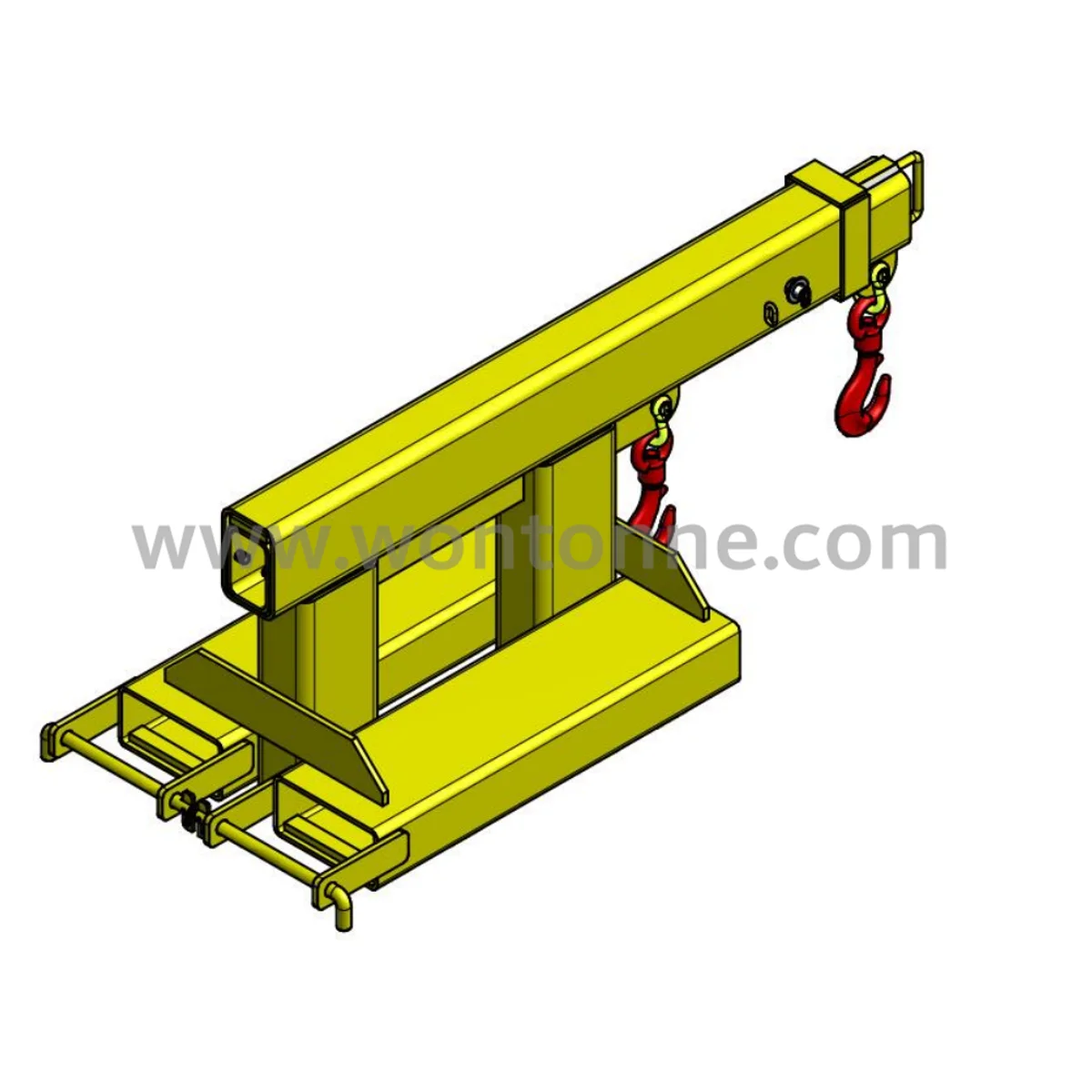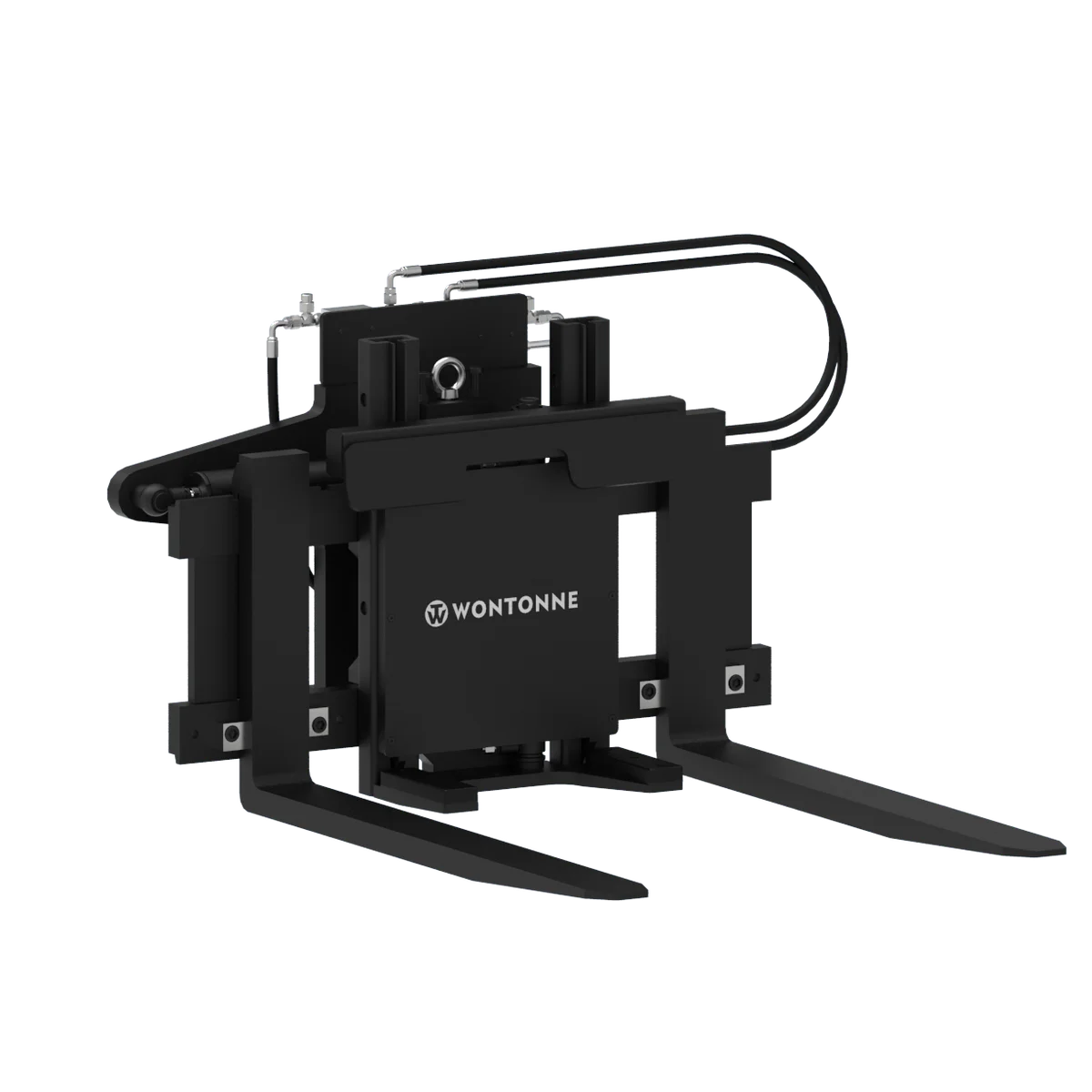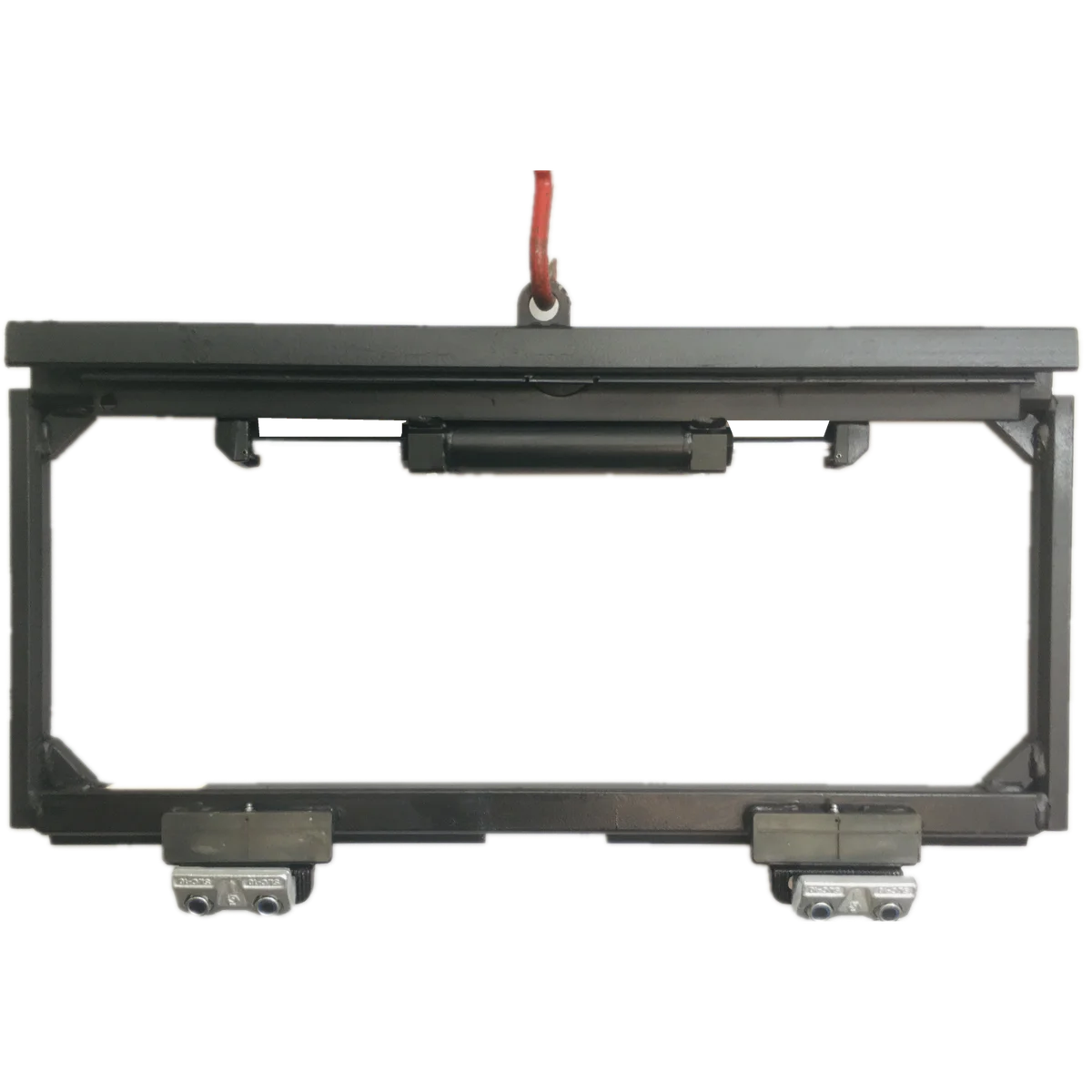

Waste bins in an industrial setting are not the same product as the wheeled containers you see on a residential street. When material has to move by forklift, the bin becomes a load-bearing steel structure with defined lifting points, a controlled discharge method and a capacity rating that has to be matched to the truck. This guide covers the main categories of forklift-mounted waste bins, the capacity ranges available, and the practical points that decide which bin and which attachment belong together.
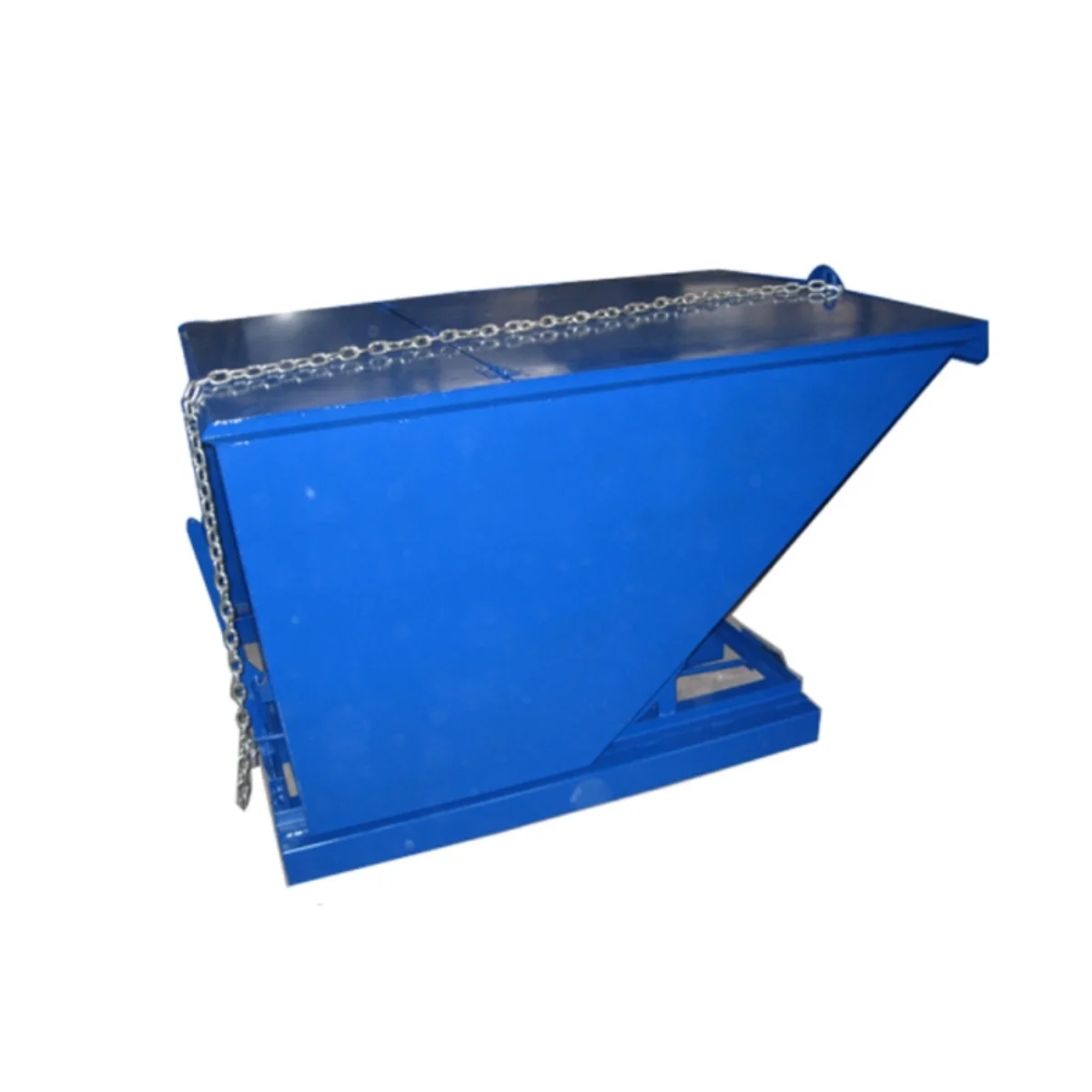
WONTONNE has manufactured waste bins and material handling attachments for more than 20 years, exporting to packhouses, factories, recycling yards, mines and ports. The six bin families below are the ones most often specified, and each exists because a different discharge method or duty cycle suits it better than the others.
Why forklift waste bins differ from standard containers
A conventional commercial waste bin is designed to be pushed, tipped by a truck-mounted lift or emptied by hand. A forklift waste bin is designed to be picked up on forks or on a dedicated attachment, carried as a suspended load, and emptied without anyone touching the contents. That changes three things:
- Structure: the shell has to resist the point loads of fork entry and the racking forces of being carried, so plate thickness, bracing and weld quality matter more than cosmetic finish.
- Discharge: the bin either tips forward, releases through a bottom door, or is emptied by an attachment that rotates or tilts it. The bin geometry and the attachment geometry must agree.
- Rated capacity: every bin carries a working capacity, and the forklift's residual capacity at the relevant load centre has to cover the bin plus its contents.
This is why a bin bought purely on volume often disappoints. A 10m³ shell is easy to build; a 10m³ shell that survives years of scrap loading and forklift handling is a different engineering exercise.
The main types of forklift waste bins
Tipping bins for general waste and mixed material
The D Series Tipping Bins are the general-purpose option: easy to use for collecting waste from packhouses, farmyards, factory floors, workshops and building sites, with quick and convenient dumping. They are built in LD, MD and HD models so the same footprint can be specified in different duty grades, and the series is rated to a capacity of up to 2500 kg. Model numbers in the range run from D-25-LD through D-33-LD, D-50-LD, D-75-LD, D-100-LD and D-150-LD, giving a spread of sizes within one design family.
Self-dumping bins for scrap and bulk waste
The SK Series Waste Bins are intended for loading, transporting and handling waste and scrap. They are fully welded inside and outside with 5mm CFW welds, and burrs and sharp edges are removed — a detail that matters when operators are working around the bin by hand. The series is customizable and can be supplied with surface treatment. Capacities run from 2m³ to 10m³ across models SK2, SK3, SK4, SK6, SK9 and SK10, with a stated maximum of 10m³.
Drop bottom bins for solid waste
Where the discharge point is a hopper, a shredder feed or a container that a tipped bin cannot reach, a bottom-release design is more practical. The DB Series Drop Bottom Bins are heavy duty units manufactured from 3mm plate and reinforced for solid waste, with a quick-release bottom door for fast material discharge. The two models in the range, DB 800 and DB 1100, are both rated to a capacity of up to 1000 kg.
Lightweight bins for high-volume, low-density material
Cardboard, packaging film and similar material fills volume long before it approaches a weight limit. The LC Series Waste Bins address that with structured channel exterior bracing and reinforced lips for dumping, seam-free sides and bottom for longer lasting quality, and drain holes in the floors. Capacities run from 6m³ through LC6, LC7, LC8 and LC11 up to LC17, with a stated maximum of 17m³.
Heavy duty and custom-built bins
The HB Series Waste Bins are built from Q235 steel and can be customized according to drawing specifications, with various plate thicknesses and surface treatment available. The series is also planned around shipping efficiency: 4 pcs fit in a 40ft container and 3 pcs in a 20ft container. Capacities span 8m³ to 30m³ across models including HB 8, HB 10, HB 12, HB 15, HB 23 and HB 27.
Flat pack bins for remote sites
For mines, ports and garbage dumps, freight cost can exceed the value of the steel. The FP Series Waste Bins are produced for exactly those environments and are available as flat packs and semi-finished welding, with local welding and painting, easy installation and customizable designs. The approach greatly saves logistic fees. The series covers FP 6 and FP 9, with a stated maximum of 9m³.
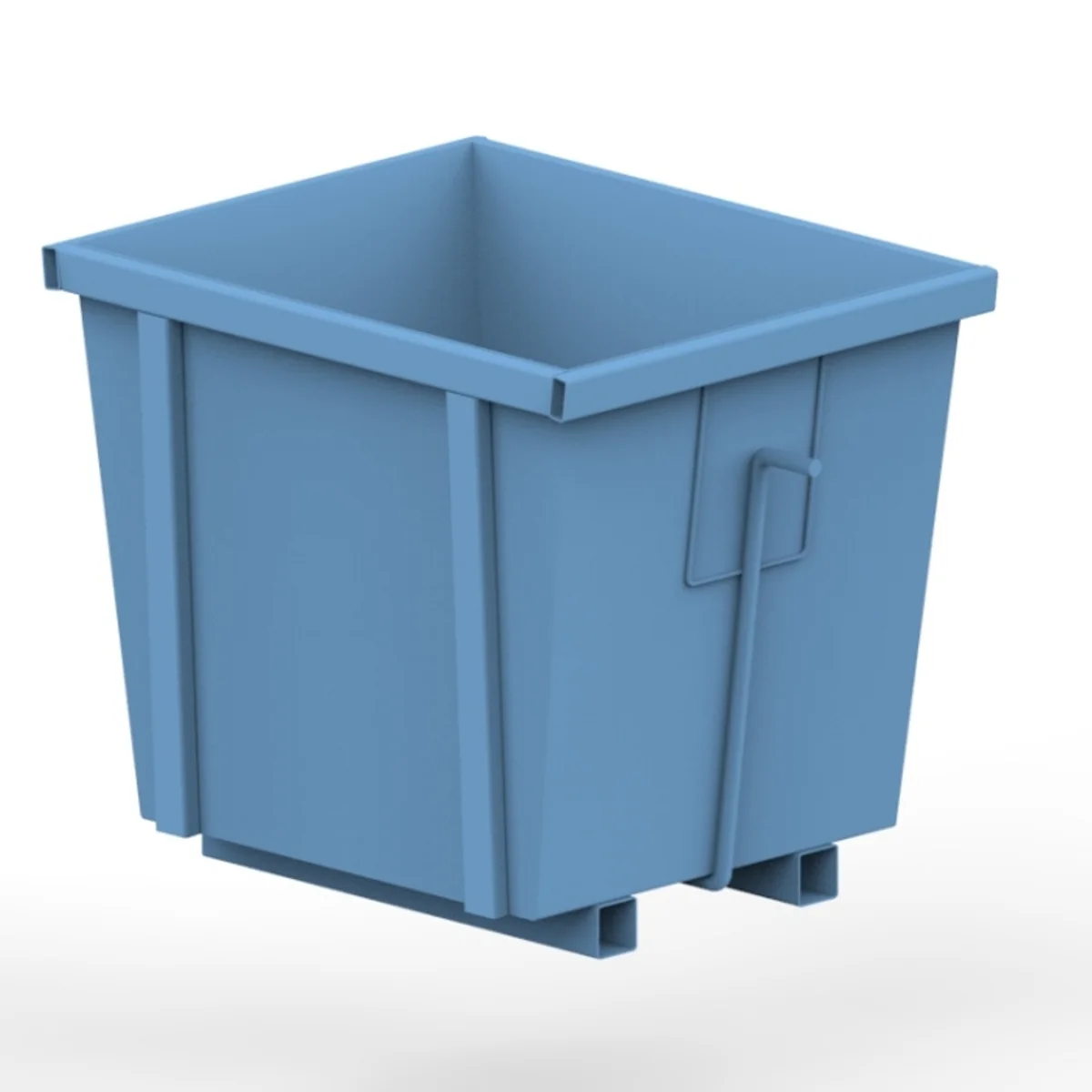
Comparing the WONTONNE waste bin series
| Series | Typical use | Discharge method | Capacity range | Construction notes |
|---|---|---|---|---|
| D Series Tipping Bins | Packhouse, farmyard, factory floor, workshop, building site | Tipping | Up to 2500 kg | LD, MD and HD models; D-25-LD to D-150-LD |
| SK Series Waste Bins | Waste and scrap handling | Self-dumping | 2m³ to 10m³ | Fully welded inside and outside, 5mm CFW welds, burrs removed |
| DB Series Drop Bottom Bins | Solid waste | Quick-release bottom door | Up to 1000 kg | 3mm plate, reinforced; DB 800 and DB 1100 |
| LC Series Waste Bins | High-volume, low-density waste | Tipping | 6m³ to 17m³ | Channel exterior bracing, reinforced lips, seam-free, drain holes |
| HB Series Waste Bins | Heavy duty and custom builds | Depends on configuration | 8m³ to 30m³ | Q235 steel, various plate thicknesses, 4 pcs per 40ft container |
| FP Series Waste Bins | Mines, ports, garbage dumps | Depends on configuration | 6m³ to 9m³ | Flat pack and semi-finished options, local welding and painting |
All series are compatible with major forklift brands, and WONTONNE provides after-sales support including technical support and spare parts.
Matching the bin to the forklift attachment
A bin without a compatible attachment is a static container. Two attachment families cover most waste handling work:
- Sanitation Forks — built for dumping goods in the sanitation sector, with efficient forward dumping, alloy steel forged forks, imported hydraulic seals and hoses, and a forward check valve that holds pressure. The two models, HW25D-006B and HW50D-006C, are rated to 2500 kg and 5000 kg respectively, with load centres of 500 mm and 600 mm.
- Hinged Broke Handler (With Forks) — increases fork frame tilt angles to 45° forward and 12° backward, with a jaw that holds goods during transport. It suits non-standard packaging goods and handles waste paper, straw and fibre, as well as recycling and scrap clamping. Models HKB30D-022B and HKB30D-024B are both rated to 2500 kg at a 500 mm load centre, with roll ranges of -100~1900 and -180~1800.
Before ordering, confirm three things: the bin's lifting or tipping geometry matches the attachment, the forklift's residual capacity at the working load centre covers the loaded bin, and there is enough tipping clearance and aisle width for the discharge motion. A bin that fits the truck but not the aisle is still the wrong bin.
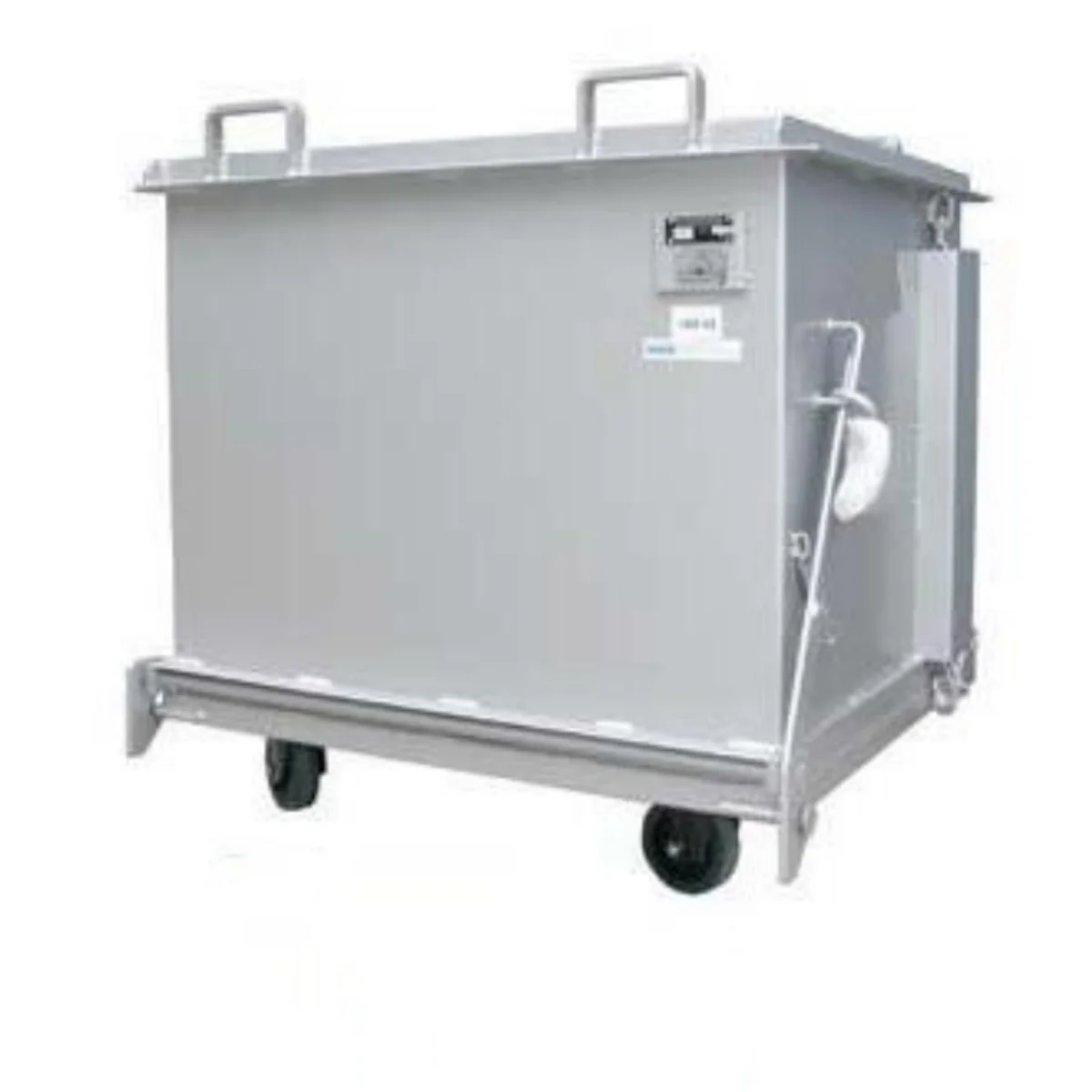
What to check when buying waste bins for sale
Most procurement problems trace back to specification gaps rather than price. Work through this list before you request a quotation:
- Material and density. Scrap metal, wet organic waste and cardboard place very different demands on plate thickness and reinforcement.
- Discharge point. Decide whether the bin tips, releases from the bottom, or is emptied by the attachment. That single decision narrows the range immediately.
- Volume versus weight. Confirm which limit you will hit first. A 17m³ bin loaded with dense material will exceed a truck long before it is full.
- Environment. Outdoor and washdown use favours drain holes and surface treatment; abrasive scrap favours heavier plate and deburred edges.
- Logistics. For export orders, nesting and container packing change the landed cost. Flat pack and semi-finished options exist precisely for this reason.
- Customisation. Several series can be built to drawing, so non-standard footprints and plate thicknesses are worth asking about rather than designing around.
If you are also specifying the truck side of the system, the broader range of forklift attachments covers the related handling functions.
FAQ
What capacity waste bins can be mounted on a forklift?
WONTONNE bins range from units rated to a capacity of up to 1000 kg, such as the DB Series, through the D Series at up to 2500 kg, up to volume-based designs of 2m³ to 10m³ in the SK Series and 8m³ to 30m³ in the HB Series. The limiting factor is usually the forklift's residual capacity at the working load centre once the bin and its contents are added, not the bin itself.
How do I choose between a tipping bin and a drop bottom bin?
Choose tipping when the discharge point is open and the bin can be rotated or tilted to empty — this suits general waste from packhouses, farmyards, factory floors and building sites. Choose a drop bottom design when the material must be released downward into a hopper, shredder or enclosed container, or when solid waste needs fast discharge through a quick-release bottom door.
Can WONTONNE waste bins be customised and shipped efficiently?
Yes. The HB Series can be customised according to drawing specifications with various plate thicknesses and surface treatment, and the SK Series is also customizable to customer needs. For long-distance export, the FP Series is available as flat packs and semi-finished welding with local welding and painting, which greatly saves logistic fees. The HB Series is also planned for container loading at 4 pcs per 40ft container.
Talk to WONTONNE about your waste handling setup
Send us the material you handle, the volume you generate per shift, your forklift model and the discharge point, and we will recommend the bin series and attachment combination that fits. With more than 20 years of manufacturing experience and an export business serving packhouses, factories, recycling operations, mines and ports, WONTONNE can supply a standard model or build to your drawing. Contact WONTONNE to start the specification.