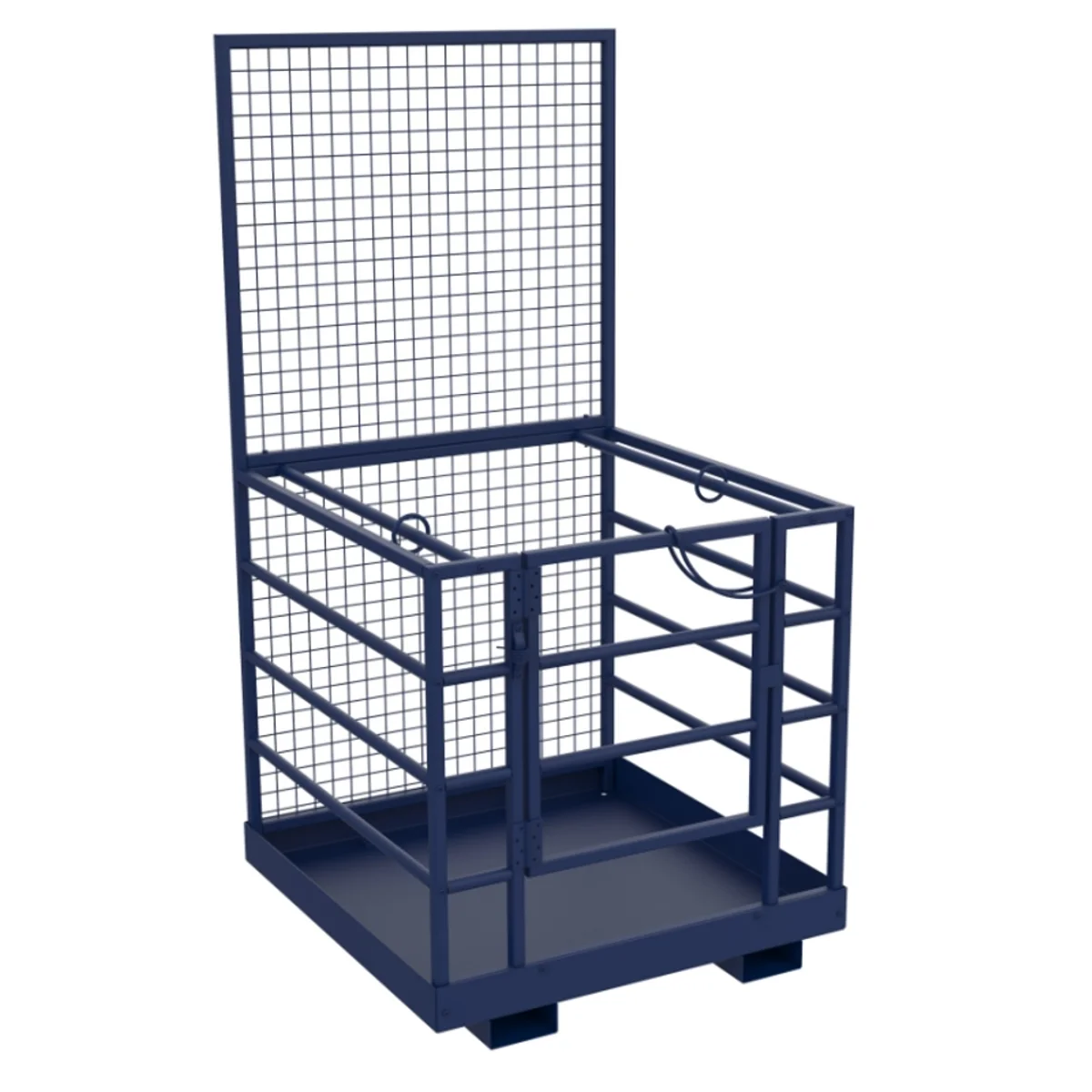
A working platform is an elevated, guarded surface that lets a person stand and work at height with both hands free. In material handling, the term usually means a fork-mounted platform: a steel cage that a forklift picks up on its forks so an operator can be raised to a rack face, a light fitting, a conveyor or a machine housing. WONTONNE has built attachments for material handling for more than 20 years, and the Working Platform is one of the simplest and most useful tools in that range. This guide explains what a working platform is, how it differs from other access equipment, and how to specify one without compromising capacity or safety.
What Counts as a Working Platform?
Broadly, any raised surface used as a place of work or as a means of access to a place of work falls under the heading of a working platform. That definition covers scaffolding, scissor lifts, boom lifts and permanently installed mezzanine platforms. In the forklift attachment world it means something more specific: a platform that mounts on the forks of an existing truck and is lifted by that truck.
That distinction matters because it changes who owns the risk. With a scissor lift, the lift is the machine and the platform is part of it. With a fork-mounted working platform, the forklift is the machine and the platform is an attachment. Capacity, stability and restraint all depend on the pairing, not on the platform alone.
Where fork-mounted platforms fit
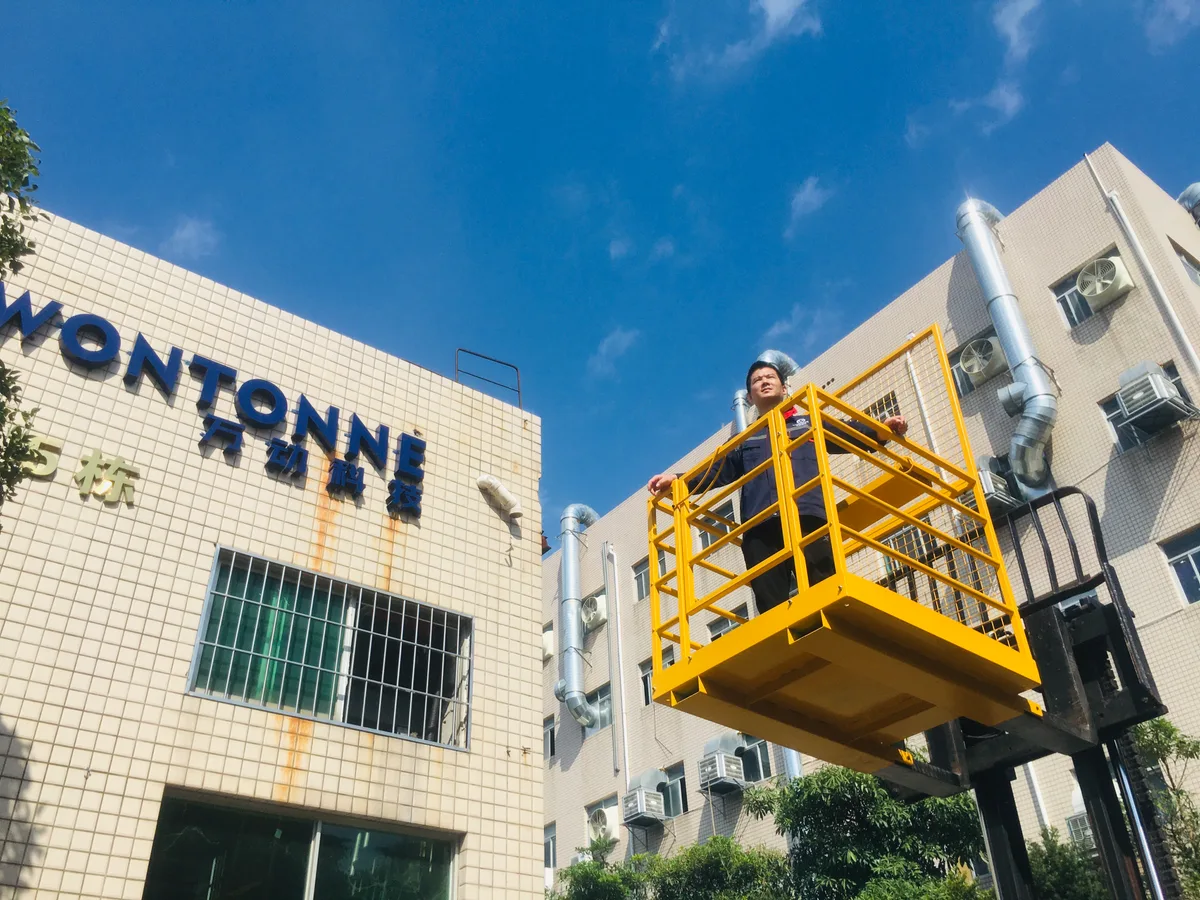
They are best suited to short-duration, repetitive tasks at low to moderate height: changing high-bay lamps, servicing overhead doors, cleaning ductwork, reaching racking, or working on machinery that sits above floor level. For long shifts at height, or for tasks that need the operator to travel while elevated, a purpose-built aerial work platform is usually the better tool. A working platform earns its place where a forklift is already on site, the task is brief, and setting up scaffolding would take longer than the job itself.
Working Platform vs Scaffold Tower vs Aerial Lift
The three options overlap in reach but differ in setup time, cost and regulation. The table below compares them on the points that usually decide the purchase.
| Factor | Fork-mounted working platform | Scaffold tower | Aerial work platform |
|---|---|---|---|
| Setup time | Minutes — pick up on the forks | Often 30 minutes or more | Minutes, but needs its own machine |
| Prime mover | Existing forklift | None | Dedicated lift |
| Operator travel while elevated | Not intended | No | Yes |
| Best for | Short, repeated overhead tasks | Long-duration work on one face | Long-duration or travelling work at height |
| Capacity reference | Up to 250 kg on the WONTONNE WB1010 | Depends on build | Depends on model |
If the job is a two-minute lamp change above a production line, a working platform is the fastest compliant answer. If the job is a full day of cladding work, it is not.
Design Features That Matter on a Forklift Platform
A platform is only as good as the details that keep a person inside it. When comparing models, look at these points before price:
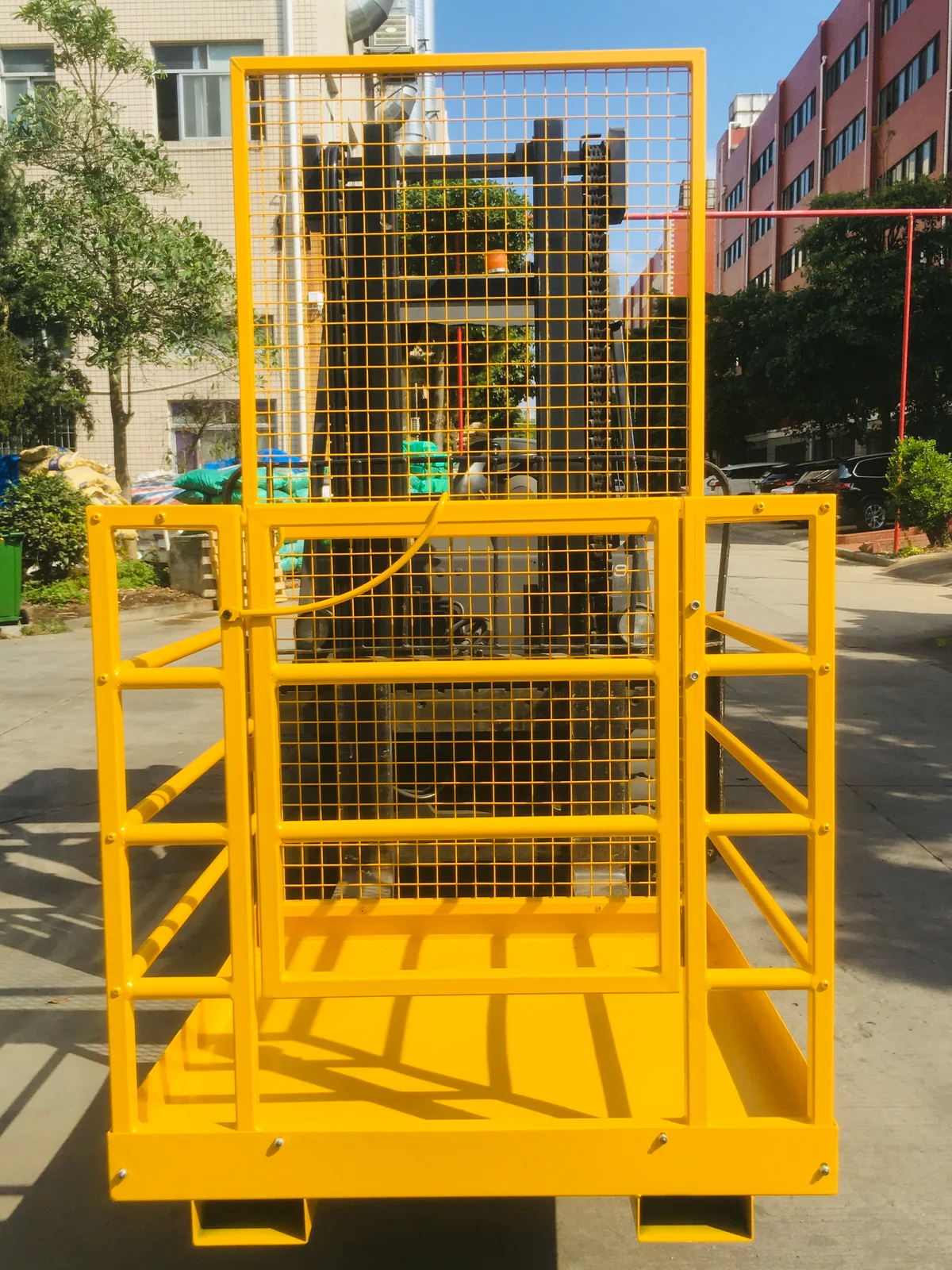
- Self-closing gate. The entry gate should return to the closed position under its own weight or spring, so the operator cannot leave it open behind them. This is the single most important feature on any fork-mounted platform.
- Guardrail and toe board. Full perimeter guarding at the correct height, with a kick plate to stop tools rolling off the deck.
- Fork pockets and restraint. The platform must sit on the forks in a defined position and be secured so it cannot slide forward or tip. A heel pin or equivalent restraint is standard practice.
- Deck surface. Slip-resistant flooring, drained so water and oil do not pool.
- Rated capacity plate. A clear, permanent marking of the maximum load — people plus tools — so nobody has to guess.
The WONTONNE Working Platform, model WB1010, is built around these principles: a fixed-arm, forklift-mounted design with a self-closing gate, a secure and reliable structure, and a rated capacity of up to 250 kg for comfortable, stable operation during elevated maintenance.
Capacity is a system figure, not a sticker
The 250 kg rating applies to the platform. The load the forklift can actually lift is the truck's rated capacity at the load centre, minus the weight of the platform and its occupants. A platform mounted on the forks moves the load centre forward, which reduces the usable capacity of the truck. Always check the truck's data plate and the attachment weight together before you put a person in the air.
How to Specify the Right Working Platform
Work through these questions in order. They will narrow the choice faster than any catalogue.
- What height do you need to reach? Work back from the task, not from the truck you happen to own.
- What is the total load? One operator plus tools plus any material being handled. If it approaches 250 kg, review the truck capacity first.
- Which forklift will carry it? Fork pocket spacing, fork thickness and truck class all affect fit. WONTONNE platforms are compatible with major forklift brands, but the pairing should still be confirmed.
- How often will it be used? Frequent use justifies a dedicated platform; occasional use may justify sharing one across several trucks.
- What does your safety regime require? Confirm the platform meets the standards your site operates under, and that operators are trained on the specific combination of truck and platform.
If you are also reviewing other attachments for the same fleet, the full range is listed under all forklift attachments, including goods cages and other load-handling equipment.
Safety Practice on Site
Most incidents with fork-mounted platforms come from procedure, not hardware. The recurring failures are well known: an operator lifted without a restraint, a platform used to travel with someone on board, a truck operated by someone who has not been trained on the attachment, or a load chart that was never updated after the platform was fitted.
Practical controls that work:
- Keep the platform on the ground until the operator is inside and the gate has closed.
- Never travel with a person on the platform. Raise and lower only when the truck is stationary.
- Keep the mast vertical and the truck on level, firm ground.
- Use a spotter or a controlled exclusion zone beneath the platform.
- Inspect the platform, gate and fork restraint before each shift.
- Record the attachment in the truck's capacity documentation.
A working platform does not make a forklift into an aerial lift. It makes a forklift into a controlled access point for short work at height — provided the capacity, the restraint and the training are all in place.
FAQ
What is a working platform used for?
It is used to raise a person to a height so they can perform maintenance, inspection or assembly work with both hands free. Common tasks include overhead lighting, ductwork, racking, signage and machine servicing.
Can any forklift carry a working platform?
Most counterbalance trucks can, provided the platform fits the forks and the combined weight of platform, operator and tools stays within the truck's rated capacity at the relevant load centre. Because a fork-mounted platform moves the load centre forward, the usable capacity is lower than the truck's nominal rating, so the data plate must be checked.
How much can the WONTONNE WB1010 working platform carry?
The WB1010 is rated for up to 250 kg. That figure covers the operator and anything they are carrying. It is a fixed-arm, forklift-mounted platform with a self-closing gate, designed for secure and comfortable elevated maintenance work.
Talk to WONTONNE About Your Application
If you need to get a person safely to height without tying up a scaffold crew, a fork-mounted working platform is often the most practical answer. Send us the task, the height, the load and the forklift you plan to use, and our team will confirm the right configuration. WONTONNE supports every platform with technical advice and spare parts after delivery. Contact WONTONNE to discuss your requirement.