
Reach fork attachments are the interface between a narrow-aisle reach truck and the loads it must handle at height. Where a standard reach truck fork reaches into racking, a purpose-built reach fork or fork extension changes what the truck can pick up, how deep it can go and how stable the load remains at lift height. For warehouse managers running high-density storage, the reach fork is often the difference between a truck that handles one pallet profile and a fleet that adapts to new SKUs without new trucks.
WONTONNE has manufactured forklift attachments and material handling equipment for more than 20 years, supplying fork extensions, special forks and custom fork designs to distribution centres and OEMs worldwide. This guide explains the reach fork options available, how they differ, and what to check before specifying one for your operation.
What a Reach Fork Does on a Narrow-Aisle Truck
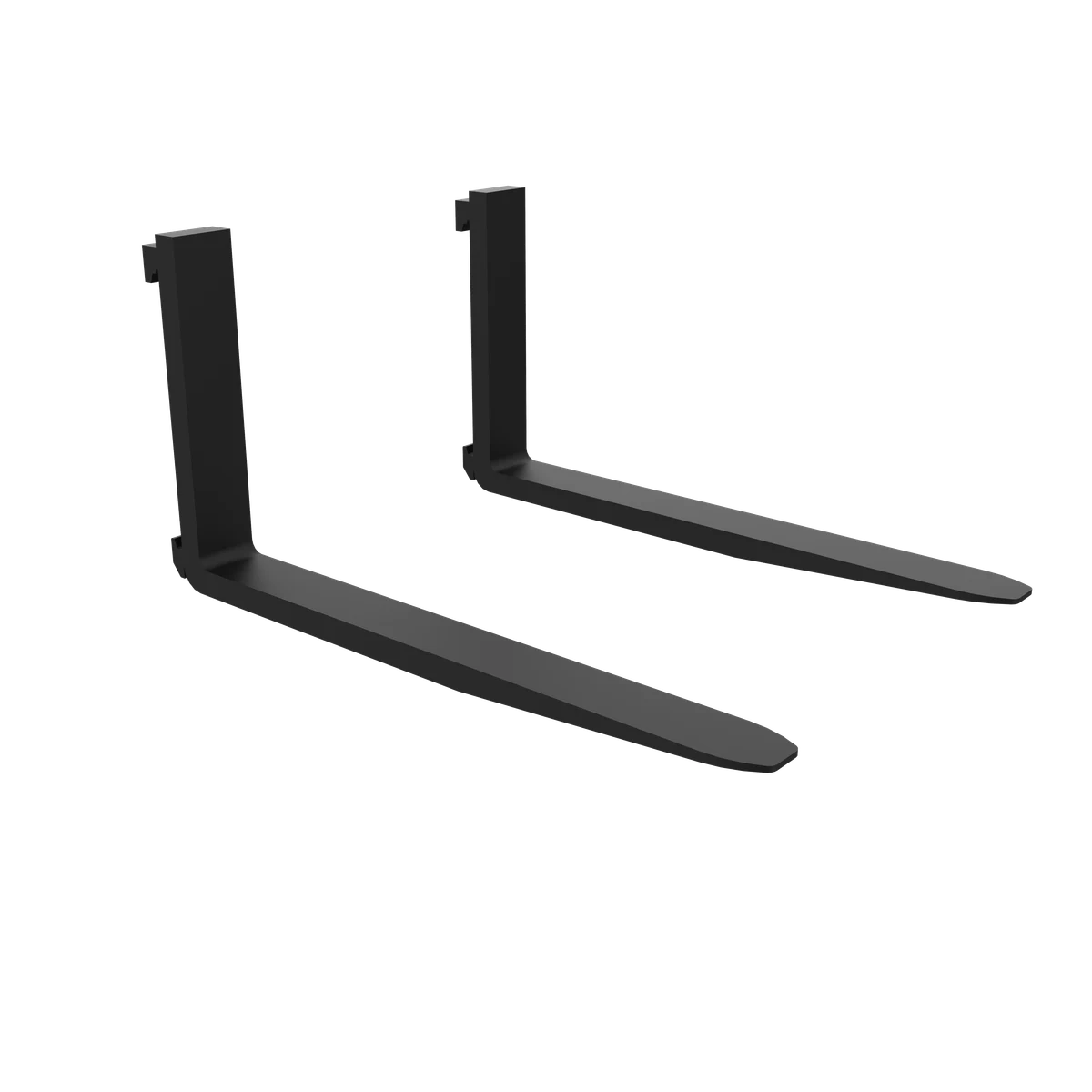
A reach truck's carriage moves the forks forward and back, letting the operator place pallets in double-deep racking or pick from the opposite side of a trailer without turning the truck. The reach fork itself is the load-engaging element: its length, section, mounting class and surface treatment determine whether the truck can handle a given pallet, slip-sheet or long load.
Standard reach forks work well for uniform pallets within the truck's rated capacity. Problems appear when loads are longer than the fork, when racking is deeper than the reach stroke, or when the load cannot sit on a wooden pallet at all. That is where specialised reach forks and fork extensions come in.
Reach forks versus standard forks
The distinction is practical rather than theoretical. A standard fork is sized to the truck and the pallet; a reach fork or extension is sized to the load and the rack. Choosing the wrong one either limits the truck's usefulness or creates a load-stability risk that no amount of operator skill can fully offset.
Types of Reach Fork Attachments
WONTONNE's range covers the main ways warehouses extend reach fork capability. Each type solves a different handling problem.
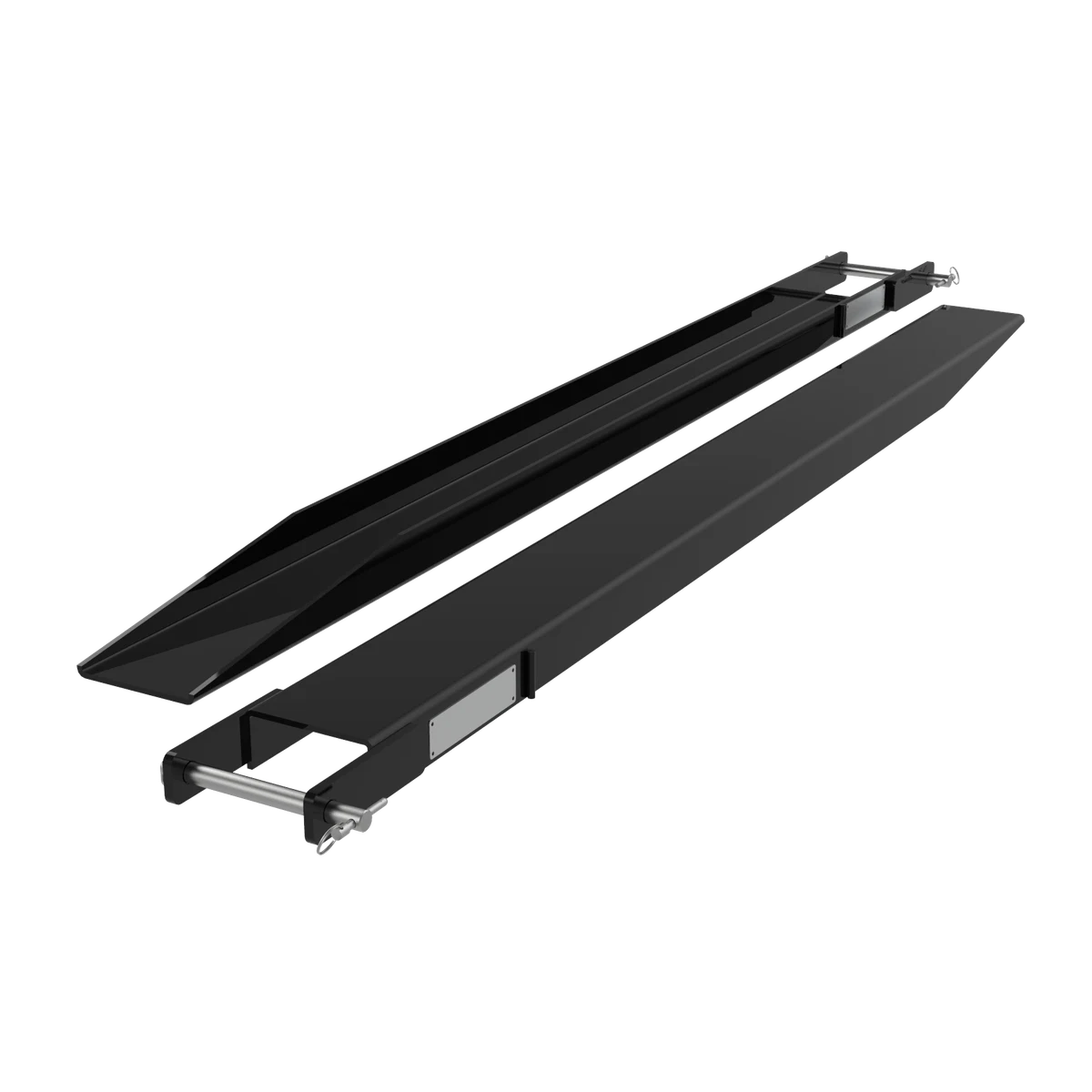
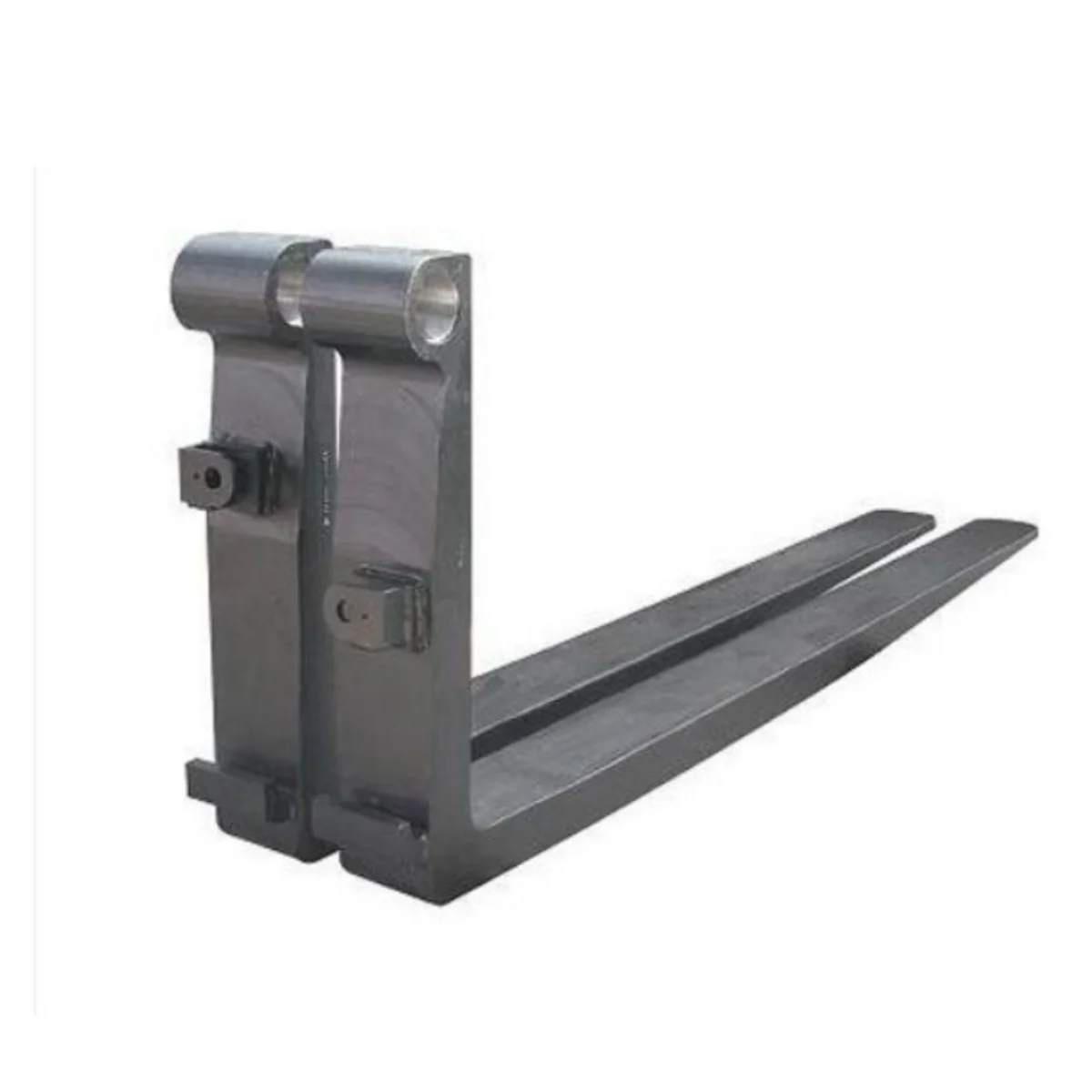
- Slip-on fork extensions — the Forklift Extension slides over existing forks to support long or large objects. The closed-bottom design is rated to 8500kg and is available in galvanised or painted finish.
- Open-bottom fork extensions — the Fork Extension (Open Bottom) offers the same extra support with an open profile, also rated to 8500kg, for applications where the closed-bottom version does not fit the carriage or load.
- Hydraulic telescopic forks — Telescopic Forks extend under hydraulic power to stack palletised goods in double-deep racks or on the opposite side of a truck. They double as hydraulic fork extensions and handle loads up to 2500kg.
- Roller forks — Roller Forks, also called wheel forks, use an internal rolling mechanism for pallet-less handling of slip-sheets and heavy cylindrical loads, with capacity up to 2000kg and ISO 2A or 3A mounting.
- Special and custom forks — Solid Stainless Steel Forks for corrosive environments, Spark-Retardant Brass-Clad Forks for hazardous areas, and Custom Forks in sleeve-type, folding, stainless-clad and other configurations.
Reach Fork Specifications at a Glance
The table below summarises the core data from WONTONNE's reach fork and fork extension range. Always confirm the rating against your truck's data plate and the actual load centre before ordering.
| Attachment | Typical capacity | Mounting / fit | Best for |
|---|---|---|---|
| Forklift Extension (closed bottom) | Rated to 8500kg; common models at 4500kg / 600mm load centre | Slips onto existing forks; 100×45mm and 140×55mm mounting classes | Long or oversized loads on standard reach trucks |
| Fork Extension (open bottom) | Rated to 8500kg; common models at 4500kg / 600mm load centre | Slips onto existing forks | Long loads where an open profile is required |
| Telescopic Forks | Up to 2500kg retracted; 1000kg at 1750mm load centre (TFQ4-25E) | ISO 2A or 3A | Double-deep racking, opposite-side trailer stacking |
| Roller Forks | Up to 2000kg; common models at 1000kg | ISO 2A or 3A | Pallet-less handling, slip-sheets, cylindrical loads |
| Forklift Forks (ISO 4A) | For 5000–7000kg capacity trucks | ISO 4A | Heavy-duty multi-purpose handling |
Reading capacity at the load centre
Every attachment's capacity is stated at a load centre, and that number falls as the load centre moves outward. A fork extension rated at 4500kg at 600mm does not carry 4500kg at 1200mm. When a long reach fork is used to pick a load near its tip, the truck's residual capacity — not the attachment's headline rating — governs the lift. Check the truck's derating chart together with the attachment data.
How to Choose a Reach Fork for Your Operation
Selection starts with the load and the rack, not the truck catalogue. Work through these points before requesting a quote.
- Load dimensions and weight. Measure the longest load and its weight distribution. A long reach fork must support the load without excessive deflection at the tip.
- Rack depth and reach stroke. For double-deep storage, a passive extension may not be enough; hydraulic telescopic forks extend the working stroke and keep the load stable.
- Pallet or pallet-less. If loads arrive on slip-sheets or without pallets, roller forks can eliminate the pallet cost and the push-pull attachment.
- Environment. Food, chemical, marine and hazardous areas call for stainless steel or spark-retardant fork surfaces rather than painted carbon steel.
- Mounting class. Confirm the carriage class — ISO 2A, 3A or 4A — so the attachment fits the truck without adapters that add lost load centre.
Kooi reach forks and similar aftermarket reach fork designs are often specified by load profile rather than by brand. Matching the fork section, length and mounting class to the truck is what determines performance, regardless of the original equipment brand.
Installation, Inspection and Maintenance
Reach forks and fork extensions are wear items. Inspect them at the start of each shift for cracks, bent tips, worn heels and loose retaining pins, and check the fork heel thickness against the manufacturer's wear limit. Slip-on extensions should seat fully on the parent fork with the retaining device engaged before lifting.
Hydraulic telescopic forks add seals, hoses and a hydraulic circuit to the inspection routine. Check for leaks and confirm the extension stroke operates smoothly through its full range without binding. Roller forks need their rolling elements kept clean and free of debris so loads move without jerking.
WONTONNE supplies technical support and spare parts for its attachment range, so maintenance planning can include recommended spares from the outset.
FAQ
What is the difference between a reach fork and a fork extension?
A reach fork is the load-engaging fork fitted to a reach truck, while a fork extension is an attachment that slips over an existing fork to increase its length and support. In practice, many warehouses use fork extensions to turn standard reach forks into long reach forks for oversized loads.
Can I use a fork extension on a reach truck in double-deep racking?
Only if the combined reach of the truck and the extension places the load safely within the rack. For routine double-deep work, hydraulic telescopic forks are usually the better choice because they extend under control and keep the load centre predictable.
Are kooi reach forks compatible with WONTONNE attachments?
Compatibility depends on the carriage mounting class and fork section, not the truck brand. WONTONNE fork extensions and special forks are made to fit major forklift brands; provide the carriage class and fork dimensions and the matching attachment can be specified.
Ready to specify a reach fork for your fleet? Browse all forklift attachments or contact WONTONNE with your load details, rack depth and carriage class for a technical recommendation and quotation.