
Road sweepers are not only municipal machines. In farms, grain terminals, waste transfer stations, mining yards and heavy manufacturing plants, the fastest way to clear sand, grain, rubbish and rocks from a hard surface is often a sweeper attachment mounted on a forklift that is already on site. WONTONNE has built material handling attachments for more than 20 years, and the SWM and SWP series sweeper brushes exist because customers kept asking the same question: why buy a second machine when the forklift can do the job?
This guide explains how a forklift-mounted road sweeper works, where it beats a ride-on street sweeper, and how to choose between the two WONTONNE sweeper brush series and their model sizes.
What a Forklift-Mounted Road Sweeper Actually Does
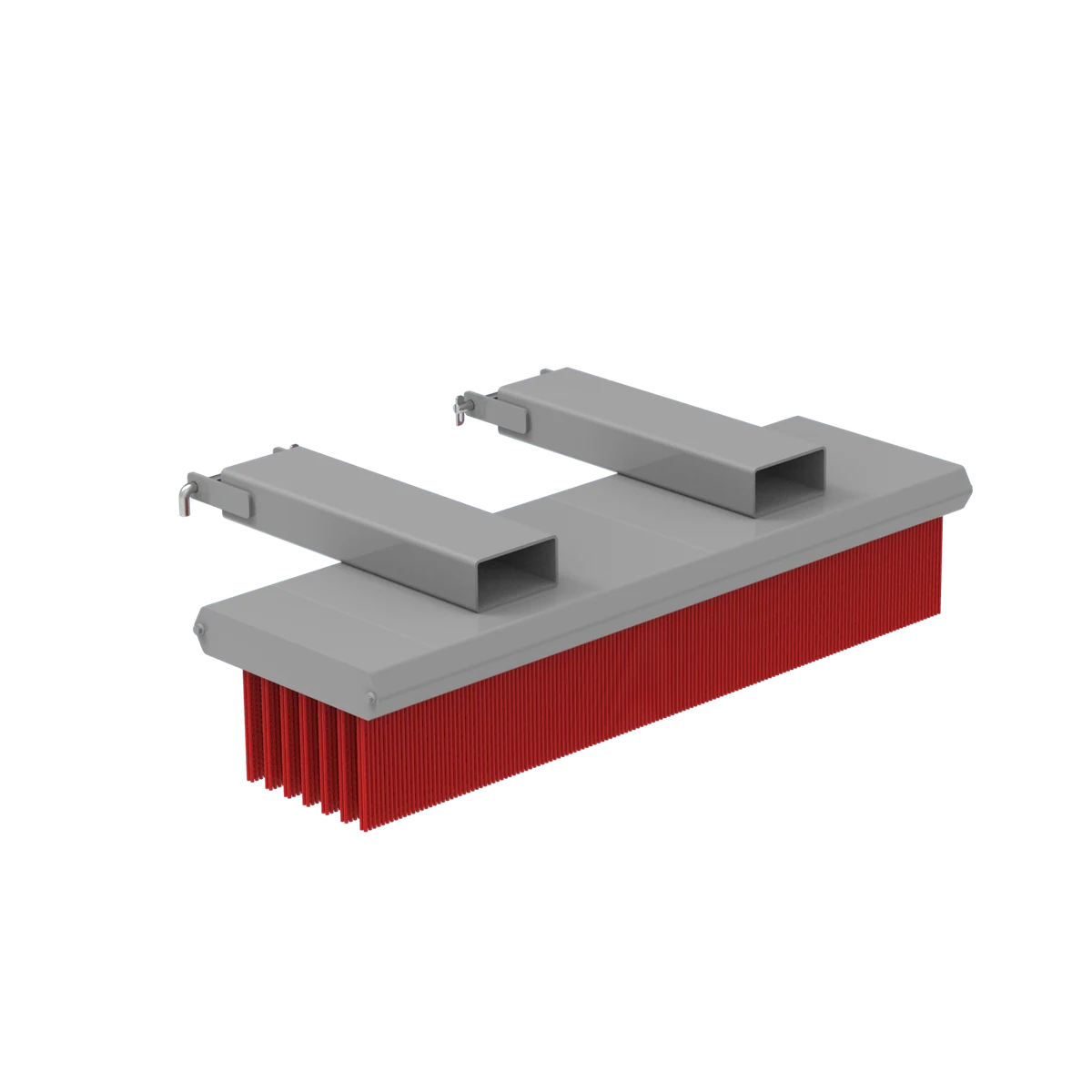
A sweeper attachment turns the forklift into a mobile broom. The unit locks onto the forks and is driven by the hydraulic system, so the truck supplies the power and the operator stays in the cab. As the forklift moves forward, the rotating brush rolls debris ahead of the machine or sweeps it aside into a windrow that can be picked up afterwards.
This is mechanical sweeping in its simplest form, and that simplicity is the point. There is no auxiliary engine, no water tank, no vacuum fan and no complex filtration to service. The attachment is a steel frame, a set of bristles and the hydraulic drive that connects them to the truck.
Where it fits in a cleaning routine
- Bulk debris removal after loading, tipping or storm events, where sand, grain, gravel or rubbish has spread across a yard or roadway.
- Daily housekeeping in grain handling, waste and recycling areas where loose material builds up quickly.
- Pre-cleaning before a vacuum sweeper or pressure washer is brought in for fine dust.
- Access roads and hardstands around mining and agricultural sites where a dedicated street sweeper would rarely be available.
Forklift Sweeper Attachment vs Ride-On Road Sweepers
Municipal road sweepers are purpose-built vehicles. Mechanical broom trucks use gutter brooms and a wide main broom to move debris onto a conveyor; vacuum and regenerative air machines use a suction head and airflow to lift fine particles. They are excellent at what they do, but they are also a significant capital purchase, they need a licensed driver, and they are usually committed to a fixed route.
A forklift sweeper attachment takes a different position in the fleet. It is a lower-cost tool that uses an asset you already own, it can be deployed the moment a spill happens, and it stores flat when not in use. The trade-off is that it does not collect debris into a hopper and it is not designed for fine dust suppression. For many industrial sites, the two approaches are complementary rather than competing.
| Consideration | Forklift-mounted road sweeper | Ride-on street sweeper |
|---|---|---|
| Power source | Forklift hydraulics | Dedicated engine |
| Debris handling | Rolls and displaces debris | Collects into hopper or vacuum system |
| Best for | Yards, farms, grain, waste, mining, access roads | Public roads, gutters, fine dust |
| Fleet requirement | An existing forklift | A separate vehicle and driver |
| Maintenance focus | Bristles and hydraulic drive | Engine, brooms, vacuum or water system |
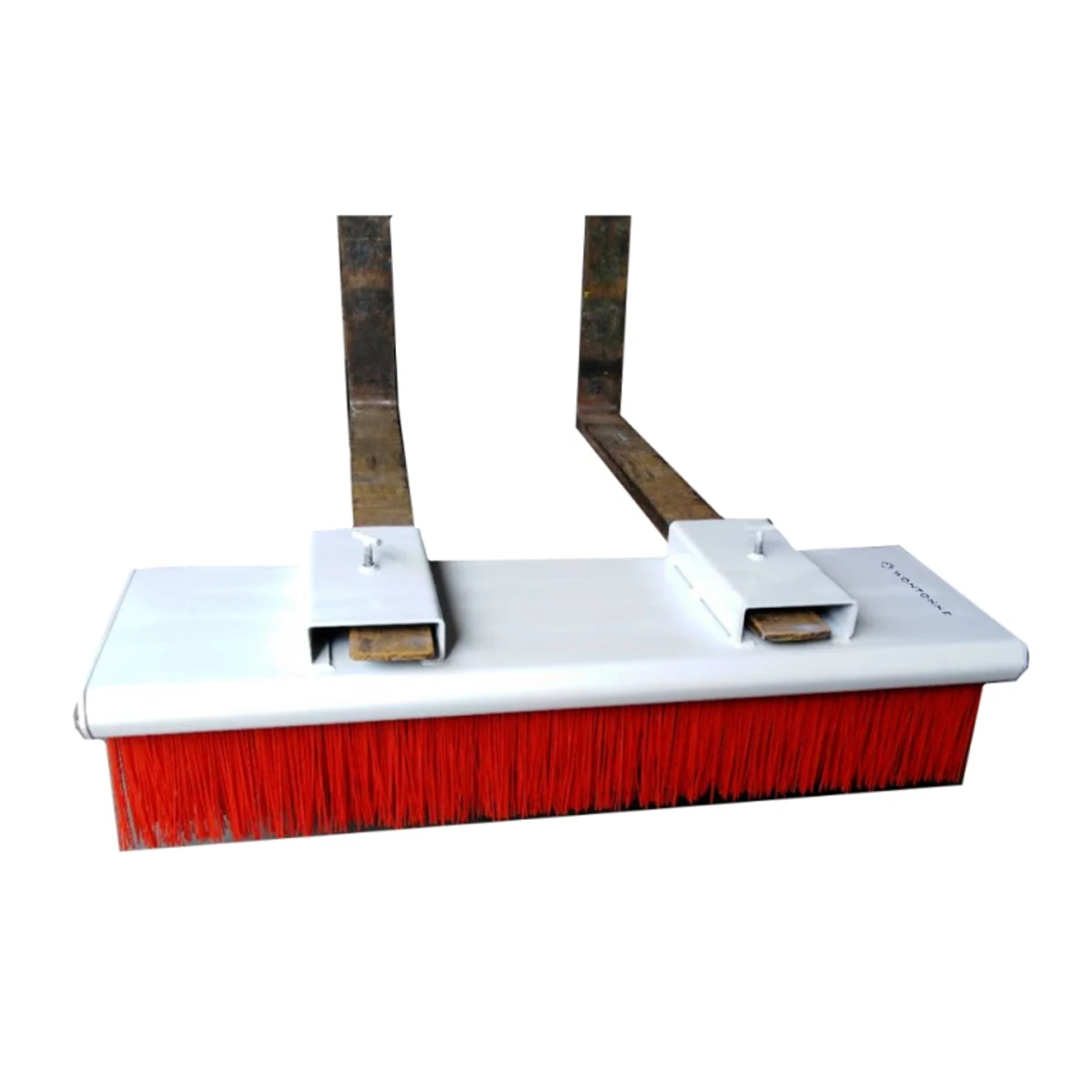
Choosing Between the SWM and SWP Sweeper Brush Series
WONTONNE builds two families of forklift sweeper brush, and the difference between them comes down to how the unit is fixed to the truck and how the bristles are set.
SWM Series Sweeper Brush (Mega Type)
The SWM series is locked by pins on the forks. It is built around strong steel plates with channels, which gives the frame the rigidity needed for repeated contact with hard ground. The bristle set is arranged for economical, powerful sweeping, and bristles can be replaced easily when they wear. It is widely used in farming, agriculture, grain handling, waste and mining, and it cleans sand, grain and rubbish.
SWP Series Sweeper Brush (Pro Type)
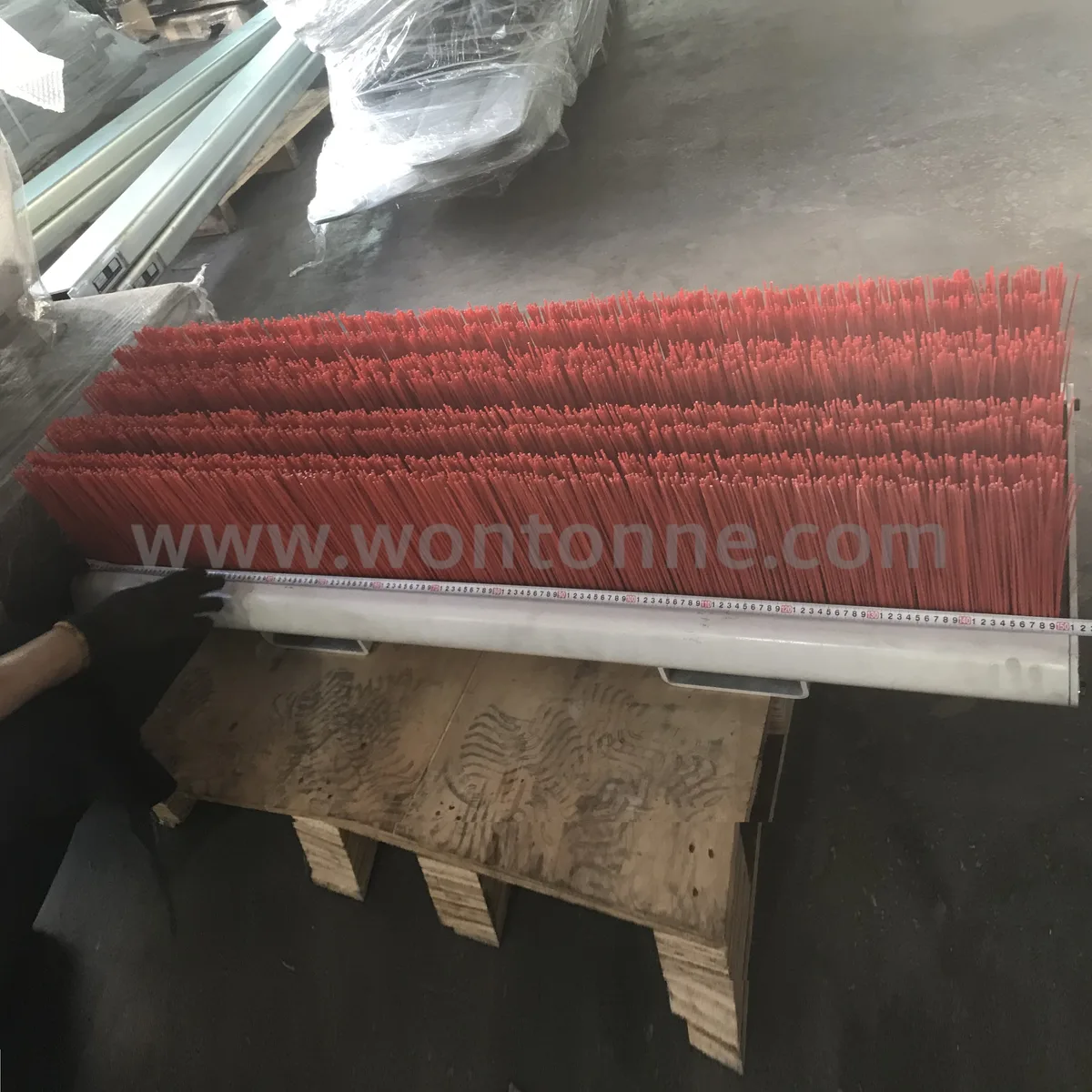
The SWP series is locked by bolts on the forks and uses erect, thick bristles. That stiffer bristle profile is aimed at the same working environments — farming, agriculture, grain handling, waste and mining — but with an emphasis on cleaning sand, grain, rubbish and rocks. Where the surface is rougher or the debris is heavier, the erect bristle design is the one to look at.
Model sizes in both series
Both series share the same model numbering, so you can compare like for like:
- SWM12-5 and SWP12-5
- SWM15-8 and SWP15-8
- SWM18-5 and SWP18-5
- SWM18-8 and SWP18-8
- SWM18-11 and SWP18-11
- SWM24-11 and SWP24-11
Both series use a fixed arm type. Because the specification depends on your forklift and your application, confirm the correct model with WONTONNE before ordering rather than matching numbers by eye.
Sizing a Road Sweeper Attachment to Your Forklift
The attachment is carried on the forks, so the first check is physical: the fork spacing, the fork thickness the locking system has to grip, and the clear width available on the truck. The second check is operational: how wide a path you need to clean in one pass, and how much debris you are pushing.
Wider units cover more ground per pass but increase the load on the forklift and the hydraulic circuit. Narrower units are easier to manoeuvre between racking, columns and parked vehicles. Match the attachment to the tightest space you sweep regularly, not to the widest open yard.
Getting more life from road sweeper brushes
- Replace bristles before they are worn flat; a worn brush stops sweeping and starts polishing.
- Keep the brush off the ground when travelling between work areas.
- Adjust working height so the bristles flex against the surface rather than pressing hard into it.
- Inspect the locking pins or bolts on the forks as part of the same routine as the bristles.
- Clear wire, strapping and string from the brush regularly — it wraps around the core and reduces sweeping width.
Frequently Asked Questions
Can I use a forklift road sweeper on a public road?
These attachments are designed for yards, farms, terminals, waste sites and internal access roads. Public highway sweeping is normally carried out by purpose-built street sweepers operated by trained crews, so check local requirements before using any attachment on a public road.
What is the difference between the SWM and SWP sweeper brushes?
The SWM series is locked by pins on the forks and uses a bristle set built for economical, powerful sweeping. The SWP series is locked by bolts on the forks and uses erect, thick bristles aimed at heavier material including rocks. Both cover farming, agriculture, grain handling, waste and mining.
Do I need a specific forklift brand to run a WONTONNE sweeper attachment?
WONTONNE sweeper brushes are compatible with major forklift brands. The deciding factors are fork dimensions, hydraulic capacity and the working width you need, so share your truck details with our team and we will confirm the right model.
Talk to WONTONNE About Your Sweeping Application
Tell us what you are sweeping — sand, grain, rubbish, rocks — and what forklift you run, and WONTONNE will recommend the right sweeper brush from the SWM Series Sweeper Brush or SWP Series Sweeper Brush range. You can also review the full range of forklift attachments we manufacture, with technical support and spare parts supplied after delivery. Send your enquiry through our contact page and we will come back with a concrete recommendation.