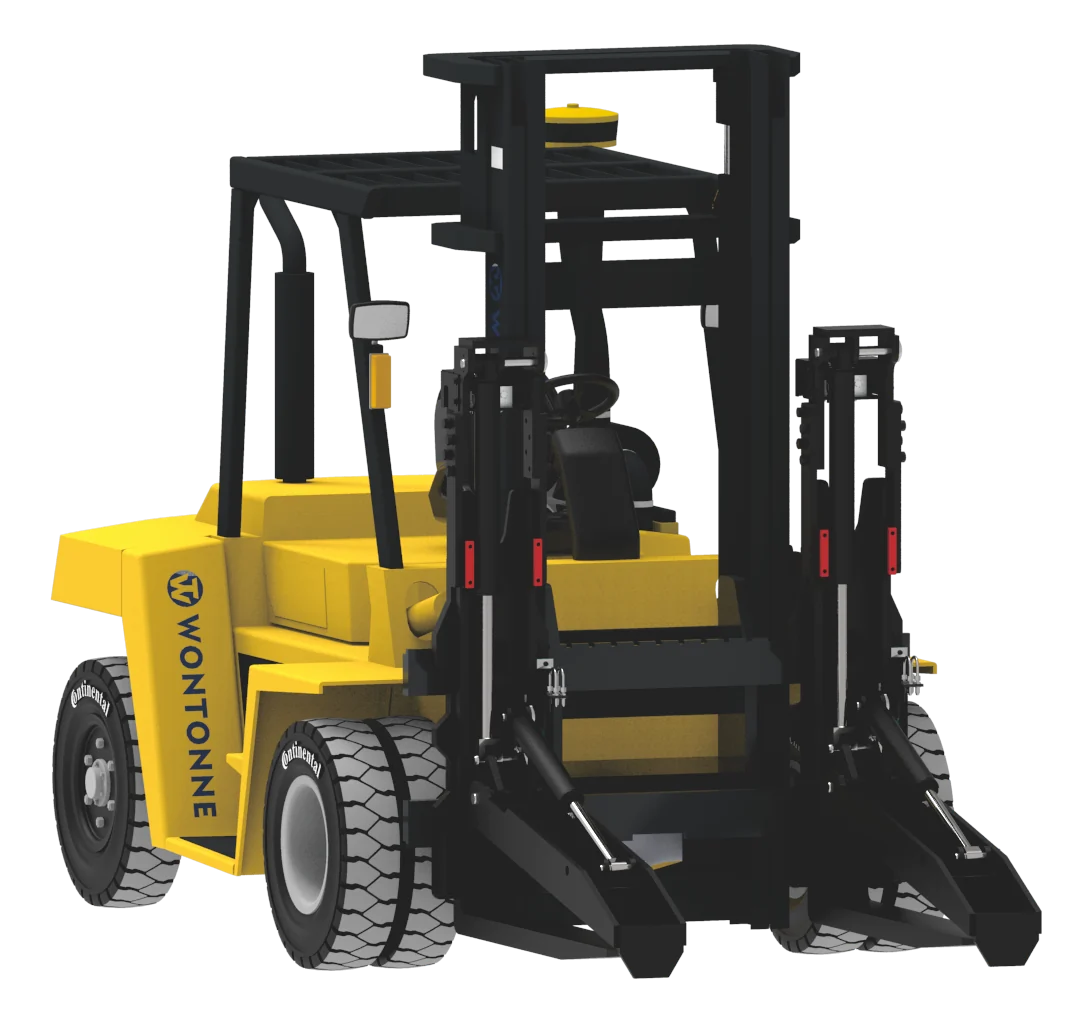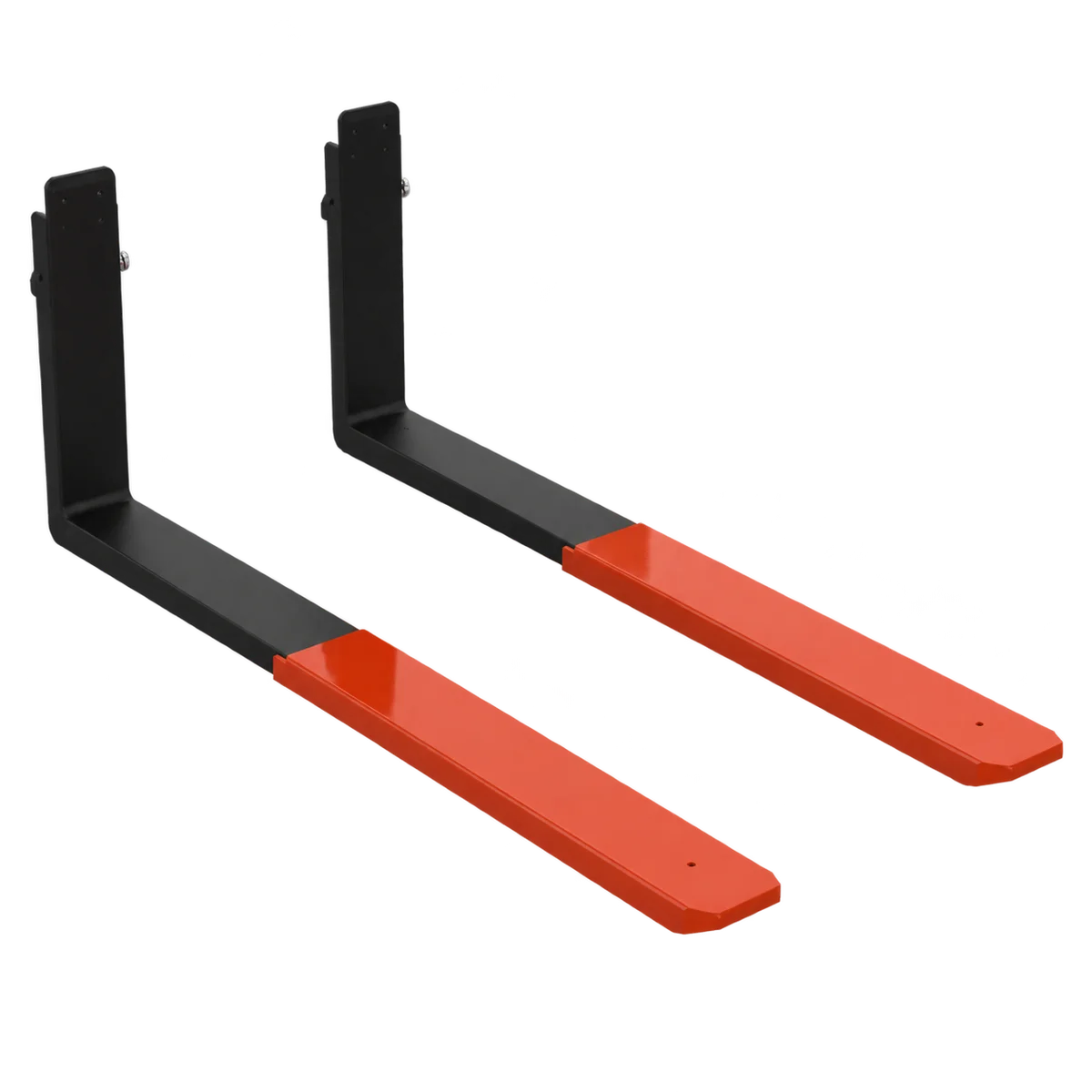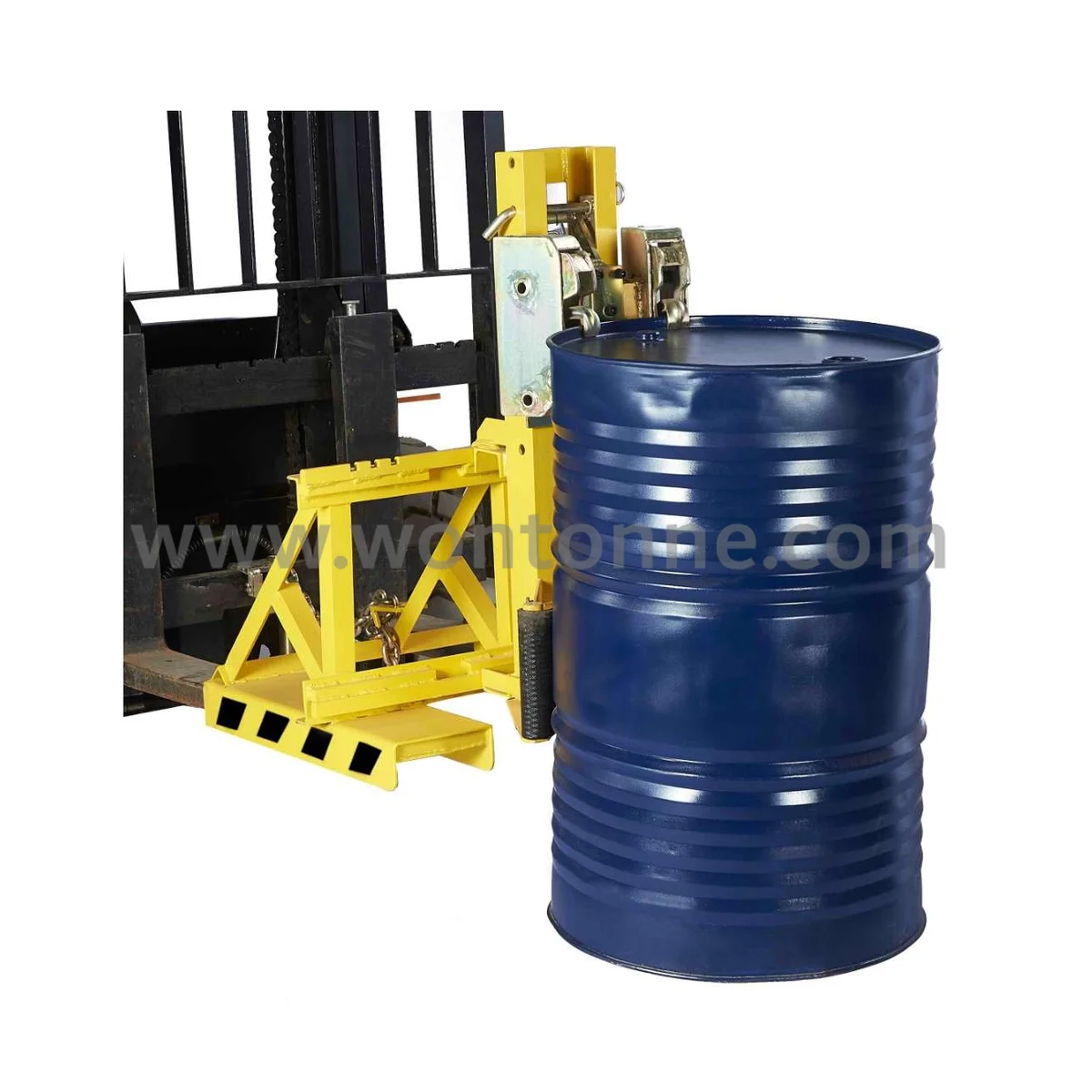

A scrap bin is the container that sits between the point where waste is generated and the point where it leaves your site. Get the specification right and it becomes a quiet piece of infrastructure: loaded at ground level, lifted by forklift, emptied on a schedule. Get it wrong and it becomes a daily problem — too small to hold a shift's worth of offcuts, too light for the material going in, or impossible to tip cleanly without manual handling. This guide covers the decisions that actually matter when specifying a scrap bin for forklift-based waste handling, using the WONTONNE SK Series as a concrete reference point.
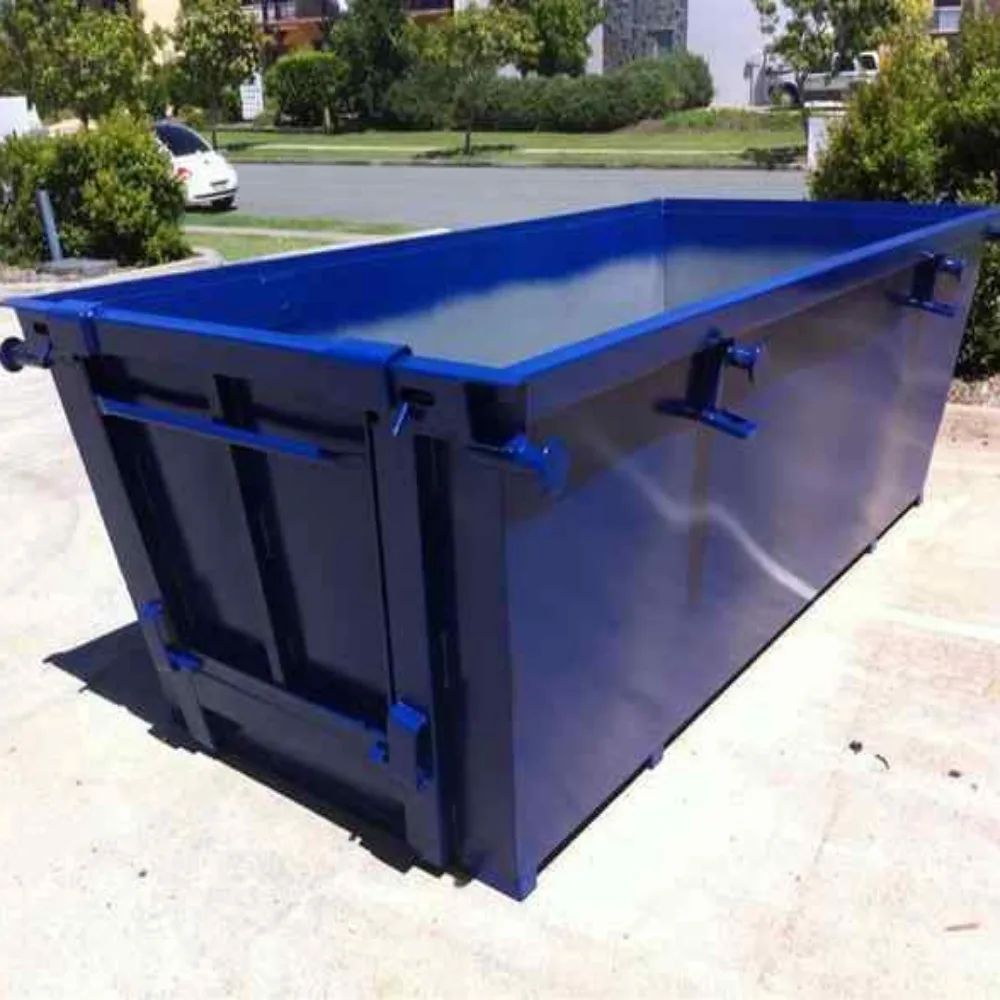
What a Scrap Bin Has to Do on a Working Site
Industrial scrap bins are not general-purpose containers. They are purpose-built to hold dense, abrasive and often sharp material, then be moved and emptied repeatedly without failing at the seams. That combination drives the design priorities:
- Structural strength under concentrated load. Scrap metal, offcuts and demolition debris load a bin unevenly and impact it when dropped in. Welded construction and reinforced corners matter more than nominal wall thickness alone.
- Safe lifting and transport. A loaded bin is heavy and its centre of gravity shifts as it fills. Fork pockets or base channels must give the truck a stable, repeatable pick-up.
- Clean discharge. Whether the bin is tipped by forklift rotation or emptied by hand, the internal geometry should let material fall away rather than bridging in corners.
- Operator protection. Burrs and sharp edges on a container that people load by hand are a straightforward injury risk and should be removed at manufacture.
Construction Details That Separate a Durable Bin From a Disposable One
The difference between a bin that lasts a decade and one that leaks material after two years usually comes down to fabrication quality rather than headline specifications.
Welding and edge finishing
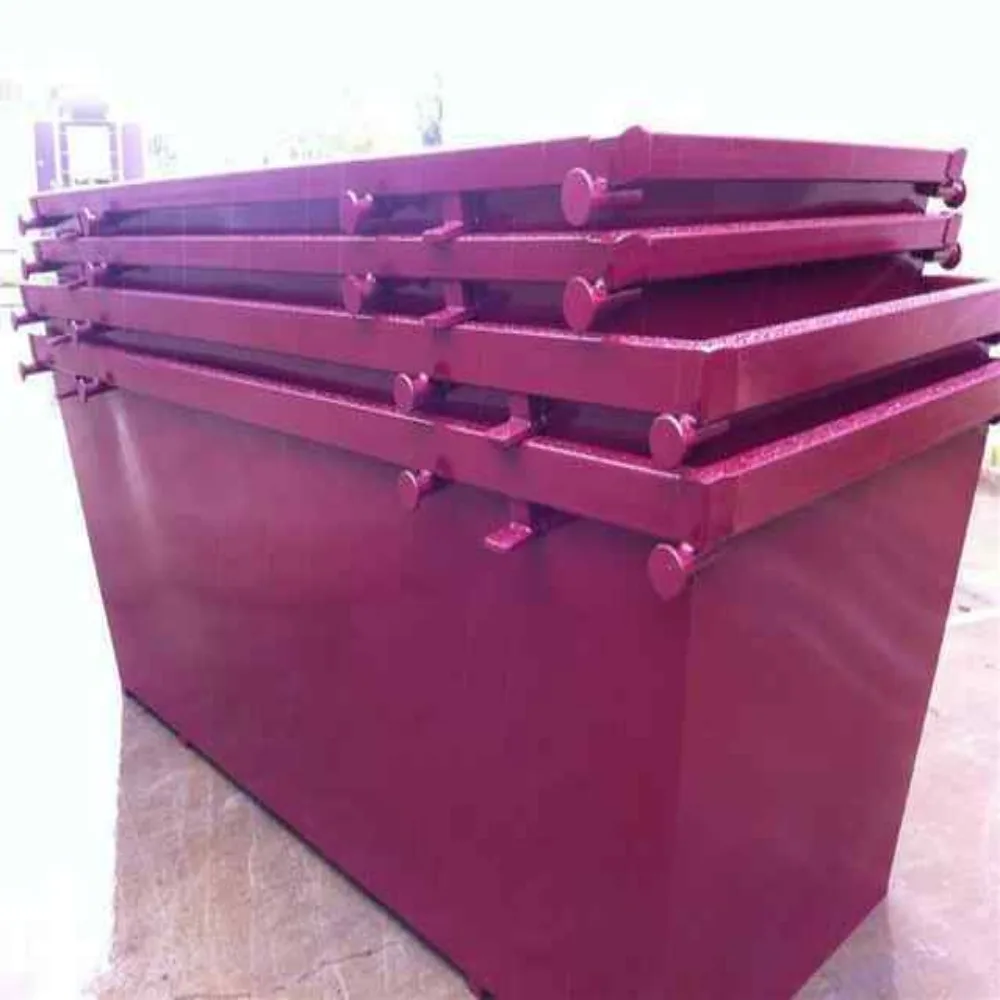
The WONTONNE SK Series bins are fully welded inside and outside, with 5mm CFW welds and burrs and sharp edges removed. Full internal welding matters because a bin loaded with wet or fine scrap will find any unwelded seam; external welding matters because the base and corners take the brunt of forklift handling and ground impact.
Customisation and surface treatment
Standard bins rarely match every waste stream. The SK Series is customizable to customer needs, and surface treatment is available for sites where corrosion, washdown or outdoor storage is a factor. If your material is oily swarf, food-contaminated packaging or mixed construction debris, raise it at specification stage rather than after delivery.
Capacity: Matching the Bin to Your Waste Flow
Capacity is the specification most often chosen by eye, and the one most often regretted. The useful question is not "how big a bin can the forklift lift?" but "how much material accumulates between collections, and how much of that can the truck safely handle at once?"
The SK Series covers a broad working range, from small bins that suit individual production cells up to large containers for central scrap collection points. Capacities run up to 10m³, with the following models in the range:
| Model | Capacity | Mounting | Typical role |
|---|---|---|---|
| SK2 | 2m³ | Fixed | Machine-side or cell-level collection |
| SK3 | 3m³ | Fixed | Departmental waste points |
| SK4 | 4m³ | Fixed | General workshop scrap |
| SK6 | 6m³ | Fixed | High-volume production lines |
| SK9 | 9m³ | Fixed | Central collection and transfer |
| SK10 | 10m³ | Fixed | Bulk scrap and yard storage |
Two practical rules apply across that range. First, size the bin so a full load stays within the forklift's rated capacity at the actual load centre — a large bin is only useful if the truck can lift it when full. Second, avoid oversized bins at the point of generation: a bin that takes a week to fill becomes a sorting and housekeeping problem long before it becomes a transport one.
Static Bins vs Self-Dumping Designs
The SK Series is a self-dumping design, which changes how the bin fits into your workflow. Rather than being emptied by hand or by a separate tipper, the bin is lifted, rotated and discharged directly into a larger container, skip or truck body.
Choosing between the two approaches comes down to material and frequency:
- Static scrap bins suit low-volume streams, mixed material that needs sorting before disposal, and sites where the bin is emptied manually or by crane.
- Self-dumping bins suit repetitive, high-frequency emptying — production lines, recycling sorting areas, warehouses generating packaging waste — where eliminating manual handling is the main gain.
Self-dumping also reduces the labour content of waste handling, which is often the real cost driver. One operator with a forklift can service a row of bins in a fraction of the time manual emptying takes.
Forklift Compatibility and Safe Operation
SK Series bins are compatible with major forklift brands, which keeps them usable across mixed fleets and replacement trucks. In practice, three checks should be made before the first lift:
- Fork spacing and pocket entry. Confirm the fork pockets or base channels accept your actual fork spread and thickness, not the nominal figure.
- Rated capacity at load centre. A loaded bin moves the load centre forward. Derate the truck accordingly and confirm the lift is within the data plate.
- Discharge clearance. Check the tipping height and reach against the receiving container so the bin clears it cleanly at full rotation.
WONTONNE provides after-sales support including technical assistance and spare parts, which matters for bins that will be worked hard for years rather than replaced each season.
Specifying a Scrap Bin: A Short Checklist
- Material type, density and whether it is wet, oily or sharp
- Volume generated per shift or per week, and collection frequency
- Required capacity, matched to forklift rated capacity at load centre
- Static or self-dumping, based on emptying frequency and manual handling risk
- Indoor or outdoor storage, and whether surface treatment is needed
- Any customisation — dimensions, discharge geometry, labelling or drainage
FAQ
What is a scrap bin used for?
A scrap bin is used to collect, store and transport industrial waste and scrap material — metal offcuts, production waste, packaging and general debris — before it is recycled or disposed of. It is loaded at the point where waste is generated and lifted by forklift for emptying or transfer.
How do I choose the right capacity?
Match capacity to the volume generated between collections, then confirm the full bin stays within your forklift's rated capacity at the actual load centre. The SK Series runs from 2m³ to 10m³, with models including SK2, SK3, SK4, SK6, SK9 and SK10, so most waste flows can be matched without going oversized at the point of generation.
Are WONTONNE scrap bins compatible with my forklift?
SK Series waste bins are compatible with major forklift brands. Before first use, check fork spacing and pocket entry against your actual forks, confirm the loaded weight is within the truck's data plate rating, and verify discharge clearance against the receiving container.
Next Step
If you are specifying a scrap bin for a new waste flow or replacing bins that keep failing, the fastest route is to work from your actual material and lifting data rather than a catalogue size. Review the SK Series Waste Bins for capacities from 2m³ to 10m³, browse all forklift attachments for related handling equipment, or contact WONTONNE with your material type, volume and forklift details and we will recommend the right configuration.