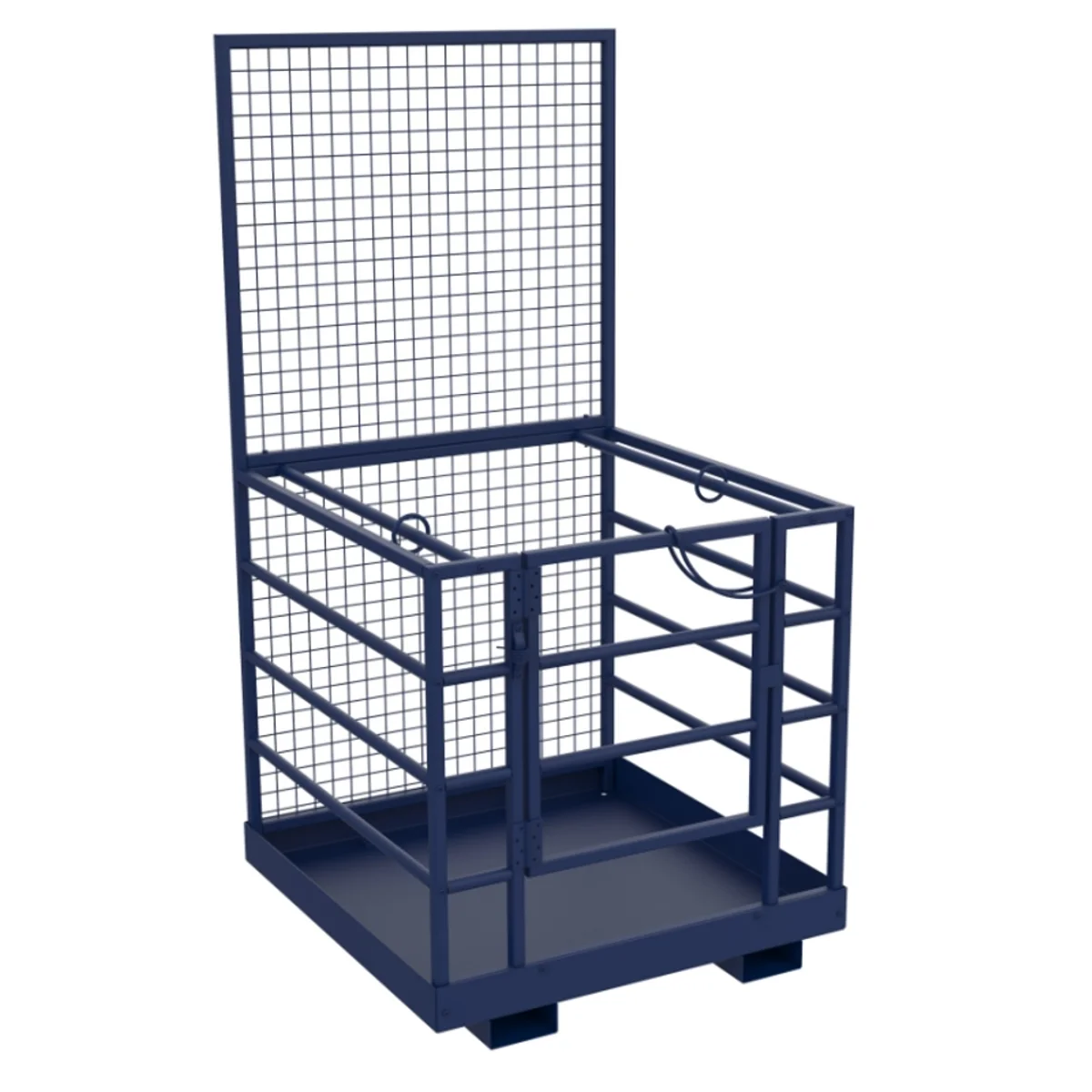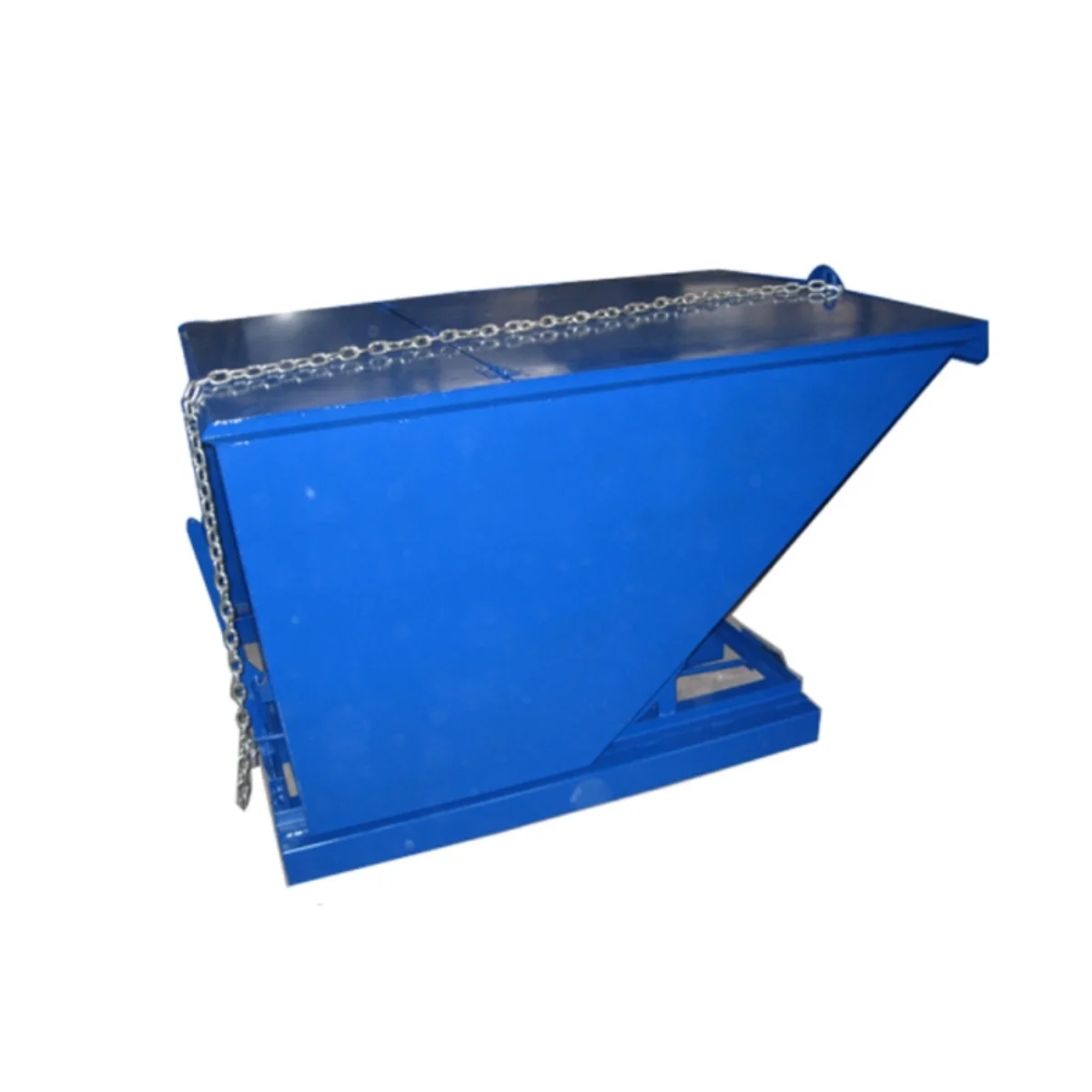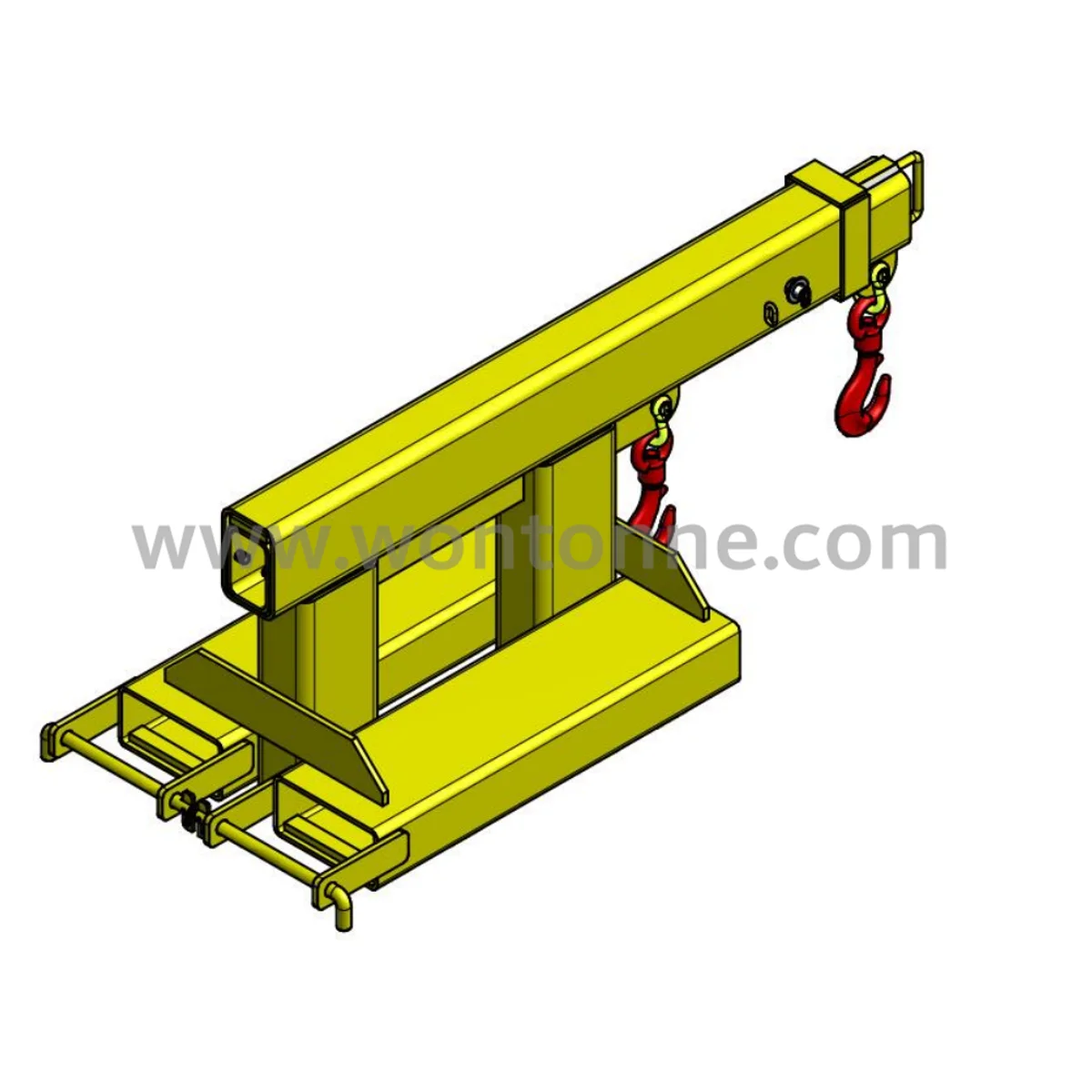

Tri lateral handling on a forklift means the load is turned on more than one axis rather than simply lifted or shifted sideways. A rotator spins the load around a horizontal axis so a box or bin can be emptied. A turnafork, sometimes written turnaload, turns the forks themselves so a pallet or stillage can be presented at a different angle. Where a side shifter only moves the carriage left and right, tri lateral attachments change the orientation of the load, which is what makes them useful in food processing, waste handling, and any operation that has to tip, dump or re-present a unit load.
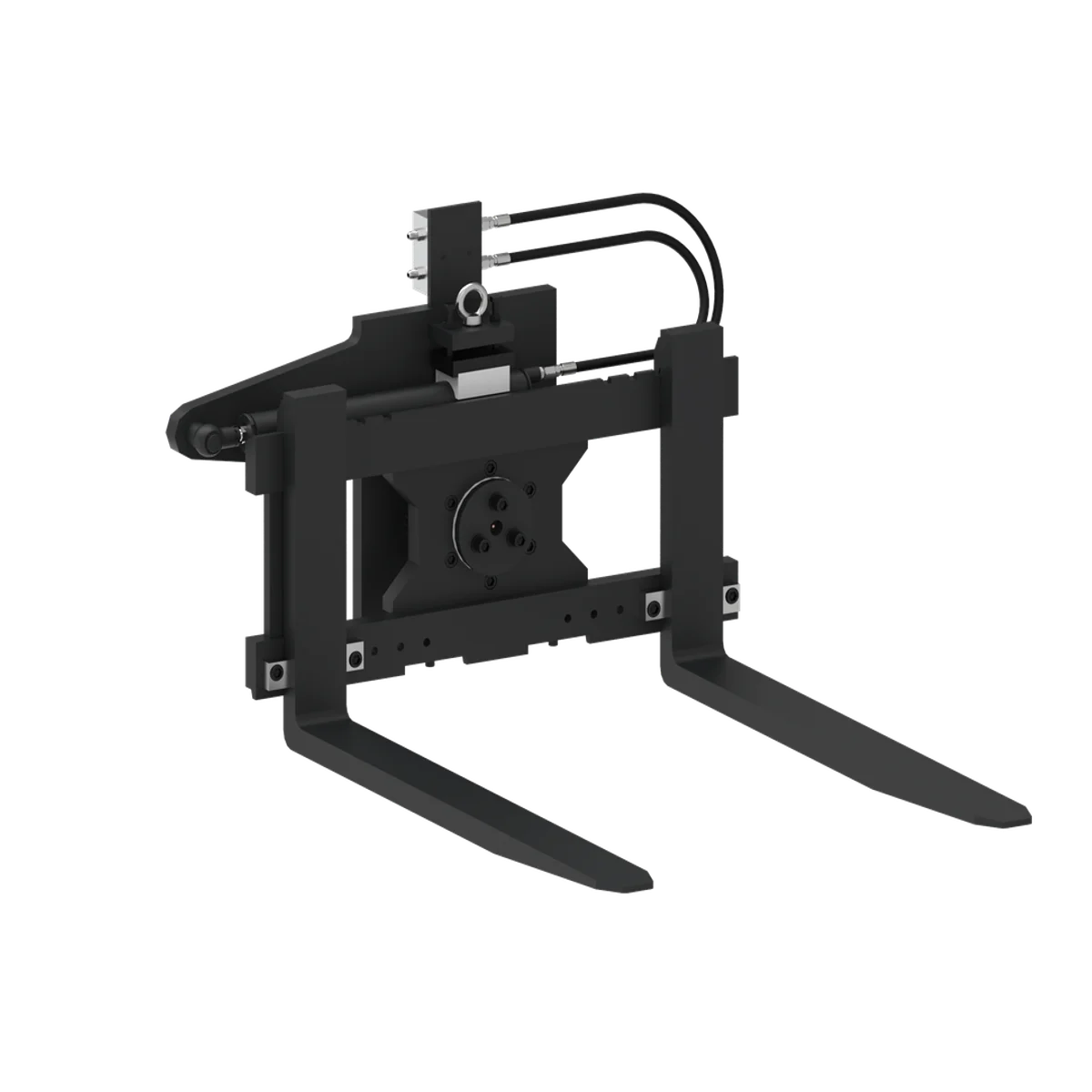
What "tri lateral" actually refers to on a forklift
The term appears in two different contexts, and it is worth separating them. In general industry writing, trilateral describes cooperation between three parties. In material handling, tri lateral describes movement across three planes: lift, lateral travel along the carriage, and rotation of the load itself. A fork positioner gives you the lateral adjustment. A rotator adds the rotational axis. Combine them and the truck can pick, shift and turn a load without the operator leaving the seat.
This matters because every extra axis of movement changes two things on the truck: the rated capacity and the effective thickness of the attachment. Both figures are published per model, and both must be checked before the attachment is ordered.
Rotators: turning the load, not the forks
A rotator carries the forks and rotates them around a horizontal axis, taking the load with them. The most common configuration in box handling is a 180-degree unit that tilts a box or bin far enough to discharge its contents and then returns it upright.
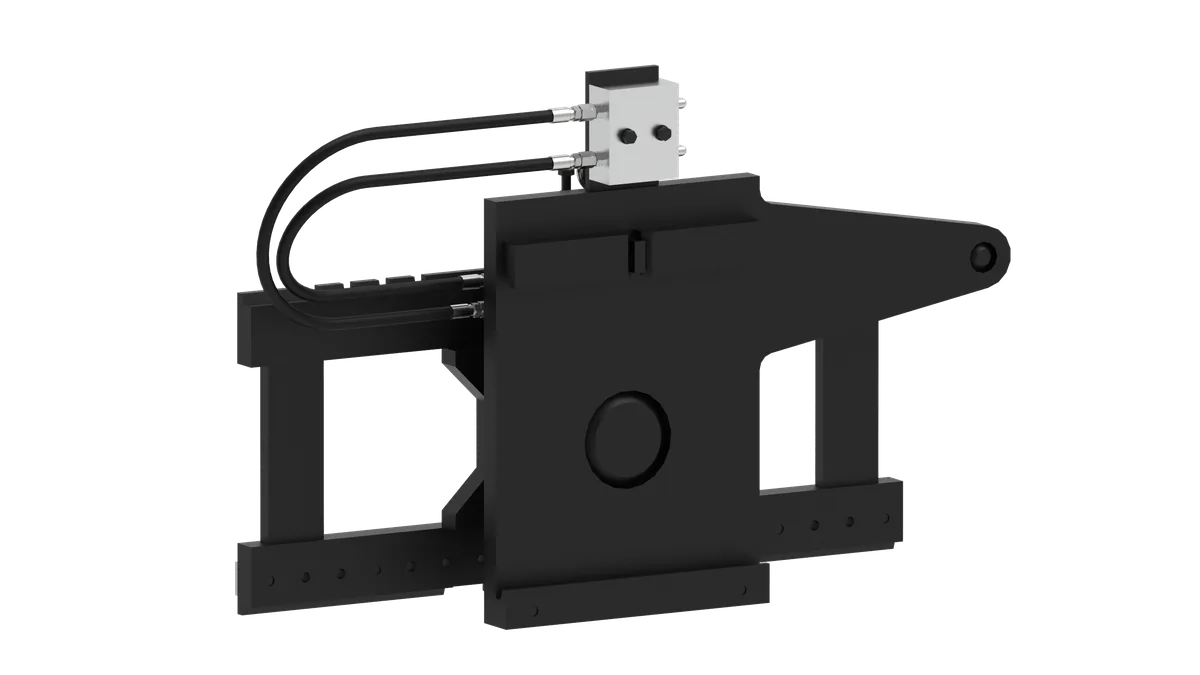
The 180° Box Rotator (Standard Type) is built for exactly this duty: transporting boxes and tilting them laterally to dump the contents, with the body connecting directly to the fork carriage. It is aimed at fruit, produce and general sundries where the container has to be emptied in a controlled way rather than tipped by hand.
Two models are available in this range:
- BRH25A-1040A — 2500 kg capacity at 500 mm load centre, ISO 2A mounting class, 1050 mm roll range, fixed arm type, 290 kg attachment weight, 244 mm effective thickness.
- BRH30A-1100B — 3000 kg capacity at 500 mm load centre, ISO 3A mounting class, 1360 mm roll range, fixed arm type, 427 kg attachment weight, 299 mm effective thickness.
Note the pattern: the larger model carries more, but it also adds roughly 137 kg of attachment weight and 55 mm of lost load centre. On a truck already working near its limit, that difference decides whether the job is legal or not.
Fixed arms versus adjustable arms
Both models above use a fixed arm type, which suits a repeatable box size. If your container dimensions change between shifts, an adjustable configuration is the conversation to have with the supplier rather than something to assume.
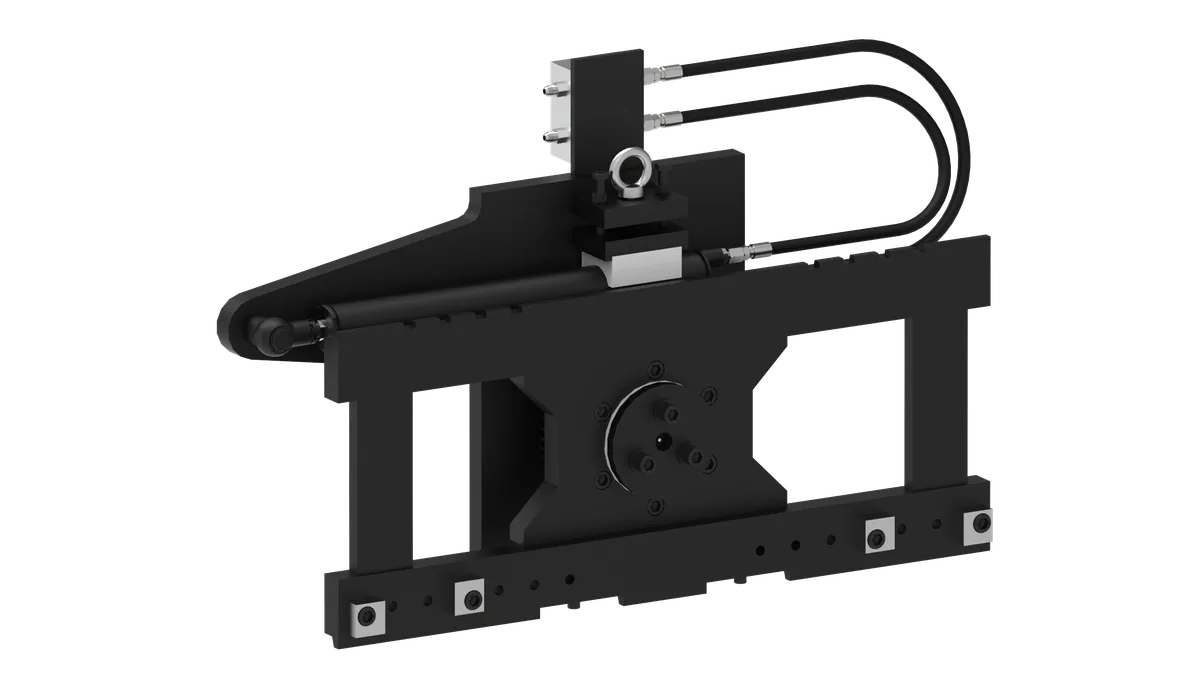
Turnaforks and turnaloads: re-presenting the pallet
A turnafork rotates the fork tines themselves, so a pallet can be picked from one face and set down on another. Turnaload units do the same job for unit loads that are not palletised. The practical effect is that the truck can rotate a load through a fixed angle to align it with a racking face, a conveyor or a machine infeed without the driver manoeuvring the whole truck.
These attachments are usually specified where floor space is tight and reversing is expensive. They are not a substitute for a rotator: a turnafork is about orientation, a rotator is about discharge.
Multiple load handlers and combination attachments
Once a truck has a rotational axis, adding lateral movement is a short step. Multiple load handlers combine fork positioning with rotation so that one attachment can pick two pallets, spread them, and rotate them as a set. The trade-off is the same as everywhere else in attachment selection: more function means more weight and a longer load centre, which reduces the residual capacity of the truck.
Specifying a tri lateral attachment: what to check
Work through the following before you request a quotation.
- Load weight and load centre. Capacity is always quoted at a stated load centre. A 3000 kg rating at 500 mm is not a 3000 kg rating at 600 mm.
- Mounting class. ISO 2A and ISO 3A carriages are not interchangeable. Confirm the class on the truck before matching an attachment.
- Effective thickness. This is the distance the attachment adds in front of the carriage. It pushes the load further out and reduces what the truck can lift.
- Roll range. If the box has to be fully inverted to empty, the roll range must be sufficient for the container's geometry.
- Attachment weight. Subtract it, along with any lost capacity from the load centre shift, from the truck's rated capacity.
| Attachment type | Primary motion | Typical duty | What it costs you |
|---|---|---|---|
| Side shifter | Lateral travel | Pallet alignment in racking | Minimal weight penalty |
| 180° Box Rotator | Rotation plus lift | Discharging boxes and bins | Attachment weight and added effective thickness |
| Turnafork / turnaload | Fork rotation | Re-presenting pallets and unit loads | Reduced residual capacity |
| Multiple load handler | Lateral plus rotation | Handling several loads per cycle | Highest combined weight penalty |
Getting the capacity calculation right
Every attachment in the WONTONNE range is rated at a defined load centre, and the residual capacity of the truck must be recalculated after fitting. Skipping that step is the most common cause of unstable lifts and, in the worst case, of a truck that is being operated outside its data plate. The box rotator models above are compatible with major forklift brands, and WONTONNE provides technical support and spare parts after delivery to help keep the calculation and the maintenance schedule on track.
If you are unsure which configuration suits your containers, review the full range at all forklift attachments or send the box dimensions and truck data plate to contact WONTONNE for a specification check.
FAQ
What does tri lateral mean in material handling?
It describes a load handling system that moves a load on more than one axis — typically lift, lateral travel and rotation — rather than only lifting. Rotators, turnaforks and multiple load handlers all fall into this group.
How much capacity does a rotator cost me?
Two figures matter: the attachment's own weight and its effective thickness, which moves the load centre forward. For example, the BRH30A-1100B weighs 427 kg and adds 299 mm of effective thickness, so the truck's residual capacity must be recalculated before use.
Can I use a 180° box rotator on any forklift?
No. The mounting class must match the truck carriage — ISO 2A for the BRH25A-1040A and ISO 3A for the BRH30A-1100B. Matching the class and confirming the residual capacity are both required before fitting.
Tell us the container, the weight and the truck, and we will confirm which rotator, turnafork or multiple load handler fits the job.